
Article
Commercial excellence: The model for generating predictable and profitable growth


Many companies invest in strategy, marketing, and sales. However, they still struggle to turn that effort into consistent growth.
Despite the existence of initiatives, tools, and dedicated teams, results fall short of expectations: conversions are below target, productivity is inconsistent, and scaling up successful practices is difficult. The problem lies in the absence of an integrated system. Commercial excellence is precisely that system, aligning strategy, marketing, and sales through disciplined, data-driven execution focused on concrete results. Without effective alignment between marketing and sales strategy, organizations tend to generate activity without achieving consistent results.
It is not just a concept; it is a management model that links organizational capabilities to tangible results: more qualified leads, better conversion rates, greater team productivity, and sustained customer retention.
In this article, we address commercial excellence in practical terms: what it is, how it is organized, the required capabilities, how to measure impact, and, above all, how to implement it to transition from scattered initiatives to predictable and profitable growth.
What is commercial excellence?
Commercial excellence represents an evolution in how organizations approach growth. Rather than relying on isolated initiatives — such as a new campaign, sales training program, or tool implementation — it involves building a structured model that ensures consistency in how the company generates, converts, and retains customers.
This concept is becoming increasingly relevant in an environment where growth depends not only on commercial effort but also on the ability to coordinate multiple levers: positioning, demand generation, sales execution, and customer relationship management. Commercial excellence emerges as a framework that transforms these dimensions into a coherent, results-oriented system. More than just an ambition, it is a management discipline that requires strategic clarity, rigorous execution, and the ability to measure and adjust continuously.
Build a consistent, results-oriented commercial model
Definition of commercial excellence
Commercial excellence can be defined as an organization’s ability to maximize its commercial performance through an integrated model that aligns strategy, marketing, sales, and execution.
This model is based on three fundamental principles:
- Clarity in defining where and how to compete.
- Consistency in execution throughout the entire customer journey.
- Systematic use of data to support decisions and continuous improvement.
It is not just about increasing sales volume, but about doing so efficiently and sustainably, ensuring that every market interaction contributes to value creation.
Difference between commercial excellence and one-off improvements
Many organizations invest in initiatives with a localized impact: a new digital campaign, CRM adoption, or a commercial training program. While these actions are relevant, they typically have a limited effect when not integrated into a broader model.
The main difference with commercial excellence is its systemic nature. Rather than solving isolated problems, it seeks to address the structural causes that drive commercial performance, from how the market is segmented to how teams are managed and evaluated.
While one-off improvements tend to generate temporary gains, commercial excellence creates the conditions for consistent results over time. It is the difference between optimizing parts of the process and designing a complete, performance-oriented system.
Commercial excellence model
Commercial excellence is achieved through a structured model that organizes the main growth levers in an integrated, execution-oriented manner. This model is not merely conceptual; it defines how an organization makes decisions, prioritizes initiatives, and manages its daily commercial performance. Figure 1 presents the Kaizen Commercial Excellence Model, showing the interconnection of the different dimensions — commercial strategy, marketing, and sales — and the cross-functional capabilities that support them, ensuring alignment, disciplined execution, and continuous improvement.
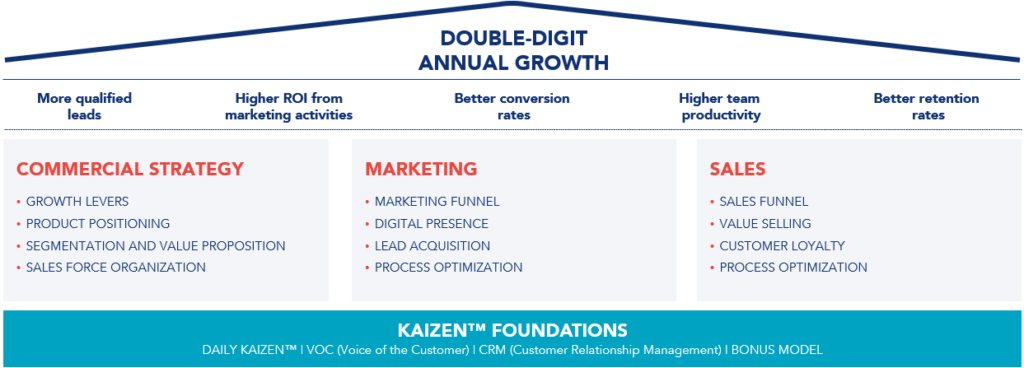
Figure 1 – Kaizen Commercial Excellence Model
The goal is not to optimize individual areas, but rather to create a cohesive system in which each component strengthens the others, thereby increasing the predictability and impact of growth.
Excellence in commercial strategy
The commercial excellence strategy establishes the foundation upon which the entire model is built. It defines where the organization should focus its efforts, how it should position itself in the market, and how it can allocate its resources to maximize returns. This process involves defining the commercial strategy and implementing it, ensuring that strategic priorities are translated into tangible, executable actions.
Growth levers
The starting point for developing the business strategy involves identifying the key growth levers for the business, based on a structured analysis of the market, customers, and internal performance. These levers may include expanding into new market segments, increasing penetration among existing customers, optimizing prices, or launching new offers.
The goal is to prioritize high-impact initiatives and ensure that resources are directed toward opportunities that contribute effectively to profitable growth.
Product positioning
Positioning defines how a product or service sets itself apart in the market and explains why consumers should choose it over available alternatives. It is a strategic exercise that clarifies the core value proposition and ensures consistent communication throughout the entire sales funnel.
A well-defined positioning facilitates marketing and sales efforts, increases the effectiveness of messages, and directly contributes to better conversion rates.
Segmentation and value proposition
Not all customers have the same potential or needs. Segmentation allows the market to be structured into groups with similar characteristics and behaviors, creating the foundation for a more focused commercial approach.
Based on this segmentation, differentiated value propositions are developed and tailored to each segment. This increases the relevance of the offer, improves commercial success rates, and avoids generic approaches that reduce the impact.
Sales force organization model
The effectiveness of the sales force is shaped by its structure. This model defines how teams are organized (by segment, geography, customer type, or product) and how resources are scaled and allocated across different activity types.
It also includes the definition of roles, responsibilities, and operating models, ensuring alignment with commercial strategy and greater efficiency in market coverage.
Marketing excellence
Marketing excellence aims to consistently and predictably generate qualified demand aligned with the organization’s commercial strategy. Rather than simply increasing visibility or lead volume, the marketing strategy should establish a system that attracts the right customers at the right time and effectively guides them through the buying journey. This requires combining a strong digital presence and rigorous management of the marketing funnel, ensuring that each interaction increases engagement and the likelihood of conversion. It also requires a data-driven approach in which marketing data analysis plays a central role in measuring impact, identifying opportunities, and continuously optimizing performance.
Marketing funnel management
Marketing funnel management lays the foundation for a structured approach to lead generation and nurturing. This involves defining the different stages of the funnel, qualification criteria, and mechanisms for passing leads to the sales team.
A well-designed funnel increases team efficiency, improves the quality of business opportunities, and minimizes losses throughout the process.
Digital presence and demand generation
Digital presence is one of the main drivers of demand generation, and ensuring visibility among priority segments is essential. This involves optimizing channels such as search engines, social media, and digital platforms, as well as creating relevant content and effective user experiences.
The goal is to attract qualified traffic, strengthen brand awareness, and create touchpoints that support the customer’s journey toward a decision.
Lead acquisition and qualification
The acquisition of leads must be guided by clear criteria based on the ideal customer profile and conversion potential. The focus is on the quality of leads generated and how well they align with the company’s value proposition, rather than just volume.
This process includes segmented campaigns, prospecting initiatives, and qualification mechanisms that prioritize the most promising opportunities with a higher probability of success.
Marketing process optimization
Process optimization is essential for ensuring consistency and scalability in marketing activities. This involves redesigning marketing processes, defining workflows, automating repetitive tasks, and using tools that support campaign execution and analysis.
By improving operational efficiency, it is possible to reduce waste, increase team productivity, and make more informed, data-driven decisions.
Sales excellence
Achieving sales excellence involves developing the ability to consistently, predictably, and efficiently convert opportunities into revenue. This capability is even more critical in B2B sales contexts due to the complexity of the decision-making process, the need to engage different stakeholders, and the importance of a structured, value-based commercial approach. This involves structuring processes, methodologies, and tools that optimize the sales team and improve results (higher success rates, shorter cycles, and greater value per customer).
This approach requires rigorous management of the sales funnel, a strong focus on value, and continuous attention to the customer experience throughout the entire sales cycle. The goal is to ensure that every sales interaction contributes to increasing the likelihood of closing a deal and strengthening the relationship with the customer.
Discover how to optimize your sales funnel to achieve excellence
Sales funnel management
Sales funnel management allows you to track all sales opportunities in a structured manner, from the initial contact through to closing. This funnel serves as a central monitoring tool, providing visibility into the status of opportunities, their quality, and the likelihood of conversion.
Effective funnel management identifies bottlenecks, prioritizes efforts, and ensures sufficient capacity to meet defined commercial objectives.
Value selling
Value selling centers the sales approach on creating and communicating value to the customer, rather than focusing solely on the product or service’s features. It involves deeply understanding the customer’s needs and demonstrating how the solution helps solve specific problems or generate an impact on their business.
This approach increases differentiation, reduces price sensitivity, and improves conversion rates and margins.
Customer loyalty and retention
The customer relationship doesn’t end at the point of sale. Loyalty and retention are critical to ensuring sustainable growth and maximizing value over time. This requires active customer portfolio management with a focus on experience, proximity, and identifying new development opportunities.
An effective retention strategy reduces churn, increases recurring revenue, and strengthens brand engagement.
Sales process optimization
Sales process optimization involves continuously improving how sales teams work by eliminating inefficiencies and reinforcing higher-value activities. This includes streamlining processes, clarifying priorities, and using data to support decisions and track results.
Increasing the time dedicated to selling while reducing low-impact tasks can significantly improve overall team productivity and performance.
Cross-functional capabilities for commercial excellence
Commercial excellence goes beyond strategy, marketing, and sales. It depends on a set of cross-functional capabilities to ensure consistent execution and enable results to scale over time. These capabilities are structural elements of the model that ensure alignment across teams, more informed decisions, and greater discipline in performance management. Without these foundations, even a well-designed model tends to become ineffective. Through these capabilities, the organization transforms strategy into concrete results while maintaining focus, alignment, and continuous improvement.
Team organization and management
Team organization and management must be grounded in disciplined execution and continuous improvement to ensure consistency in the daily implementation of the commercial strategy. In addition to clearly defining roles, responsibilities, and goals, it is crucial to establish structured routines that ensure focus, alignment, and swift decision-making.
This involves using operational dashboards to make performance visible and holding regular team meetings focused on tracking KPIs, identifying deviations, and defining corrective actions. Standardizing processes ensures consistent execution, while structured problem-solving enables teams to address root causes and prevent recurring failures.
This approach increases productivity, strengthens collaboration between marketing and sales, and ensures that teams are aligned around common objectives and focused on activities that generate the greatest impact.
VOC (Voice of the Customer)
The Voice of the Customer (VOC) allows for the collection and structuring of relevant information regarding customers’ needs, expectations, and perceptions. This information is essential for supporting decisions throughout the entire sales cycle, from positioning to the sales approach.
Consistently using VOC increases the relevance of the value proposition, improves the customer experience, and reduces the risk of decisions based on incorrect assumptions.
CRM (Customer Relationship Management)
A CRM system is a central tool that enables organizations to consolidate information, track interactions, and support commercial decision-making. It should function as more than just a data repository; it should also serve as an execution support system that facilitates funnel management, opportunity prioritization, and performance tracking.
Proper implementation contributes to increased efficiency, improved information quality, and strengthened coordination across teams.
Incentive and bonus model
The incentive model is one of the main mechanisms for aligning strategic objectives with team behavior. It directly influences priorities and decisions in the field by defining how performance is measured and rewarded.
An effective model must be clear, balanced, and focused on value creation, incentivizing not only short-term results but also behaviors that support sustainable growth.
KPIs and performance measurement
Commercial excellence requires a clear, integrated performance measurement system that links marketing and sales activities directly to business results. The goal is to understand the quality, efficiency, and sustainability of growth, not just track volume.
The system should include three main dimensions: growth, efficiency, and retention. At the growth level, it is important to measure lead generation, conversion rates throughout the funnel, and revenue evolution to ensure consistency between activity and results.
In terms of efficiency, indicators such as ROI, customer acquisition cost (CAC), and team productivity enable an assessment of whether growth is sustainable and achieved with efficient resource use.
When it comes to retention, metrics such as churn, repeat purchases, and lifetime value (LTV) help assess the organization’s ability to consolidate and grow its customer base. The relationship between LTV and CAC is particularly critical, as it allows for evaluating the economic viability of the growth model and the balance between acquisition and retention.
To be truly useful, these indicators should be integrated into simple, decision-oriented dashboards aligned with the organization’s management routines. The goal is to create visibility into deviations, support rapid decision-making, and ensure alignment across teams around common goals.
Roadmap for implementing the commercial excellence model
Implementing commercial excellence requires a structured, execution-oriented approach tailored to each organization’s specific needs. Rather than defining a theoretical model, the focus is on translating that model into specific initiatives and routines that generate short-term impact and sustained results. The goal is to evolve from scattered initiatives to an integrated system that can generate predictable, scalable growth.
Initial diagnosis
The starting point consists of a commercial analysis covering all processes and the entire customer journey, from demand generation to conversion and retention. This analysis and evaluation of the organization’s commercial capabilities allow for the identification of gaps, inefficiencies, and improvement opportunities based on data and operational evidence. In addition to performance analysis, it includes an assessment of commercial capabilities, tools, and team alignment, providing a clear view of intervention priorities.
Based on the diagnosis, a structured plan of initiatives is defined, focusing on the levers with the greatest impact. This plan prioritizes actions, defines objectives, assigns responsible parties, and sets deadlines, ensuring clarity in execution. A cost-benefit analysis is also conducted, and the governance model for the implementation phase is designed.
Implementation plan
Implementation follows a practical, phased approach based on kaizen events. These events consist of intensive, action-oriented workshops in which cross-functional teams redesign processes, test solutions, and rapidly implement improvements on site. These sessions accelerate results and build internal momentum.
Meanwhile, Mission Control monitors implementation continuously through management routines, KPI tracking, and decision-making support to ensure alignment and resolve deviations quickly.
This approach combines quick wins, which generate short-term results, with structural initiatives to ensure effective implementation and growth sustainability in the medium and long term.
Conclusion: How to build profitable growth with commercial excellence
Commercial excellence is not an isolated initiative, but rather a structured, disciplined, results-oriented approach to managing growth. In a context where increased activity no longer ensures improved results, differentiation stems from the capacity to align strategy, marketing, and sales within a coherent, executable framework.
This model makes it clear that impact does not come from one-off optimizations but from integrating multiple dimensions: clear priority definition, qualified demand generation, conversion effectiveness, and consistent customer relationship management. The best examples of commercial excellence demonstrate that true impact stems from consistently linking strategy and execution. This is all supported by data, processes, and capabilities that enable scaling what works.
Organizations that successfully implement this approach gain growth, predictability, and control over their commercial performance. They transition to making evidence-based decisions, allocating resources more efficiently, and building a stronger, more profitable customer base.
Therefore, building profitable growth with commercial excellence requires shifting the approach from scattered initiatives to an integrated model where every action contributes to the common objective of generating consistent results over time.
See more on Sales & Marketing
Find out more about improving this business area