
Case Study
Marketing strategy for complementary products
Goals: increase sales of complementary products by focusing on segmentation and added value for the customer


+30%
Complementary product sales
+50%
Profitability per day
1,4M€/year
Annual savings
In a market that is increasingly competitive and mature, organizations face the challenge of generating more value from existing commercial interactions, which implies a shift in focus beyond simply managing these interactions. It is imperative to have a personalized offer and to guide the customer well in order to increase profits and differentiate oneself from the competition. This is how this company decided to change the way it sells complementary products by recognizing that the most important thing is the customer. Thus, the teams were equipped with tools and processes that enabled them to work in a more focused, effective, and results-oriented manner.
The company and its transformation in the mobility sector
With more than 30 years of experience in the mobility sector, this company has become one of the leading players in the national car rental market. Throughout the years, it has successfully navigated different market environments and organizational challenges, consistently focusing on innovation, customer proximity, and adaptability to new industry demands.
Supported by renowned international partnerships and with a strong nationwide presence, the organization continues to evolve to offer versatile, customer-centered mobility solutions that provide freedom of choice and movement. Its mission is to place mobility in service of customer satisfaction, driven by a long-term vision of growth and leadership in customer service.
The challenge of commercial transformation
The company identified a strategic opportunity to improve the commercial performance of its complementary products, which had shown a significantly low penetration rate. Sales teams, traditionally focused on administrative tasks and core product sales, had placed limited attention on the added value of complementary offerings and on the actual needs of customers.
A detailed root cause analysis uncovered several barriers that were preventing better outcomes, as outlined below:
Lack of customer focus and low complementary product penetration
Sales teams showed low proactivity in recommending complementary products. This was mainly due to the absence of a customer-centric approach and limited knowledge of the factors influencing purchasing decisions.
Insufficient information and unclear sales approach
There was a shortage of accessible and relevant content about complementary products, making it challenging to present them to customers. Additionally, the way in which products and conditions were communicated was unclear, which compromised customer understanding and interest.
High administrative workload and lack of segmentation
Sales teams were overwhelmed with administrative tasks, which limited their ability to engage in higher-value activities. At the same time, the commercial approach was poorly adapted to the specific characteristics of different customer segments, hindering effective and personalized communication.

Figure 1 – Root causes identified related to customer focus
The approach to transforming the commercial strategy
To address the challenges identified, the company implemented a structured plan focused on active listening, process simplification, and equipping sales teams with tools tailored to each customer segment:
Voice of the Customer (VOC) analysis
A systematic analysis was carried out to understand why customers were not purchasing complementary products. The findings revealed key barriers, including the lack of a sales approach (60%) and a preference for competitors (21%). These insights were crucial for adjusting the value proposition and redefining commercial priorities.
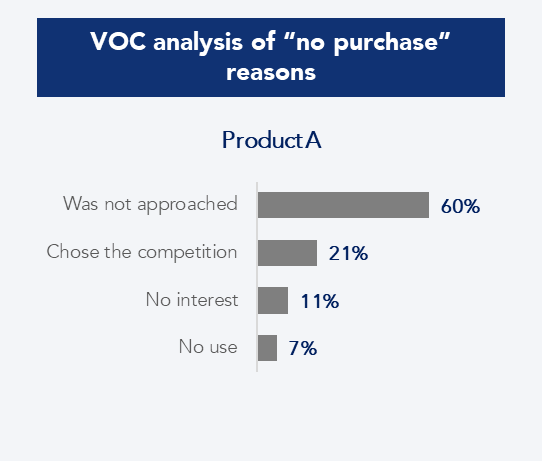
Figure 2 – VOC analysis on reasons for “non-purchase”
Customer segmentation and personalized communication
Based on the analysis, clear customer segmentation criteria were established. This segmentation made it possible to align sales content and scripts with the actual needs and priorities of each group, promoting more targeted and effective communication.
Development of visual content and sales support tools
Visual sales support materials were developed to simplify product presentations and reinforce value propositions for each type of customer. This content helped increase teams’ confidence in recommending complementary products.
Simplification and automation of administrative tasks
Several administrative tasks were automated to free up time for sales teams to focus on high-value activities. Gemba Walks were conducted to validate the new processes on-site, ensuring both effectiveness and team engagement.
Change the customer experience at your company
Results achieved through the new marketing and sales approach
The transformation in the commercial approach led to significant improvements in both financial performance and operational efficiency:
Growth in sales and profitability
Complementary product sales increased by 30%, while profitability per day rose by 50%, driven by a more effective approach aligned with customer needs.
By placing the customer at the center of commercial decision-making, the company strengthened its value proposition and improved its conversion rate.
With all initiatives combined, the company achieved estimated annual savings of €1.4 million through revenue growth and internal process optimization.
We are committed to respecting our clients’ confidentiality. While we have altered or omitted their names, the results are genuine.
See more on Marketing & Sales
Find out more about improving this business area