We synchronize assembly operations, eliminate production losses, and implement the standards that make quality and output repeatable across OEMs, Tier 1, and Tier 2 suppliers
The automotive industry runs on precision and sequence. When standards are inconsistently applied, line stoppages multiply, quality escapes downstream, and output depends on who is working and how well they remember the process. In a business with tight margins and fixed-volume commitments, that kind of variability is more than just an operational inconvenience; it is a commercial risk.
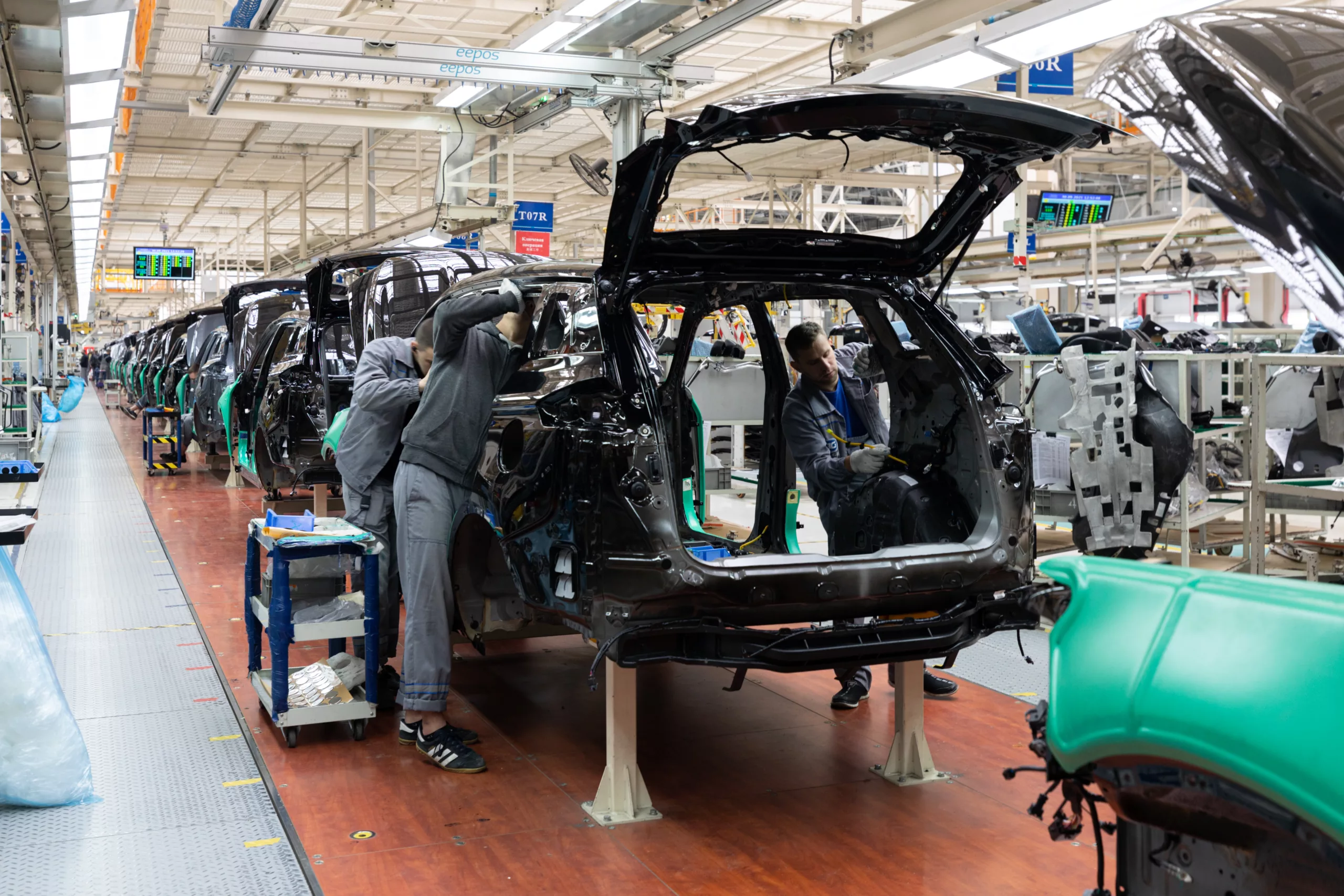
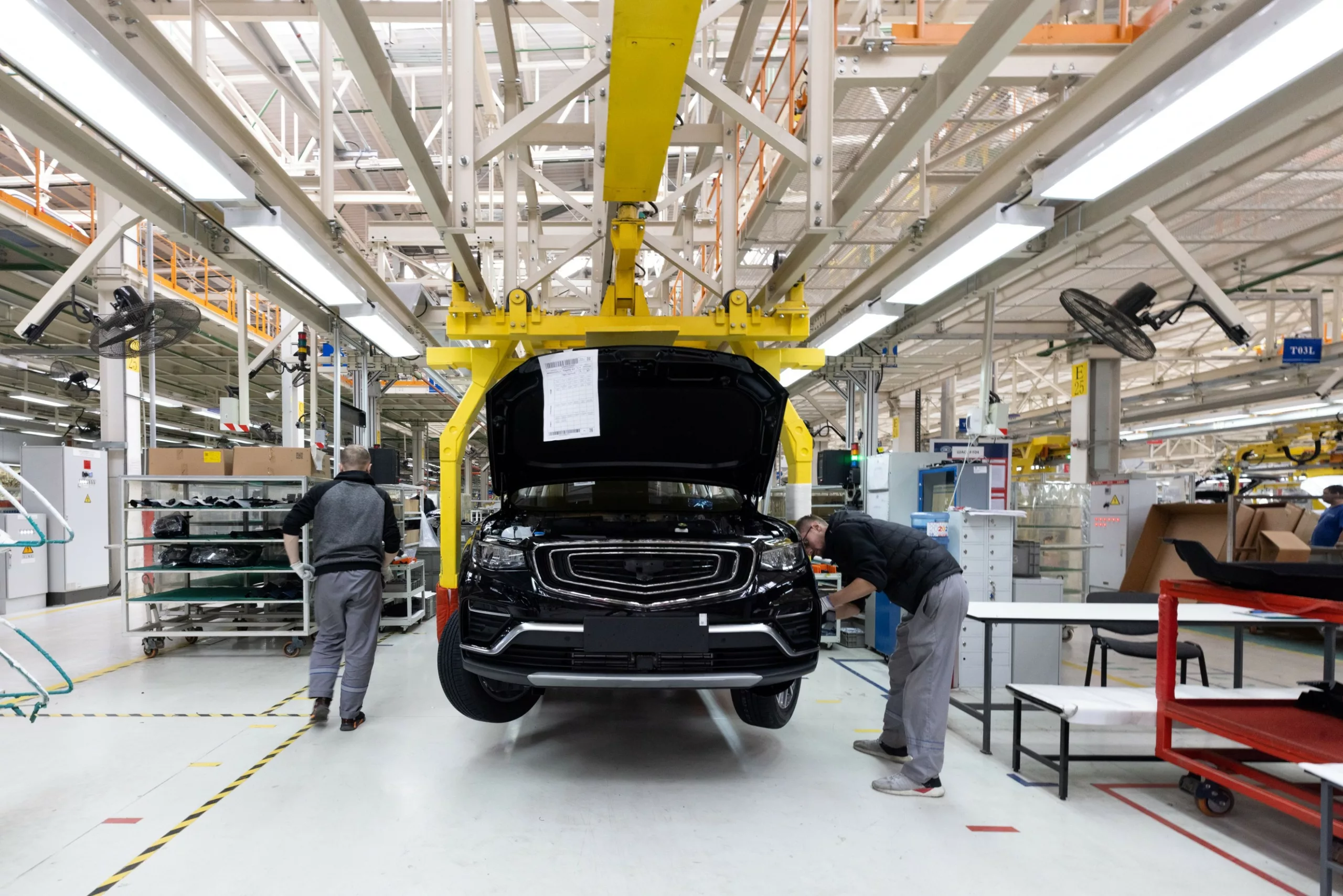
Our automotive consulting works directly on the shop floor, stabilizing processes, embedding standard work, and developing the routines that keep problems from traveling down the line. Teams develop the discipline to catch deviations early and the habits that make consistent output the norm. By building a culture of standardization and performance, automotive industry manufacturers reduce waste, protect quality at the source, and run operations that deliver reliably from parts supply to final assembly.
Design a consistent operating system for your consumer products network
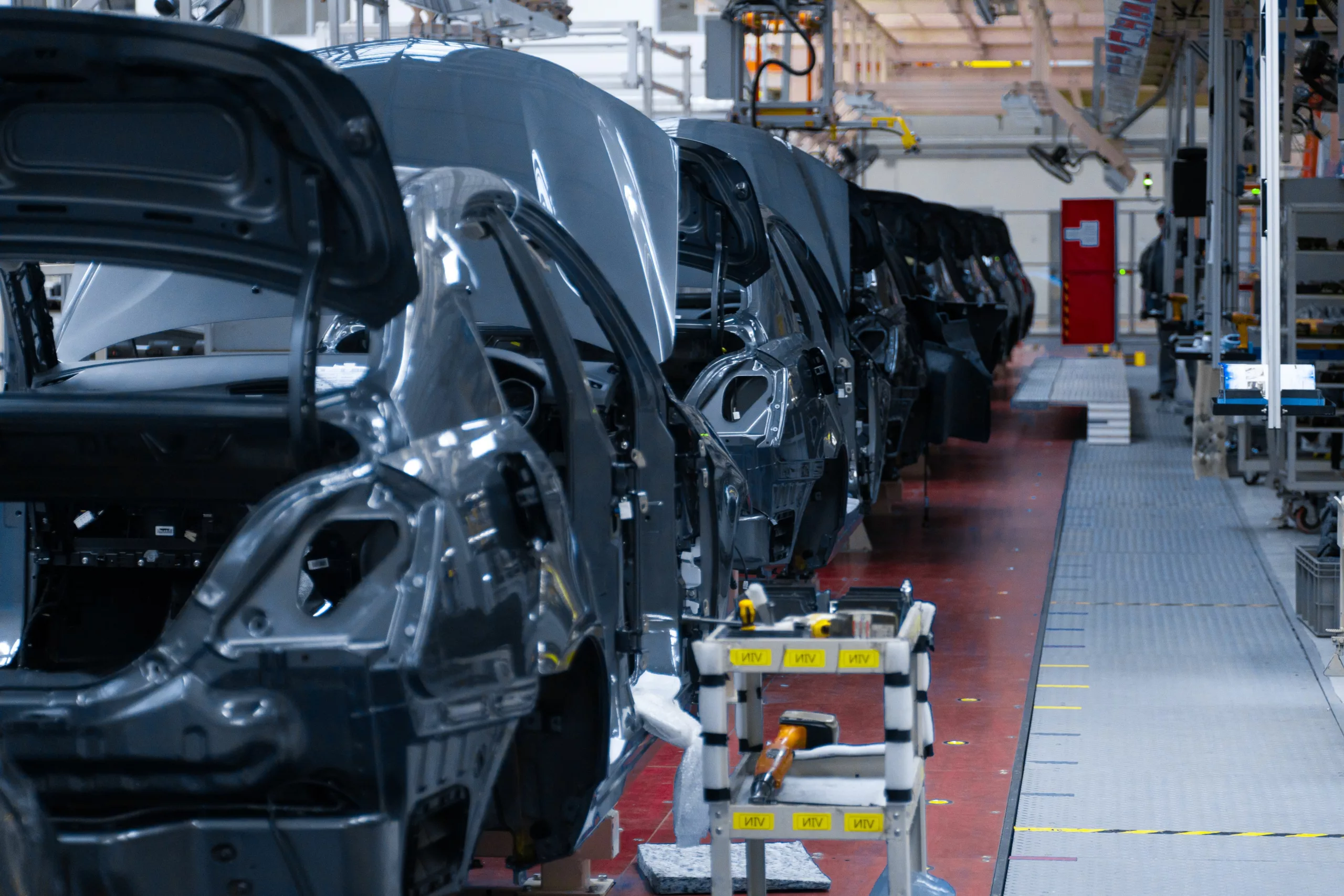
We redesign assembly layouts to eliminate gaps between stations, aligning cycle times with takt time, removing non-value-added operations, and building flow that runs to true capacity without adding headcount or floor space.
Lean line design and layout optimization to eliminate non-value-added movements and improve workflow continuity
Line balancing to align workload across stations and protect output targets at takt time.
Border of line structuring to ensure smooth material supply and collection at each production station.
One-piece flow implementation to reduce work-in-progress and expose hidden bottlenecks.
Low-cost automation to reduce manual effort on repetitive or error-prone operations without major capital investment.
TPM (Total Productive Maintenance) routines to increase equipment reliability, reduce unplanned downtime, and protect line performance between shifts.
We define and embed the best-known methods for every critical operation and build quality into the point of work so that deviations are caught where they begin, not where they land.
Standard work definition and implementation to eliminate shift-to-shift variability in output and quality.
Workplace organization (5S) to create a stable, visual work environment where deviations are immediately visible.
Autonomous quality systems, including self-inspection standards and Poka-Yoke, to detect defects at the source before they travel downstream.
Implementation of AIAG core tools (including APQP, FMEA, Control Plans, MSA, and SPC) to build quality into the process from design through production.
Structured problem-solving methods (Kobetsu Kaizen, 5 Whys, Ishikawa) to identify and permanently eliminate recurring quality failures.
Six Sigma tools, including Statistical Process Control (SPC), to reduce process variability and improve reliability.
Our quality improvement work supports the operational disciplines required for IATF 16949 certification, from standard work and defect prevention to structured problem-solving and process control.
We install the daily routines that keep problems visible, decisions close to the work, and teams improving continuously, so performance is consistent across every shift, not just the ones with the right people.
Structuring of teams by value stream to improve accountability, reduce handoff delays, and align daily activity with production objectives.
Visual team boards and daily meeting routines to track performance, surface problems, and accelerate decision- making at the point of work.
PDCA routines that embed a short, focused improvement cycle into every team’s working day.
Team leader development to build the daily management behaviors that make performance consistent across shifts.
Training in process standardization and structured problem-solving to build the capability for teams to identify and resolve issues independently.
We shift operations to a pull logic, where production is triggered by consumption and supply is synchronized with what the line actually needs, so the line runs more steadily, and inventory comes down without the system becoming more complex.
Pull planning implementation to align production with actual consumption and eliminate overproduction.
Leveling of production volume across time to balance workloads, reduce variability, and stabilize workflow.
Kanban and junjo systems to synchronize material flow and production sequences across the value stream.
Batch size reduction to improve flexibility and reduce the inventory tied up between operations.
SMED to reduce changeover time, increase line flexibility, and improve equipment utilization.
We design internal logistics so the line gets what it needs, when it needs it, through standardized replenishment cycles, dedicated supply routes, and parts delivered to the point of use without operator intervention.
Supermarket design with visual management and consumption-based replenishment to ensure parts availability at the point of use.
Mizusumashi routes with standard work cycles to supply components and collect finished products on a reliable schedule.
Kitting strategies to deliver the right parts to the right station at the right moment, reducing handling time and assembly errors.
Internal flow route design to minimize travel distance, eliminate unnecessary handling, and free operator time for value-added work.
Synchronization through kanban and junjo to maintain smooth, sequenced material flow across production areas.
We align T1 and T2 supplier cadence with the factory’s production rhythm, synchronizing inbound deliveries, agreeing on quality standards, and building the operational discipline at source that keeps disruption off the line.
Supplier scheduling alignment to synchronize inbound deliveries with production sequences and reduce variability.
Milk run logistics to standardize routes, increase delivery frequency, and reduce transportation costs and inventory.
Collaborative demand visibility processes to give suppliers a reliable signal and reduce last-minute adjustments.
Inbound quality standards and joint problem-solving to reduce incoming defects before they reach the line.
Inbound flow optimization (unloading, sorting, inspection, and storage) to reduce handling time and ensure parts reach production ready to use.
Automotive inventory management across the supply network: aligning stock levels with real consumption to reduce carrying costs and eliminate buffer inventory that hides variability.
Impact
20 to 30%
Assembly-line efficiency increase
25 to 35%
Overall productivity increase
20 to 40%
Total inventory coverage reduction
Talk to an Expert
Get in touch with us and share your business needs to get a tailored consulting or training approach
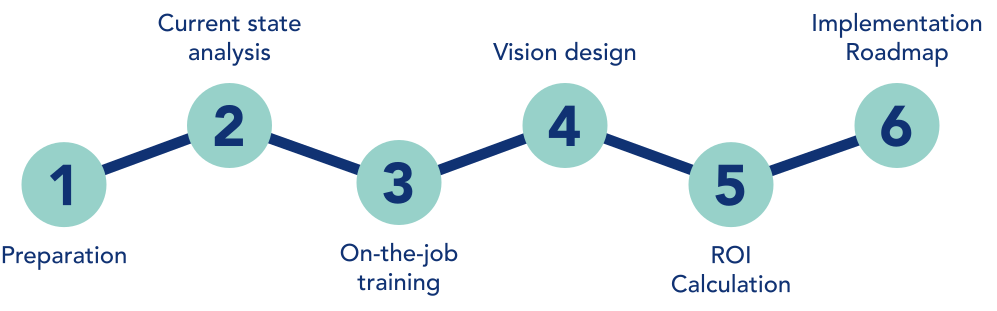
The KAIZEN™ approach begins with an end-to-end
analysis. This analysis leads to a customized solution design and implementation plan. The contribution of
the teams is critical to the success of any Lean journey. We organize our customers’ teams to break
functional silos and develop continuous improvement skills.
We support our clients in implementing
the initiative’s plan, ensuring set objectives are met.
Change Management
Kaizen Institute’s approach is practical, pragmatic,
and collaborative. We work with our customers in their Gemba – where the action takes place – and observe the
opportunities first-hand.
Our experts combine deep expertise with refined
analytical and problem-solving skills, bringing an external and fact-based perspective to the industry’s
challenges and opportunities.
We create customized solutions for every business area
Kaizen Institute works directly with the client teams, with a “Hands On” and “Teaching by Doing” approach
Kaizen Institute works directly with the client teams, with a “Hands On” and “Learning by Doing” approach