
Article
How to reduce scrap and rework in manufacturing


Scrap and rework represent significant losses in production processes, with a direct impact on costs, productivity, capacity usage, and the final quality delivered to the customer. In addition to material waste, these issues can lead to additional human and energy resources, unjustified machine downtime, delays, and increased operational complexity.
Reducing such losses requires measures that extend beyond correcting defects after they occur. It is essential to identify the source of the problems, assess their impact, understand their root causes, and intervene in the processes to prevent their recurrence.
Adopting a structured approach to continuous improvement makes it possible to reduce variability, strengthen process stability, and sustainably improve production yield.
In this article, we analyze the main causes of production scrap and rework, the key indicators for measuring them, and the methodologies that help reduce these production losses.
What are scrap and rework in production?
Scrap and rework are two forms of loss associated with products, components, or materials that fail to meet the defined requirements the first time. Although related to quality issues, they affect the production process differently and must be measured and addressed differently.
Scrap refers to materials, components, or products that cannot be recovered or reused in the intended process and must be discarded, recycled, or put to another, lower-value use. Common examples include out-of-tolerance parts, components damaged during processing, or raw material rendered unusable due to cutting or machining errors.
Rework occurs when a product or component does not initially meet the requirements but can be corrected through additional operations. These operations may include remachining, adjustments, repairs, reinspection, or repeating a process step.
A production defect, however, refers to any deviation from the defined specifications or requirements. A defect can result in scrap, require rework, or, if not detected internally, reach the customer and lead to returns, complaints, or warranty costs.
Thus, not all defects generate scrap, but both scrap and rework result from situations in which the process did not produce correctly the first time.
What is the impact of scrap and rework on industrial costs?
The impact of scrap and rework on industrial costs is significantly greater than the value of the lost raw material or the additional hours needed to correct a product. These losses affect several elements of the operation and can significantly reduce production profitability.
In the case of scrap, the cost includes not only the discarded material but also all the resources consumed up to the point the defect is detected, such as labor, machine time, energy, tools, inspections, and material handling.
The later the problem is identified in the process, the higher the cumulative cost tends to be. Rework adds operations that were not planned in the normal production flow. This means using people, equipment, and capacity again to correct something that should have been produced correctly the first time.
Beyond the direct cost, rework can create queues, increase work in process, extend lead times, and interfere with other production orders.
There are also indirect costs, often less visible, such as lost capacity, delivery delays, overtime, the need for additional inventory, greater quality management effort, and, when defects reach the customer, returns, complaints, or warranty costs.
For this reason, assessing the true cost of scrap and rework requires a comprehensive view of non-quality costs.
Quantifying these losses makes it possible to prioritize the problems with the greatest economic impact and direct improvement efforts toward the causes with the greatest improvement potential.
Discover the real cost of non-quality in your production process
How to measure scrap and rework?
Measuring scrap and rework correctly is essential to understand the scale of losses, identify where the main problems are concentrated, and track the effectiveness of improvement actions.
The analysis should not be limited to the number of rejected parts; it should also consider first-pass yield, the cost associated with the losses, and the impact on the overall performance of the process.
Scrap rate
The scrap rate measures the proportion of units, weight, or value produced that is rejected and cannot be recovered for the intended process.
It can be calculated, for example, using the following formula:
Scrap rate (%) = Rejected quantity ÷ Total quantity produced × 100
This indicator should be tracked over time and, whenever possible, broken down by product, process, equipment, shift, material, or defect type.
This segmentation makes it easier to identify the main sources of loss and helps set priorities for action.
First Pass Yield and process profitability
First Pass Yield (FPY) measures the percentage of units that complete a process correctly the first time, without the need for rework, repair, reinspection, or repeated operations.
FPY (%) = Units approved the first time ÷ Total units entering the process × 100
This indicator is particularly important because it reveals losses that can remain hidden when only final production is analyzed.
A process can meet the planned quantity and still consume significant capacity on rework.
When a process has multiple stages, you can analyze overall yield by tracking cumulative performance across operations, making it possible to identify where in the flow the greatest quality losses occur.
Other relevant key quality and performance indicators
For a more complete view, the scrap rate and FPY should be complemented by other indicators, such as the rework rate, the cost of non-quality, the number of defects per unit, the time spent on corrections, customer complaints, and warranty costs.
It is also important to correlate quality indicators to operational metrics such as productivity, OEE, lead time, adherence to the production plan, and capacity utilization.
This analysis helps understand how quality issues affect the overall performance of the operation and better quantify the potential associated with reducing them.
What are the main causes of scrap and rework?
The causes of scrap and rework vary by production process, but they generally relate to a combination of materials, equipment, work methods, and process conditions. Identifying and distinguishing these causes is essential to avoid superficial corrective actions and address the true root causes of problems.
The most common causes include:
- Materials and supplier quality: Out-of-specification raw materials or components, batch-to-batch variability, damage during transport or storage, and supplier quality issues can cause defects throughout the production process.
- Process variability and parameters: Temperatures, speeds, pressures, cycle times, tolerances, or other parameters outside the defined conditions can create instability and increase the occurrence of nonconforming products.
- Equipment, tools, and maintenance: Tool wear, breakdowns, misalignments, improper calibration, or lack of maintenance can affect the precision and repeatability of the process.
- Work methods and standardization: The absence of clear standards, outdated instructions, or different ways of performing the same operation increases variability and the risk of defects.
- Training, working conditions, and human error: Insufficient training, unintuitive interfaces, inadequate ergonomic conditions, or processes that are excessively dependent on human intervention can contribute to operator errors. In these cases, it is important to analyze the process conditions that allowed the error to occur, rather than blaming it solely on the operator.
The analysis of these causes should be based on data and direct observation of the process. The goal is to understand why the defects occur and act on the conditions that cause them, reducing the likelihood of recurrence.
How to reduce scrap and rework?
Reducing scrap and rework requires a progressive and structured approach to quality.
Rather than reinforcing final inspection, the goal is to shift from a reactive approach focused on correcting defects to increasingly stable, robust processes that prevent or detect problems as close to the source as possible.
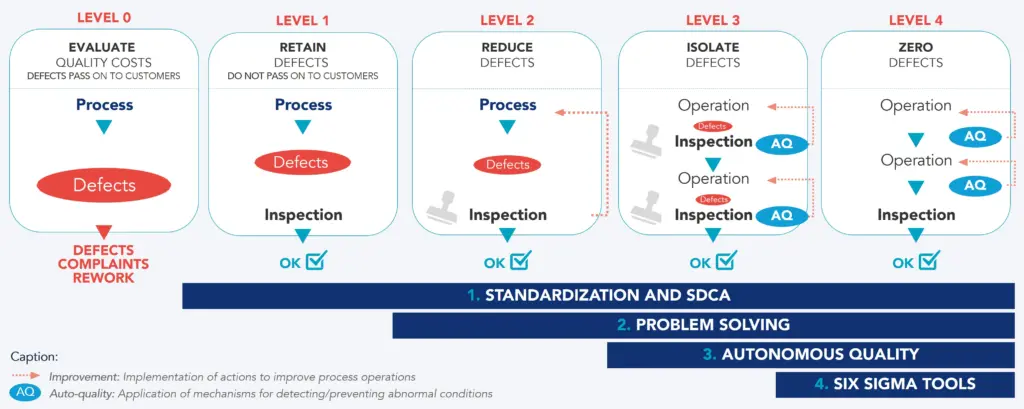
Figure 1– KAIZEN™ Total Quality Management (TQM) Model
Standardize and stabilize processes
Sustainably reducing defects begins with creating stable and repeatable process conditions. This involves defining clear work standards, process parameters, quality criteria, and control methods to ensure operations are carried out consistently.
The SDCA cycle (Standardize, Do, Check, Act) helps maintain these conditions and quickly identify deviations. Without stability and standardized work, it becomes difficult to distinguish one-off problems from structural causes and to assess the true impact of improvement actions.
Solve problems and eliminate the root causes
As the process stabilizes, it is necessary to address quality problems in a structured way, adjusting the depth of analysis to their complexity.
For simple problems or those with a more straightforward resolution, the 3C tool can be used, for example, organized into the following steps: define the problem, analyze its causes, identify and implement countermeasures, and verify the results obtained. Root cause analysis can draw on, for example, the Ishikawa diagram or the 5 Whys. This approach makes it possible to quickly solve everyday problems without losing the rigor needed to prevent their recurrence.
For complex, chronic problems, or those with multiple potential causes, a more in-depth approach, such as kobetsu KAIZEN™, is more appropriate. This method structures the resolution process into nine steps, from clarifying the scope and studying the initial situation to root cause analysis, solution testing, results confirmation, standardization, and replication of the lessons learned.
In both cases, the goal is to move beyond merely addressing symptoms and eliminate the conditions that cause scrap and rework, ensuring that the implemented solutions produce sustainable results.
Embed quality into the operation itself
As the process evolves, quality must be ensured at the very point where the work is performed. To do so, it is important to start by understanding where defects are generated and where they are detected along the production flow.
The auto-quality matrix allows us to visualize this relationship between the origin and detection of defects. By identifying in which operation each defect is created and at what point it is discovered, it becomes possible to understand how far problems have progressed through the process before being identified. The greater the distance between generation and detection, the greater the impact tends to be.
Based on this analysis, self-quality resources should be strengthened, with the goal of bringing detection closer to the source of the problem and, whenever possible, preventing the defect from occurring.
The main resources include execution and self-check standards, which make it possible to verify the quality of the work at each operation before it moves to the next step; poka-yoke devices, which help prevent errors or make abnormal conditions immediately visible; jidoka, which detects anomalies and stops or signals the process before the defect can propagate; and, finally, statistical process control (SPC), used to monitor process variability and identify deviations before they result in defects.
The intended evolution is clear: moving from a system in which defects are found at the end of the process to one in which they are prevented or detected at the source, reducing the spread of problems and increasing the ability to produce the first time correctly.
Reduce variability withSix Sigma tools
In processes with an adequate level of stability and reliable data, Six Sigma tools make it possible to further reduce variability and improve process capability.
Techniques such as capability studies, measurement system analysis, and design of experiments help identify less obvious sources of variation, understand relationships between variables, and define more robust operating conditions.
As variability is reduced and the process becomes more robust, the likelihood of defects also decreases, bringing the operation closer to a zero-defect condition.
How can technology help reduce defects and waste?
Technology can strengthen operations’ ability to detect deviations earlier, understand patterns of occurrence, and prevent defects before they lead to scrap or rework.
Automated process data collection allows for real-time monitoring of critical parameters and the identification of variations that could compromise quality. Sensors, machine vision systems, and automated inspection mechanisms can accelerate the detection of anomalies, bringing detection closer to the point where the problem originates and reducing the risk of continued production under incorrect conditions.
Data analysis can also help correlate defects to variables such as equipment, tools, raw material, supplier, shift, or operating parameters. In processes with greater volume and complexity, on the other hand, analytical and artificial intelligence models can identify patterns that are difficult to recognize through conventional analysis and support the prediction of conditions associated with a higher risk of defects.
In maintenance, monitoring equipment condition can anticipate situations such as tool wear, misalignments, or component degradation before they affect product quality. Similarly, digital systems can support standards management, traceability, and rapid response to deviations.
However, technology must be applied selectively and with a problem-driven focus.
The guiding principle should be to start with the problem and the process, then apply technology where it adds prevention, control, and decision-making capability.
Learn how to bring your defect detection closer to the root of the problem
Reducing scrap and rework requires addressing the root cause
Sustainably reducing scrap and rework means going beyond inspection and defect correction. The focus should be on creating stable processes, structured problem-solving, error prevention, and detecting anomalies as close as possible to the point where they occur.
The combination of standardization, problem-solving, auto-quality, variability reduction, and selectively applied technology makes it possible to progressively improve process performance and increase the ability to produce correctly the first time.
More than an isolated quality project, this approach should be part of daily operations management. When problems are made visible, analyzed based on data, and turned into new standards, defect reduction no longer depends on one-off actions and becomes part of a continuous improvement system.
The result is an operation with less waste, lower production costs, higher productivity, better use of capacity, and greater reliability in the quality delivered to the customer.
Kaizen Institute supports organizations on this journey, combining quality consulting, focused on standardization, structured problem-solving, and auto-quality, with digital consulting in autonomous and flexible operations, which applies technology selectively to accelerate anomaly detection and strengthen decision-making capability. This combination allows companies to advance consistently toward more stable, more robust processes that are ever closer to zero defects.
Still have some questions about scrap and rework?
Can AI reduce production errors and scrap?
Yes. Artificial intelligence in industry can help reduce production errors, scrap, and rework by analyzing large volumes of data, identifying patterns, and detecting abnormal conditions early. It can be applied, for example, to defect prediction, machine vision, predictive maintenance, process parameter optimization, and identifying relationships between variables that would be difficult to detect manually.
How does PFMEA relate to reducing scrap and rework?
PFMEA (Process Failure Mode and Effects Analysis) helps reduce scrap and rework through a preventive approach to process risks. Insteadz of acting only after a defect occurs, it allows for the early identification of potential failure modes, their causes, and their respective effects.
The analysis helps prioritize the most relevant risks and define actions to reduce the likelihood of occurrence or improve detection capability. When used dynamically and updated with learning from real problems, PFMEA helps make the process more robust and reduce the recurrence of defects, scrap, and rework.
How is Lean Manufacturing related to reducing scrap and rework?
Lean Manufacturing seeks to eliminate waste and create more stable, efficient processes. Defects, scrap, and rework represent waste because they consume materials, time, capacity, energy, and resources without adding value for the customer.
In this context, quality is also an essential condition for creating flow. When there are high levels of defects and rework, it becomes difficult to produce consistently with low levels of inventory, small batch sizes, or pull production, increasing the need for buffers, reinspections, and replanning. Many of the Lean Manufacturing tools help stabilize processes, prevent errors, reduce variability, and detect anomalies earlier, strengthening the ability to produce it right the first time (RFT).
These principles apply to any type of operation. In discrete manufacturing industries, for example, the focus may be on machining, assembly, or welding operations, whereas in continuous processes it centers mainly on controlling process parameters and conditions.
See more on Quality
Find out more about improving this business area