
Case Study
Operational excellence in printing and packaging: the Moquin Press Lean case
Goals: implement a Lean operating system to eliminate waste, stabilize processes, and maximize equipment efficiency without additional capital investment


+14%
OEE
−26%
Makeready time
+$1.69M
Annualized impact
The printing and packaging industry operates in an increasingly demanding and competitive environment. Growing demand for smaller, more diverse orders, shorter lead times, and higher levels of customization puts constant pressure on operational efficiency and business margins. Against this backdrop, the ability to maximize the performance of existing equipment, without additional capital investment, has become a critical competitive differentiator. Organizations that can eliminate waste, standardize processes, and consistently operate close to their equipment’s nominal capacity are redefining performance standards across the industry.
Moquin Press and its commitment to operational excellence
Moquin Press is a family-run print and packaging company founded in 1985 and headquartered in Belmont, California. With around 100 employees and two manufacturing facilities, it produces packaging, labels, and commercial print, serving customers in the beauty, food, beverage, and Consumer Packaged Goods (CPG) sectors across North America.
Over four decades in business, the company has built an organizational culture grounded in operational discipline and continuous improvement. Lean Manufacturing principles are embedded throughout the organization, enabling teams to identify waste, standardize processes, and systematically improve performance. To support this approach, the company invests in developing its people through structured training programs, with all managers certified as Six Sigma Yellow Belt and currently working toward Lean Practitioner certification.
It was on this foundation that Moquin Press developed the project that earned it recognition at the KAIZEN™ Awards North America 2026, in the Operational Breakthrough category, by transforming its most productive press into a stable, high-performance system.
Get inspired by the success stories behind the KAIZEN™ Awards North America
Opportunity in the offset printing operation
Printing was the step with the most leverage in the value chain: improving it would lift throughput for the whole plant. The company had already invested in a high-spec press, which gave it a strong base. About 57% of the press’s available capacity was still unused, which meant there was major room to grow without buying new equipment. The order mix involved frequent changeovers, so the clearest gains were in shortening makeready times, making the process more consistent and cutting micro-stoppages. Those changes would turn the press’s nominal capacity into real output.
Starting point: capacity ready to unlock
In December 2025, the press’s OEE was 42.8%. That number set the baseline for the improvement program. With more than half of available capacity still unused, the operation had a clear chance to turn the equipment’s technical potential into consistent production results. Closing that gap would directly strengthen competitiveness and profitability.
Makeready: the biggest lever for time
Average makeready took 23 minutes per job. With about 12 changeovers a day across two 8-hour shifts, makeready was the single biggest chance to win back productive time. Internal and external makeready tasks had not yet been separated and organized, which opened a clear path for process optimization. Every minute saved per changeover would add up across the whole day.
Standardization: turning operator know-how into shared practice
The operators had built up valuable hands-on knowledge, but it hadn’t yet been captured in a documented work standard at the workstation. Standardizing those practices would make results consistent across shifts, make the operation less dependent on any one person, and help the team spot deviations early.
Monitoring: bringing data closer to the floor
Performance tracking ran apart from the daily operating routine, and the team had no single shared data source. Building monitoring into daily work, with one source of truth, would give everyone an objective, real-time view of the indicators. That would support evidence-based decisions and show which improvement actions were working.
Where is the waste in your operation?
The approach to transforming the printing operation
To address these challenges, a structured 90-day improvement program was implemented, led from the press floor. The approach combined Lean Manufacturing principles with disciplined execution and continuous monitoring through the Heidelberg Performance Portal – a single data source shared by the entire team.
Built on continuous improvement methodologies such as structured problem-solving, SMED, visual management, standard work, and PDCA cycles, the program helped eliminate waste, stabilize processes, and sustainably improve operational performance.
The project team had six members: a press operator, a second pressman, the production manager, the plant manager, the scheduler, and the quality lead. Daily 15-minute standups were held at the press, and every improvement was proposed by the press crew, piloted on one shift and, once validated, standardized across the entire operation – with no capital investment, no additional labor, and no external system changes.
Diagnosis and prioritization
The project began with a diagnostic phase based on A3 problem-solving, supported by Ishikawa analysis and the 5 Whys methodology, to identify the root causes of inefficiencies, including micro-stoppages, long makeready times, and process inconsistencies. The GUT Matrix (Gravity / Urgency / Tendency) was used to prioritize the highest-impact actions. In parallel, an audit of the 7 wastes (Muda) was carried out, identifying losses from waiting, unnecessary motion, over-processing, and defects throughout the production cycle.
SMED study and activity separation
A SMED study was carried out, video-timing two full changeovers. The analysis identified 11 activities that could be converted from internal work, performed with the press down, to external work, performed while the press is running, specifically plate staging, ink-key presetting, and wash-up kit preparation. Changeover procedures were subsequently standardized and optimized, significantly improving the efficiency and repeatability of job changeovers.
Discover the SMED methodology and boost productivity
Standardization and visual management
A color-coded, laminated visual work standard was developed and mounted on the press console. From then on, every changeover followed the same 14-step sequence, regardless of the operator. In addition, the 5S methodology was applied to organize the workplace, reduce search time, and reinforce operational discipline.

Figure 1 – 5S methodology
Pre-kitting and material flow
A pre-kitting station was set up next to the press delivery. Plates, wash-up kits, and color targets for the next job were now staged during the current run, which removed approximately 4 minutes of downtime per changeover. In addition, the integration of ink-key presets directly from prepress eliminated manual re-dialing, saving another 2 minutes or so per changeover. A kanban system was also introduced to improve material flow and reduce interruptions to the operation.
Preventive maintenance and sustaining results
The preventive maintenance program was strengthened to increase equipment reliability and minimize unplanned downtime. To sustain the gains achieved, execution was structured around PDCA cycles and 5W2H action plans, with explicitly defined owners and deadlines, and the Heidelberg Performance Portal served as the daily scoreboard – with OEE, makeready time, and job-level results visible to the entire team at the start of every shift.
The combination of structured problem-solving, makeready time reduction, process standardization, visual management, and team engagement created a more stable and predictable operating system. These methodologies are commonly used in Lean transformation programs to increase productivity, improve equipment utilization, and sustain results over time.
Results achieved through the continuous improvement program
Implementing the Lean operating system delivered significant, measurable results across multiple performance indicators, all verified and audited through the Heidelberg Performance Portal, over the period from December 2025 to March 2026.
Quantitative results
- OEE increased from 42.8% to 48.8% (+14%), reaching the ≥48% target in week 12 through process improvement alone;
- Makeready time reduced from 23 to 17 minutes (−26%), reclaiming +312 hours of press time per year;
- Productivity per shift rose 13.7%, generating an annualized revenue impact of +$1.69M without capital expenditure.
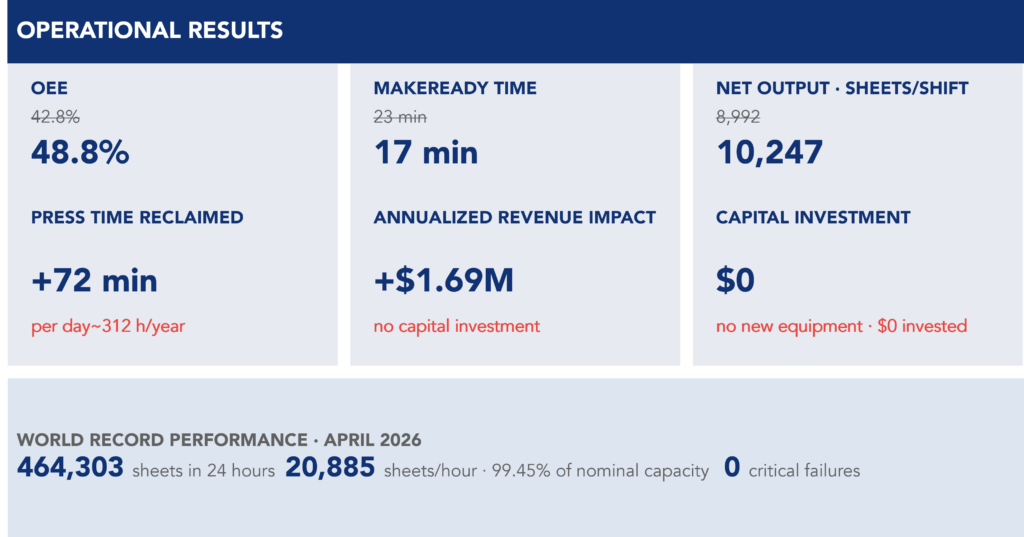
Figure 2 – Operational results of the improvement program
Qualitative results
Beyond the performance indicators, the program drove a significant cultural shift in the approach to operations. Problems and waste came to be treated as opportunities for analysis and improvement, encouraging operators to identify and report them proactively.
The press crew’s active participation in developing solutions, with direct involvement in the review and improvement process, strengthened individual commitment to collective results, establishing a sustainable continuous improvement practice that can be replicated on other production lines.
A global performance milestone
In April 2026, Heidelberg, manufacturer of the Speedmaster XL 106 and the body responsible for certifying the performance of this equipment worldwide, audited an exceptional result achieved by Moquin Press. The team produced 464,303 sheets in 24 hours, at an average speed of 20,885 sheets per hour, equivalent to 99.45% of the nominal capacity of the press, with no critical failures recorded. Although this result was not a direct objective of the improvement program, it directly resulted from a stable, optimized, and controlled production system.
Moquin Press’s operational excellence is an example of what’s possible in the printing and packaging industry.
Kaizen Institute offers specialized solutions for the discrete manufacturing industry, helping organizations eliminate waste, standardize processes, and build a sustainable culture of continuous improvement.
See more on Manufacturing Operations
Find out more about improving this business area