
Case Study
Lean Improvement in Action at United Drug
Goals: improve operational efficiency and productivity by identifying and eliminating waste across end-to-end warehouse and logistics processes through a structured Value Stream Analysis


–35%
A-Frame exception rate
+1,500
Units/hour/person
United Drug operates in a highly critical and regulated environment, where operational performance directly supports the timely distribution of medicines. In this context, efficiency, reliability and accuracy are essential to ensure that customers receive the right product, in the right quantity, at the right time — a requirement with potentially life-saving implications for patients.
As operational complexity increases and volumes continue to grow, the organisation recognised the need to strengthen its processes, reduce waste and build a more agile and resilient operation capable of sustaining future demand.
Laying the foundations for a leaner, more agile operation
United Drug is advancing its transformation journey with a renewed focus on Lean excellence. The company has committed to embedding continuous improvement across its operations, with the objective of improving efficiency, driving productivity and enhancing quality in a sustainable way.
Rather than pursuing large-scale, breakthrough changes, United Drug adopted a structured, incremental approach to improvement, centred on collaboration, data-driven decision-making and frontline engagement.
As part of this journey, United Drug partnered with the Kaizen Institute to launch a Value Stream Analysis (VSA) initiative, which represents the first stage of a broader three-phase Lean transformation programme, with completion targeted for early 2026.
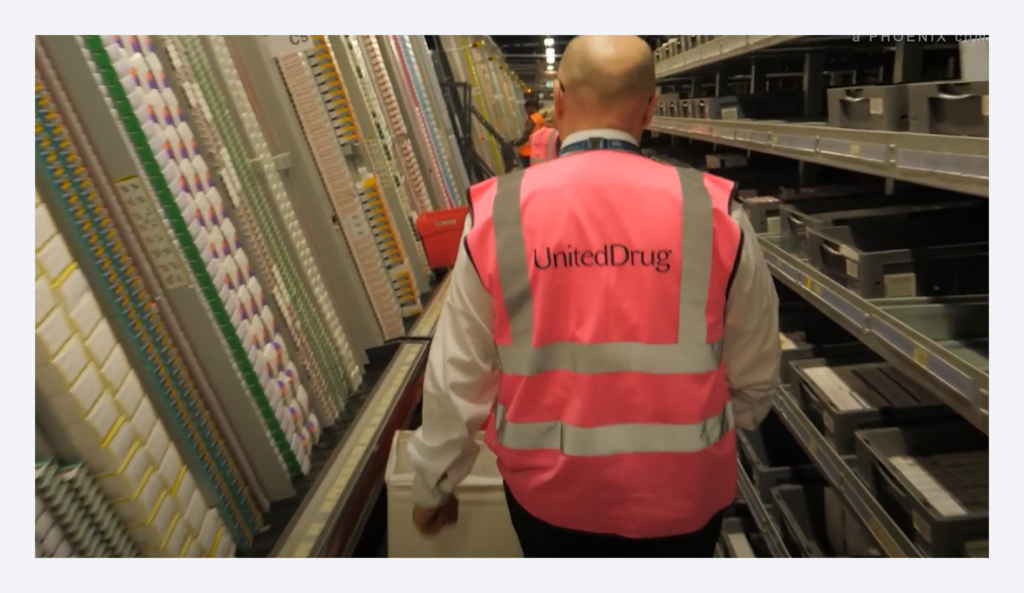
Figure 1 – Frontline warehouse operations at United Drug
Breaking through silos, constraints and resistance to change
As United Drug embarked on the first phase of its Lean transformation, the Value Stream Analysis revealed a set of interconnected operational and cultural challenges that were limiting performance and scalability.
Limited process visibility and end-to-end flow understanding
Warehouse and logistics activities were largely managed within functional silos, making it difficult to fully understand how value flowed across the organisation. Teams lacked a shared, end-to-end view of processes, which constrained their ability to identify waste, bottlenecks and improvement opportunities with the greatest overall impact.
Productivity constraints in critical warehouse processes
Key operational processes, particularly within the decant area, were not delivering the required productivity levels to support current and future demand. Output per person was limited, and existing layouts, equipment positioning and work methods were restricting efficiency.
High levels of manual intervention in automated systems
Although automation played a central role in order fulfilment, a significant proportion of volume processed through the A-Frame system was diverted into exceptions, requiring manual intervention. This increased handling effort and workload, reducing the overall effectiveness of the automated flow.
Physical workload and operational strain
Handling large volumes of totes — the containers used to move products through the warehouse — placed considerable physical demands on warehouse teams. This not only affected efficiency but also highlighted the need to improve flow, reduce unnecessary handling and make daily work easier and more sustainable for operators.
Initial resistance and scepticism towards performance targets
At the outset, a considerable number of employees questioned whether the proposed productivity targets were realistic or achievable. Without visible proof and frontline involvement, there was a risk that improvement initiatives would lack buy-in and fail to be sustained over time.
Discover how Lean supports pharmaceutical operations
From analysis to execution: making change happen
To address the challenges identified during the diagnostic phase, United Drug adopted a structured, collaborative and incremental improvement approach, with Value Stream Analysis acting as the foundation for action.
Applying Value Stream Analysis as a diagnostic tool
Value Stream Analysis is a Lean method used to examine the full set of activities required to deliver value to the customer, distinguishing between value-adding and non-value-adding work. By analysing processes end to end, the VSA helps organisations identify inefficiencies, sources of waste and improvement opportunities with the greatest operational impact.
At United Drug, the VSA was used as a diagnostic starting point to understand how warehouse and logistics processes performed across the entire flow, from initial handling through to order fulfilment. This created a fact-based view of current performance and enabled teams to prioritise improvement initiatives in a structured and focused way.
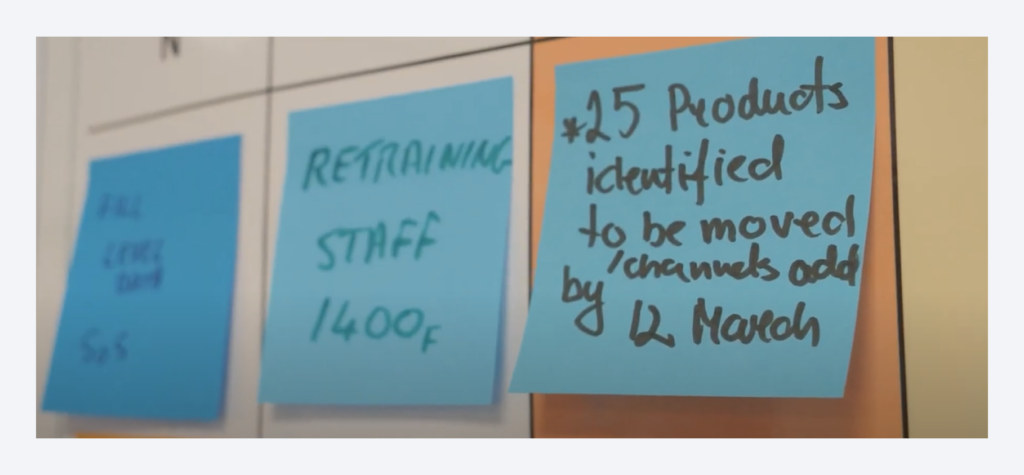
Figure 2 – Visual management used during Value Stream Analysis workshops
Cross-functional and collaborative workshops
The VSA was conducted through a series of collaborative workshops involving employees from different roles and levels of the organisation. This multidisciplinary approach was essential to ensure that process analysis reflected operational reality and that improvement opportunities were grounded in frontline experience.
By stepping away from day-to-day activities, teams were able to challenge existing routines, identify bottlenecks and develop a shared understanding of how value moved through the organisation.
Bottom-up engagement and team involvement
Employees at all levels — from warehouse operators to managers — were actively involved from the outset. Their operational knowledge was central to identifying issues, challenging existing routines and proposing practical improvements.
This inclusive, bottom-up approach helped overcome initial scepticism, built ownership of results and ensured that changes were grounded in day-to-day operational reality.
Incremental improvement and standardisation
Rather than implementing large-scale changes all at once, the organisation focused on making small, manageable improvements that could be tested, sustained and embedded over time. Once improvements proved effective, processes were standardised and rolled out more broadly.
As Rajesh Purcell, Head of Operations, explained:
“One change at a time allows us to have better results because we’re not rushing into making big changes and not being able to sustain the changes that we make.”
Training and retraining played a key role in ensuring consistency and reinforcing new ways of working across teams.
Decant process redesign
The decant process was prioritised as a critical constraint. Through value stream mapping, the team identified opportunities to improve productivity by adjusting layouts, relocating equipment and refining work methods.
Clear productivity targets were established, progress was monitored closely, and daily feedback loops were introduced to track performance and reinforce engagement. Over time, the redesigned process was standardised and adopted across the operation.
A-Frame exception reduction initiatives
Given the central role of the A-Frame system in order fulfilment, targeted actions were implemented to reduce exceptions and manual intervention. These actions included analysing operational data, reviewing channel configuration, adjusting product locations and addressing root causes of exceptions.
Frontline teams were closely involved in defining the future-state vision for the A-Frame, ensuring that improvements reduced physical workload and supported smoother flow through the warehouse.
“Their input is also very important because they are there every day so they know exactly what is going wrong and what could make their life easier and better. So we’re working together with them. “ – Vaida Kareiviene, Evening shift warehouse manager
Daily performance communication
Regular team meetings were introduced to review results, share performance data and recognise progress. These routines increased transparency, reinforced accountability and allowed teams to see the direct impact of their improvement efforts on daily operations.
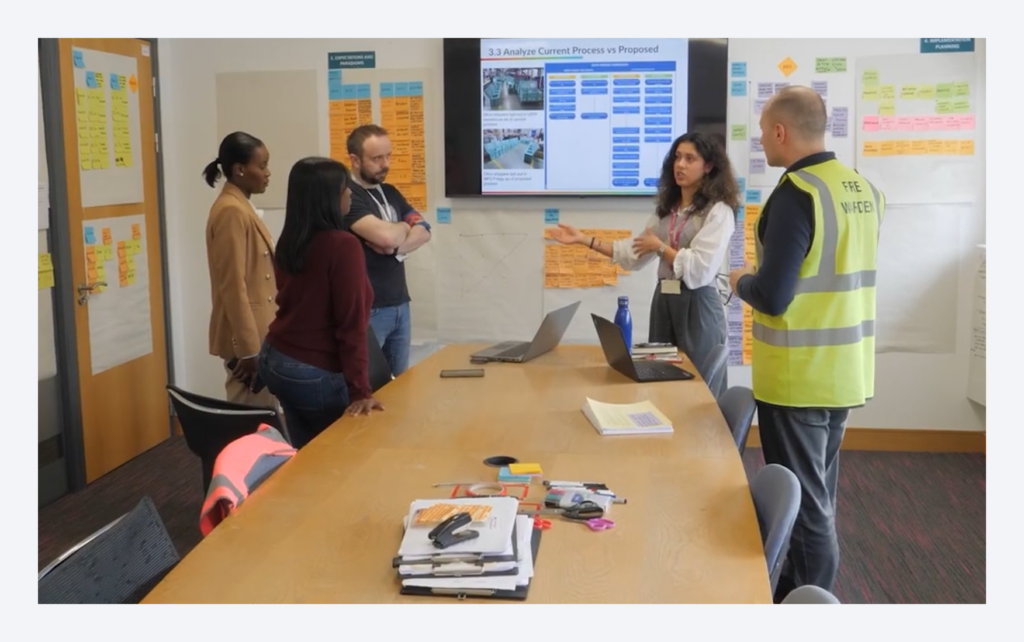
Figure 3 – Team daily meeting
Tangible performance gains across operations and teams
The outcomes of the first phase of the Lean journey can be observed both in measurable performance improvements and in the way teams work, engage and take ownership of continuous improvement.
Quantitative results
The first phase of United Drug’s Lean transformation delivered clear, measurable performance improvements in critical warehouse operations.
- Decant process productivity doubled, increasing from 1,500 to 3,000 units per person per hour, exceeding the initial target defined during the Value Stream Analysis.
- A-Frame exception rates decreased from 10% to 6.5%, significantly reducing manual intervention within automated order fulfilment.
These results confirm the effectiveness of focusing improvement efforts on key constraints identified through end-to-end process analysis.
Ready to unlock measurable performance gains with Lean?
Qualitative results
In parallel with the quantitative gains, the project generated significant qualitative benefits across operations and teams.
- Reduced physical workload for warehouse operators through improved flow and fewer manual interventions.
- Greater transparency and alignment, supported by daily performance meetings and shared visibility of results.
- Stronger employee engagement and ownership, driven by bottom-up involvement in identifying issues and implementing solutions.
- Increased confidence in continuous improvement, as teams saw that incremental changes delivered tangible results.
“From the start, obviously we got a lot of feedback of people not buying in, that the number was too high and we couldn’t achieve it. But from buying in from the bottom up, we were able to prove that the numbers were achievable and, slowly but surely, we achieved them. Today, people are proud of what they’ve achieved.” – Anthony Flynn, UDS Goods In Manager
When people believe, performance follows
Together, these outcomes reinforced a more collaborative and improvement-driven working environment, strengthening United Drug’s ability to sustain change over time.
United Drug’s improvement journey highlights the power of teamwork and shared ownership in driving meaningful change. As with many transformation initiatives, the early stages were met with scepticism and a lack of confidence in whether the proposed improvements could be achieved.
As the work progressed and results became visible, perceptions began to shift. Tangible outcomes helped build trust, encouraged engagement and brought people together around a common goal. Over time, initial resistance gave way to collaboration, pride and a stronger sense of collective responsibility.
This combination of operational progress and cultural change proved critical to success. By enabling teams to experience the impact of their efforts firsthand, United Drug strengthened both performance and mindset, laying a solid foundation for sustained improvement and future growth.
As Paul McCormack, Warehouse Manager, reflected:
“Kaizen is a Japanese word, but it means slow continuous improvement. And that’s what it is. It’s just a slow, incremental improvement. And people shouldn’t be afraid of it. They should embrace it. It’s not something to be afraid of. It’s actually something to make your life better.”
See more on Pharmaceuticals
Find out more about transformation in this sector
See more on Warehousing and Distribution
Find out more about improving this business area