

Culture of streamlining operations
Food and Beverage Manufacturing Consulting
We implement the operating systems that make production efficient, predictable, and built to last
With raw materials accounting for nearly half of total costs, inefficiencies in food and beverage manufacturing don’t stay hidden for long. Production delays, quality inconsistencies, and rising energy costs translate directly into margin erosion, and rigid processes make the problem harder to contain.
Our food & beverage consulting goes straight to where performance is lost: unstable production flows, unreliable equipment, excessive changeover times, and the absence of management routines that make problems visible before they escalate. We build the operational discipline that makes quality consistent, costs controllable, and output predictable. By building a culture of streamlining operations, food and beverage manufacturers gain the resilience to perform at every level of the supply chain.
Want to improve efficiency and quality
in
Food & Beverage Operations?
How we can help
Improve operational efficiency

Enhancing efficiency with lean solutions like structured problem-solving for equipment failures, planned, predictive, and autonomous maintenance (TPM), and SMED to reduce changeover time.
Increase material yield
Improve process control with Lean Six Sigma, eliminate machine inefficiencies, reengineer products to reduce waste, and reintroduce by-products.
Increase resource productivity
Improve resource productivity with line design, develop training plans for standard compliance, implement synchronized logistics loops between production and logistics, and optimize warehouse design.
Simplify the food & beverage supply chain
Refine stock management policies, implement planning algorithms based on historical data, and reduce supplier dependence to minimize sourcing variability.
Develop sustainable operations
Leverage data analytics for a zero-carbon roadmap, measure energy consumption in real-time, conduct cost-benefit analyses to identify critical equipment in energy performance, and decrease material consumption.
Harness the power of data
Go Digital by combining the toolboxes of automation and digital information to transform your operations and differentiate your offer.
Client results
Learn how to implement it in your organization
Impact
15 to 25%
Average productivity increase
45 to 55%
Average setup change over time reduction
3 to 8%
Average materials savings increase
10 to 20%
Average raw materials costs reduction
5 to 10%
Average quality loss reduction
20 to 30%
Average Overall Equipment Efficiency (OEE) increase
15 to 25%
Average productivity increase
45 to 55%
Average setup change over time reduction
3 to 8%
Average materials savings increase
10 to 20%
Average raw materials costs reduction
5 to 10%
Average quality loss reduction
20 to 30%
Average Overall Equipment Efficiency (OEE) increase
Talk to an Expert
Get in touch with us and share your business needs to get a tailored consulting or training approach
Insights

Our Approach
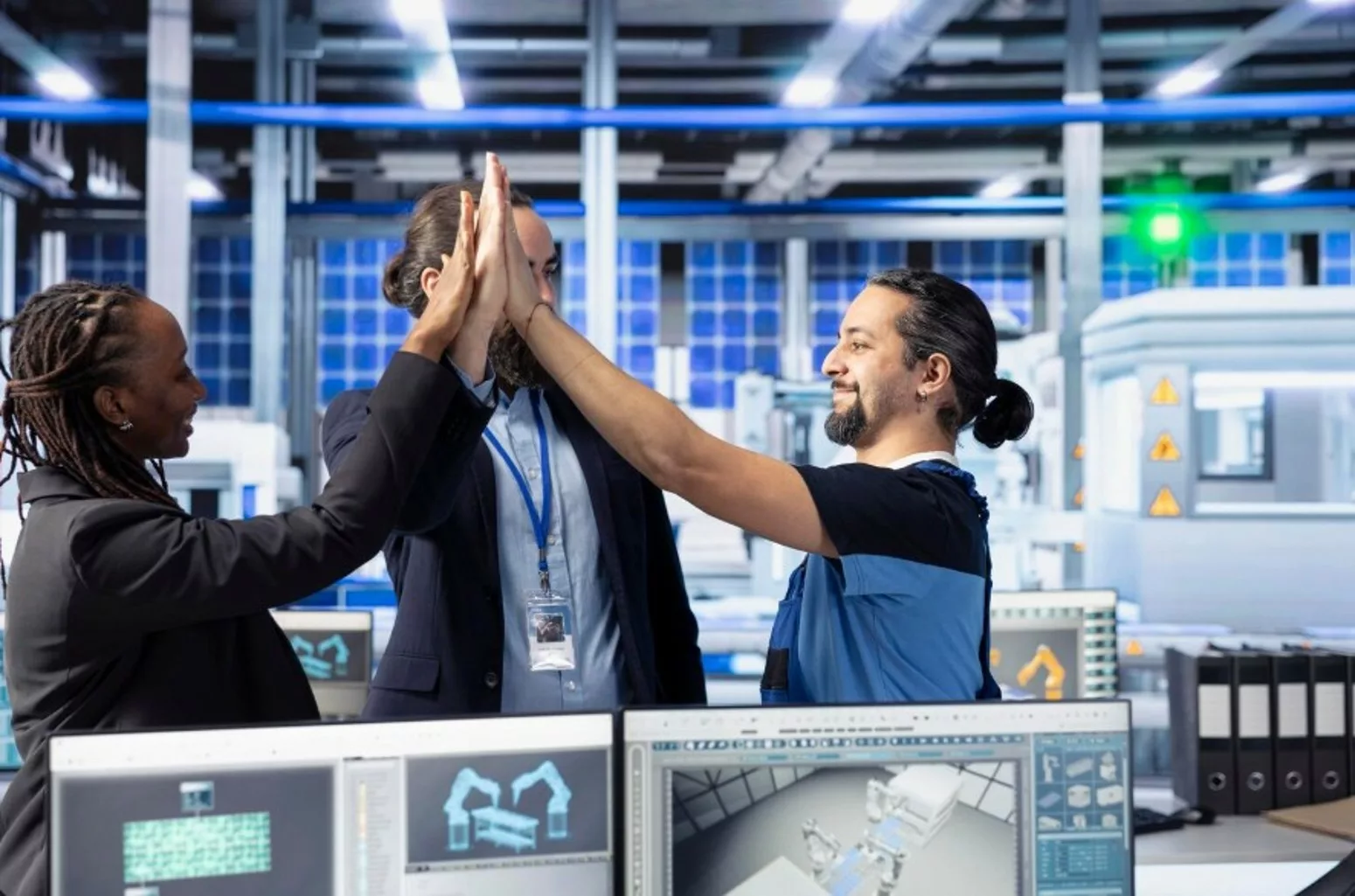
The KAIZEN™ approach begins with an end-to-end analysis. This analysis leads to a customized solution design and implementation plan. The contribution of the teams is critical to the success of any Lean journey. We organize our customers’ teams to break functional silos and develop continuous improvement skills.
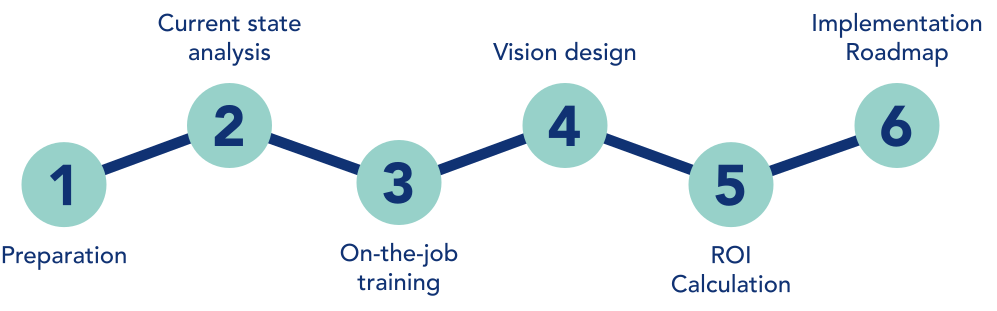
We support our clients in implementing the initiative’s plan, ensuring set objectives are met.
Change Management
Kaizen Institute’s approach is practical, pragmatic, and collaborative. We work with our customers in their Gemba – where the action takes place – and observe the opportunities first-hand.
Our experts combine deep expertise with refined analytical and problem-solving skills, bringing an external and fact-based perspective to the industry’s challenges and opportunities.
Want to get more insights?
We create customized solutions for every business area
Kaizen Institute works directly with the client teams, with a “Hands On” and “Teaching by Doing” approach
Kaizen Institute works directly with the client teams, with a “Hands On” and “Learning by Doing” approach