
Article
Rapid Improvement Event: An essential element of continuous improvement


For several decades, organizations have relied on Rapid Improvement Events (RIE) to improve processes, solve problems, and drive immediate results. Despite their long-standing history, this approach remains as relevant today as ever, proving essential for any company striving for operational excellence.
In a highly competitive environment where agility is a requirement, RIE demonstrates that it’s possible to engage teams, achieve sustainable improvements, and address critical issues in a short period of time.
In this article, we’ll explore the role of RIE within the Kaizen philosophy, the most commonly used methodologies, their characteristics, and the benefits that continue to make them indispensable for organizations across all sectors.
What is a Rapid Improvement Event?
A Rapid Improvement Event (RIE) is a short-term, structured initiative designed to solve specific problems and quickly improve processes, teams, or business areas. It’s a practical and fundamental approach in a culture of continuous improvement, designed to accelerate results.
Different names, including Kaizen Event, Kaizen Blitz, or Rapid Improvement Event, often refer to this concept. The term Kaizen Event (also known as Gemba Kaizen Event) emerged as a practical translation of Kaizen initiatives developed in Japanese factories, describing a temporary, high-intensity event aimed at rapidly solving problems. The term Kaizen Blitz gained popularity in the 1990s. Blitz” originates from the German term “Blitzkrieg,” meaning “lightning attack,” conveying a sense of a focused, high-energy effort to eliminate waste or rectify failures within a short timeframe. Over time, the expression Rapid Improvement Event became widely adopted in global business contexts, highlighting the speed of the initiative.
All three terms refer to the same type of improvement initiative: an intensive, short-term event with immediate impact. These events are commonly used in Kaizen, Lean, and Lean Six Sigma approaches.
Characteristics of a RIE
A Rapid Improvement Event is distinguished by its practical, results-oriented, and fast-paced nature. Key characteristics include:
- Teamwork: Multidisciplinary teams with decision-making authority.
- Fast implementation: Short testing and implementation cycles, typically 3 to 5 intensive days.
- Focused scope: Well-defined scope of improvement.
- Clear objectives: Pre-identified, measurable goals.
- Gemba-based execution: Analysis and implementation take place directly where the work happens.
- Results follow-up: Quantification of gains with validation by the finance department.
- Standardized methodology (A3 Thinking): Structured approach to analysis, solution design, and control.
- Low-cost countermeasures: Prioritizing simple, high-impact improvements.
In summary, a Rapid Improvement Event combines focus, speed, and methodological discipline, enabling high-impact improvements to be achieved in a short period with minimal investment.
When to apply a Rapid Improvement Event
A Rapid Improvement Event should be applied whenever a clearly defined problem has a meaningful impact on the organization. It can be used across any of the programs that support a continuous improvement culture: Leaders Kaizen, Daily Kaizen, Kaizen Cycles, and Kaizen Office.
Within Kaizen operations, RIEs play a particularly important role in Kaizen Cycles, serving as a central tool to accelerate results, mobilize teams, and rapidly and systematically transform processes.
Discover how a Rapid Improvement Event can deliver immediate and lasting results
How to organize a Kaizen Event?
A Kaizen Event follows a disciplined and structured approach that ensures fast but sustainable results. The process can be divided into three main phases: preparation, execution, and follow-up.
Preparation stages
The success of a RIE depends on thorough preparation to ensure focus and alignment from the very beginning:
- Problem and objective definition: Clearly describe the issue and define the expected outcomes.
- Data collection: Gather information about the current process, performance indicators, and main difficulties.
- Multidisciplinary team selection: Bring together employees from different functions and hierarchical levels to ensure diverse perspectives and decision-making power.
- Logistics and scheduling: Organize the agenda, prepare necessary support materials, and confirm full team availability during the intensive period of the event.
- Project charter completion: Create a document that formalizes the event’s scope, defines objectives, roles, and responsibilities, ensuring a common vision.
Event execution
The RIE typically takes place over three to five days, in practical sessions at Gemba that include:
- Analysis and diagnosis: Observe the process onsite, identify waste, and conduct root cause analysis.
- Solution development: Generate and evaluate improvement alternatives, prioritizing actions using an impact-effort matrix.
- Immediate testing of improvements: Rapidly implement selected solutions and test them in real time during the event.
Follow-up
The final stage ensures that gains are achieved and not lost over time:
- Action plan follow-up: Monitor the action plan (PDCA cycle), which identifies those responsible, deadlines, and indicators to be monitored.
- Results evaluation: Measure the operational and financial gains achieved compared to the defined goals.
- Developing new standards and transitioning to natural teams: Standardize the new way of working, train the teams responsible for the processes, and verify adherence to the new standards during Gemba Walks.
- Communication and knowledge sharing: Communicate outcomes, reinforce motivation, and replicate best practices across other areas of the organization.
Best practices for RIE
To ensure the success of a RIE, it’s essential to create the right environment for collaboration and creativity, always focusing on the Gemba. Some best practices for those leading a Kaizen Event include:
- Involve continuous improvement experts: Support the team with technical and methodological knowledge.
- Set hierarchies aside: All contributions are valuable and should be considered.
- Start with a blank sheet: use the “blank sheet” exercise to rethink processes without prejudices or initial restrictions.
- Keep an open mind to change: Accept new ideas and unconventional solutions.
- Encourage curiosity: no question is off-limits, always ask “why?”, “why not?”, and “what if?”.
- Think outside the box: Challenge assumptions and explore creative alternatives.
- Avoid perfectionism: Focus on the idea that imperfect improvement is better than delayed perfection.
- Use brains before budget: Prioritize simple, low-cost solutions.
- Go to Gemba: Observe the facts on site, instead of theorizing in a meeting room.
- Just do it!: act pragmatically—test, test, and learn from the results.
Following these best practices ensures the success of the RIE, making it a true catalyst for transformation.
Benefits of a Rapid Improvement Event
Holding a Rapid Improvement Event generates results that go beyond immediate improvements, impacting the organization in several dimensions:
- Operational impact: Increased productivity, cost reduction, improved lead times, and improved quality, with measurable benefits often seen during the event itself.
- Team engagement and motivation: Employees become active contributors to the solution, reinforcing team spirit, autonomy, and pride in the results achieved.
- Continuous improvement culture: RIEs prove that change is possible, reinforcing trust in Kaizen and creating momentum for sustained transformation.
Each RIE not only addresses an immediate issue, but also strengthens the Kaizen culture, showing that continuous improvement is achievable, motivating, and capable of delivering tangible results across any organization.
The importance of A3 Thinking in RIEs
A3 is a structured approach that guides Rapid Improvement Events regardless of the problem type. More than just a simple, visual management tool, it ensures the team follows a logical thought process, stays aligned with the objectives, and implements sustainable improvements.
The 9-step A3 structure:
- Define the challenge: Clarify the problem and its impact.
- Map the current state: observe the process at the Gemba and describe the starting point clearly, visually, and logically.
- Define the target state: Describe the objectives to be achieved, qualitatively and quantitatively.
- Investigate root causes: Identify the origins of the problem using tools such as the Ishikawa Diagram (Fishbone Diagram) and 5 Whys.
- Design solutions: Identify and select viable countermeasures.
- Test solutions: Implement quickly in the field to validate results.
- Update the action plan: Formalize responsibilities, deadlines, and next steps.
- Confirm results and standards: Measure gains, stabilize improvements, and update standards.
- Consolidate and improve: Ensure sustainability, share lessons learned, and seek new opportunities.
This 9-step cycle provides a structured approach for effective problem-solving.
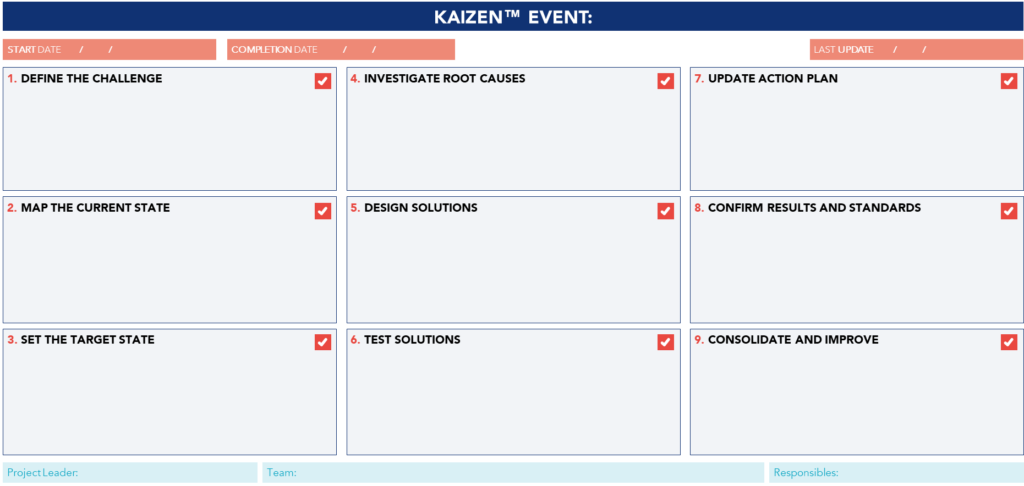
Figure 1 – Example of the 9-step A3 structure
Examples of methodologies used in RIE
Many Rapid Improvement Events use specific, well-established methodologies with clearly defined steps to tackle certain types of problems. This ensures that the team follows a tested, focused approach with a high probability of success.
Some examples of these methodologies are: value stream analysis to identify waste throughout the value chain and design the improvement vision; SMED to reduce changeover times; process mapping to improve transactional processes; 5S to organize workplaces; standard work to eliminate operator waste; and Kobetsu Kaizen to increase equipment efficiency (OEE), among many others.
These methodologies facilitate teamwork, guiding the approach and enabling solutions that have a positive impact on results.
Want to implement rapid and sustainable improvements in your company?
RIEs for delivering immediate results
Rapid Improvement Events are a structured approach to solving critical problems, delivering immediate results, and reinforcing a culture of continuous improvement within organizations. Widely applied in methodologies such as Kaizen, Lean, and Lean Six Sigma, RIEs demonstrate, in practice, how significant improvements can be achieved in a short period of time.
By combining focus, speed, and methodological discipline, RIEs prove that it’s possible to transform processes in a few days, while actively engaging and motivating teams. The use of specific methodologies ensures that solutions are both effective and sustainable.
When embedded in a Kaizen culture, RIE becomes a true catalyst for transformation, driving operational gains, strengthening team confidence in change, and contributing to the development of a more agile, efficient, and competitive organization.
See more on Kaizen Culture
Find out more about improving your organization