
Case Study
Operational transformation in a large-scale quick service restaurant network
Goals: simplify restaurant operations, reduce weekly labor hours per store, and improve service speed and order accuracy without compromising customer experience


-18%
Weekly restaurant labor hours
+ 100
Labor hours reduced per store
+30%
Improvement in order accuracy
The Quick Service Restaurant (QSR) sector operates in a high-volume, high-pressure environment where speed, consistency, and cost control are critical to performance. Restaurants must manage fluctuating demand throughout the day while maintaining consistent service standards across drive-through, takeout, and digital ordering channels.
Large franchise-led networks face additional complexity. Ensuring operational consistency across hundreds of locations—both company-owned and franchised—requires clear standards, disciplined execution, and scalable operating models. At the same time, rising labor costs and growing menu complexity are putting greater pressure on productivity.
In this context, improving performance is no longer about incremental adjustments. It requires simplifying operations and adopting a data-driven approach to labor deployment and workflow design.
The Quick Service Restaurant industry: Complexity at scale
The company operates one of Australia’s large-scale Quick Service Restaurant (QSR) networks, structured primarily under a franchise-led model and supported by a mix of company-owned and franchised locations. With hundreds of restaurants across multiple states and thousands of frontline employees, the organization manages a high-volume, repetitive production environment at scale.
Its operating model is built on standardized kitchen processes and a defined menu architecture, with strong reliance on drive-through and takeaway channels. Digital ordering and delivery integration continues to expand, further increasing operational complexity and day-to-day demand variability.
The organization’s strategic focus centers on throughput speed, order accuracy, labor productivity optimization, and the balance between menu simplification and innovation. As the business continues to grow, maintaining operational consistency across a large and diverse network has become increasingly challenging.
At the time of this transformation, the company was facing structural pressure on labor efficiency. Variability in team sizing, inconsistent deployment across shifts, peak-demand fluctuations, and product-availability issues were impacting service levels and order accuracy. While the brand remained strong, the operating model required redesign to sustain growth without increasing cost intensity.
Waste embedded in the operating system
As the organization prepared for its next phase of growth, a detailed operational review exposed structural inefficiencies across labor deployment, workflow design, and execution standards.
1. Structural waste across the operation
A detailed discovery phase revealed that non-value-added activity was embedded across the entire operation, spanning Back of House (BOH), Middle of House (MOH), and Front of House (FOH) environments.
- Back of House (BOH) refers to kitchen production activities, including cooking, preparation, and primary assembly.
- Middle of House (MOH) covers the transition area between production and customer interface, including warming, secondary assembly, and handoff preparation.
- Front of House (FOH) includes customer-facing activities such as order handout, drinks preparation, and delivery coordination.
In BOH, waste remained structurally high during on-shift operations, reaching 80% during off-peak and still accounting for 70% during peak hours. Inefficient equipment placement, duplicate handling, inconsistent process adherence, and excessive movement reduced productivity regardless of volume.
MOH presented a different dynamic. While off-peak waste reached 70%, peak periods improved to 65% value-added time. However, this performance was driven by volume rather than by structural design. Congestion, inefficient warmer configuration, repeated reaching movements, and overprocessing created instability under pressure.
FOH performance deteriorated during peak demand. Waste increased from 62% during off-peak to 80% during peak hours. Excessive movement during the parked-car handout process, the lack of a defined drink-packing process, limited visibility into delivery arrivals, and waiting time for product availability negatively impacted service speed.
Opening and closing routines further amplified inefficiencies. MOH opening activities showed 80% non-value-added work due to poor sequencing and unclear role ownership. During close, BOH still operated at 56% waste, while MOH combined 30% non-value-added time with 30% idle time — highlighting an imbalance in task allocation rather than labor shortage.
The challenge was not labor quantity, but structural workflow design misaligned with operational demand.
2. High variability in productivity (SPH)
Labor productivity analysis revealed significant weekly variability, with wide gaps between low and high trading days. While stores were often able to deliver higher-than-forecast productivity, performance lacked stability and standardization.
This variability exposed two structural issues: inconsistent alignment between labor deployment and demand patterns, and the absence of a standardized model to translate forecasted sales into stable staffing levels. As a result, restaurants cycled between idle capacity and operational strain within the same week.
3. Order accuracy failures
Pareto analysis identified that missing part and wrong item errors were the two largest contributors to order complaints, collectively accounting for the highest volume of accuracy failures.
The top four issues — missing part, wrong item, missing multiple items, and missing side — accounted for most complaints, indicating that inaccuracies were concentrated in a small number of recurring failure modes.
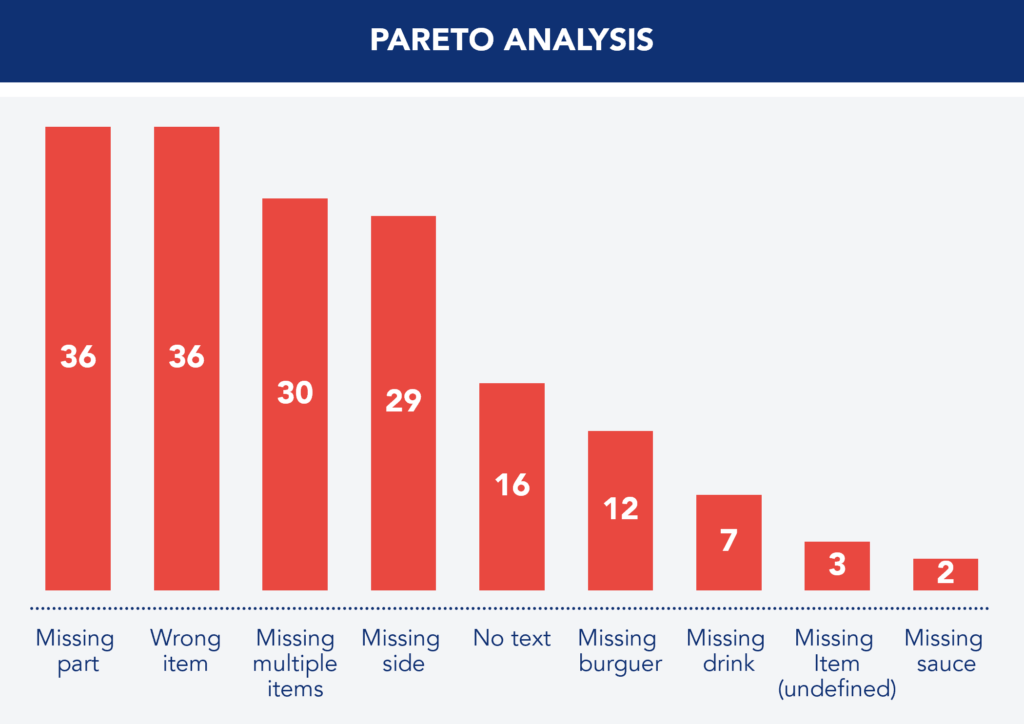
Figure 1 – Pareto analysis of order accuracy complaints
An Ishikawa (fishbone) analysis further revealed root causes, including:
- Inefficient layout and flow of items
- Multiple SKUs stored in different locations
- Lack of a standardized one-way packing process
- Pack screens not positioned at eye level
- Inconsistent packaging formats
- Product runouts disrupting flow
- Limited management presence and coaching during peaks
- High levels of multitasking under pressure
Order accuracy was not a training issue alone — it was a system design issue.
Master root cause analysis with the Ishikawa Diagram
4. Layout and flow constraints
The current layout presented multiple structural barriers to flow efficiency:
- Several storage locations for the same product category
- Non-optimized path from cook to customer
- Limited role clarity between FOH and MOH
- Storage locations are not positioned near the point of use
The layout did not align with a supermarket model or single-flow logic, resulting in idle time during off-peak periods and congestion during peak periods.
5. Inconsistent deployment and role definition
Managers were required to perform multiple manual inputs while simultaneously supporting operations. With 80% of opening time dedicated to administrative tasks, managers had limited capacity to focus on operational control.
During peak periods, managers were often absorbed in operational tasks, while team members remained underutilized in other areas. Communication between BOH, MOH, and FOH was inconsistent, and there was no standardized resource deployment model tied to forecasted demand.
The absence of clear role ownership during open, on-shift, and close periods resulted in duplicated effort, overprocessing, and delayed task completion.
6. Lack of standardized governance and tracking
Although performance data existed, there was no integrated system linking:
- Forecast accuracy
- Labor deployment
- Order accuracy
- Waste reduction
- Operational KPIs
Without structured governance, performance variability persisted across company-owned and franchised locations, making consistency difficult to sustain at scale.
Turning Lean principles into structural change
Following the diagnostic phase, the transformation moved decisively from analysis to structural redesign. Rather than addressing isolated inefficiencies, the organization adopted a Kaizen-led approach focused on eliminating waste at its root and engineering a scalable operating model.
The intervention was structured around a complete redesign of labor logic, workstation configuration, task sequencing, internal logistics, and governance. Each initiative was anchored in Lean principles and validated through trials before scaling across the network.
Redefining labor through engineering, not estimation
One of the most critical shifts was the move from historically based scheduling to a data-driven labor model. Through workload simulation and Time & Motion standards, the team translated real activity drivers—sales, transactions, and item frequency—into structured labor requirements.
A standardized rostering tool was developed to align staffing levels with forecast thresholds, eliminating reactive scheduling practices. Clear role ownership was defined for open, on-shift, and close periods, separating training hours from operational deployment and reducing ambiguity in station coverage.
This redesign reframed labor from a cost to be managed to a process to be engineered.
Stabilizing execution through structured deployment
Kaizen workshops revealed that variability was not driven by volume alone, but by unclear role definition and excessive multitasking. A formal Resource Deployment Standard was introduced to define primary and secondary responsibilities across BOH, MOH, and FOH.
By aligning deployment directly with forecast triggers and takt logic, the operation shifted from reactive behavior to structured execution. This reduced duplicated effort, improved handoffs between stations, and stabilized peak performance.

Figure 2 – Workshop session defining the Resource Deployment Standard
Redesigning workstations and standard work
High levels of movement and overprocessing were addressed through workstation redesign. Applying Lean flow principles, ingredients and tools were repositioned closer to the point of use, unnecessary walking paths were eliminated, and screen placement was optimized to reduce cognitive load.
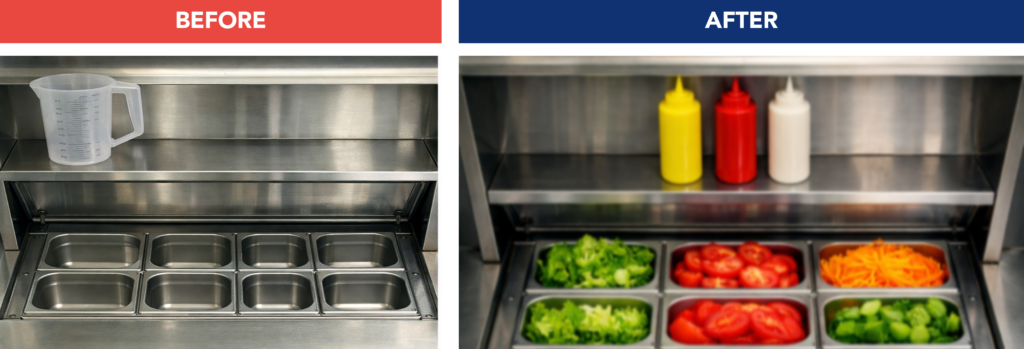
Figure 3 – Layout reconfiguration to minimize motion and improve point-of-use access
Standard Work was then defined for each station, ensuring that improved layouts translated into repeatable execution rather than one-off adjustments. This reduced variability and improved ergonomics without increasing headcount.
Reengineering open and close routines
Opening and closing routines were reconstructed using structured sequencing logic. Clear task ownership and defined time windows replaced informal task allocation. By applying Kaizen principles to routine activities—often overlooked in QSR operations—the organization eliminated duplicated effort and reduced idle time during close periods.
Trials confirmed that inefficiencies in these routines were structural rather than capacity-related, unlocking immediate labor reductions without compromising standards.
Creating flow stability through Mizusumashi and Kanban
Frequent product runouts had previously disrupted kitchen rhythm and increased multitasking under pressure. To address this, a Mizusumashi (water spider) replenishment model was introduced, supported by Kanban thresholds for high-frequency SKUs.
This structured internal logistics cycle stabilized replenishment, reduced reactive restocking, and allowed frontline teams to focus on value-added activities during peak periods.
Embedding 5S and visual management
Storage and warehouse areas were redesigned following 5S principles, eliminating multiple storage locations and implementing FIFO logic. Visual controls were introduced to clarify maximum quantities and improve stock visibility.
These changes reduced search time, minimized double handling, and improved inventory accuracy without increasing complexity.

Figure 4 – 5S methodology steps: Sort, Straighten, Scrub, Standardize, Sustain
Addressing order accuracy through system redesign
Order accuracy was addressed as a systemic design issue rather than a training gap. Through structured Kaizen Events, the team redesigned the packing sequence, product placement logic, drink preparation flow, and delivery interface to eliminate root causes of error.
To reinforce these changes, visual management improvements and a standardized one-way flow were introduced to reduce cognitive overload during peak demand. By simplifying the system, accuracy improved without adding additional checkpoints.
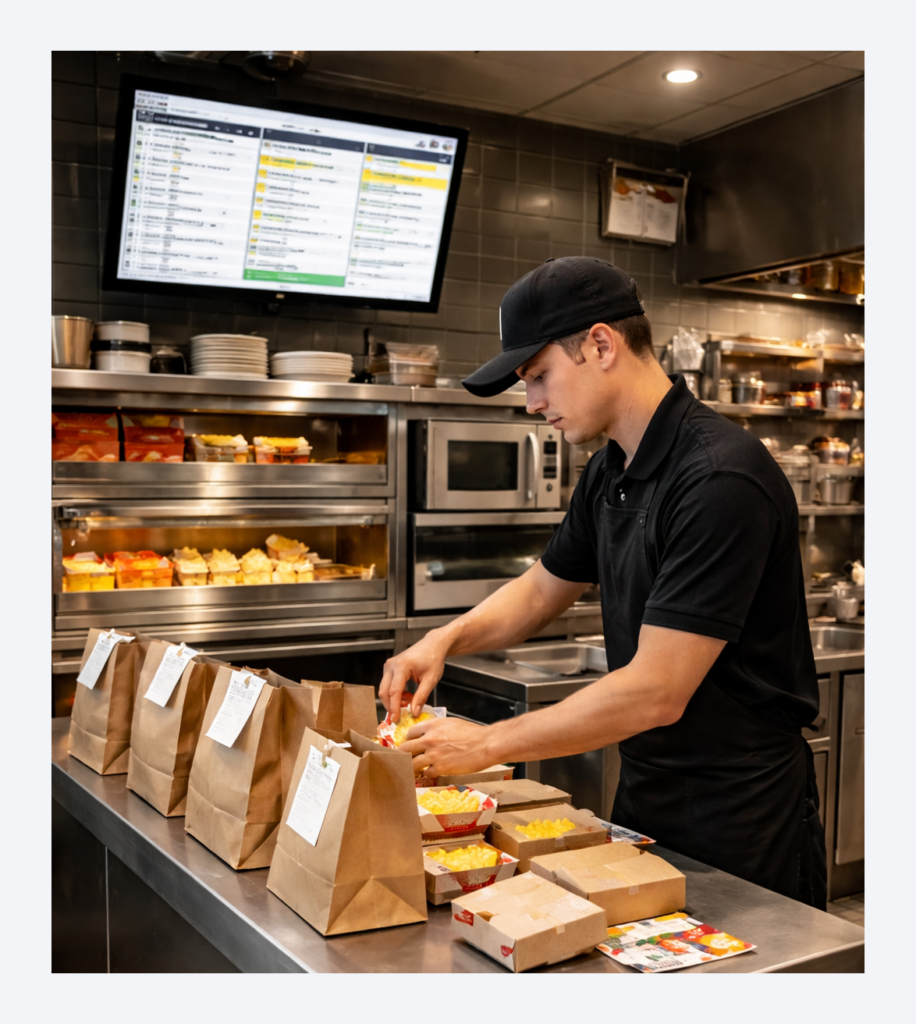
Figure 5 – Standardized packing workflow implemented
Layout redesign: from incremental fixes to blank canvas thinking
The physical layout was reassessed using a blank canvas approach. Flow paths were shortened, storage was relocated closer to the point of use, and the route from cooking to handout was simplified to reduce handling steps.
Drive-through prioritization was incorporated into the new logic to align physical space with revenue drivers. The layout redesign was not cosmetic—it was engineered to translate directly into measurable reductions in labor hours.
Governance and sustainable deployment
To ensure that improvements were scalable and not limited to pilot locations, a structured governance framework was introduced. A Mission Control Room monitored the evolution of KPIs, the achievement of benefits, and the progress of deployment. Meanwhile, a process cockpit ensured adherence to new standards.

Figure 6 – Obeya Room with visual management boards
The rollout followed a structured Train-the-Trainer model, empowering Area Managers to coach, validate, and systematically transfer ownership across successive waves. This approach ensured that Kaizen principles became embedded in daily leadership routines rather than remaining isolated project initiatives.
If these challenges sound familiar, let’s redesign your operation
Turning structural redesign into measurable performance
The operating model redesign delivered measurable financial gains, structural labor optimization, and improved execution stability across the network. The impact was observed both quantitatively and qualitatively, reinforcing the transformation’s scalability.
Quantitative results
- >18% reduction in weekly restaurant labor hours
- More than 100 labor hours reduced per store per week
- $240,000 AUD annual benefit per restaurant
- +30% improvement in order accuracy
Qualitative results
- Stabilized execution across BOH, MOH, and FOH
- Reduced operational variability during peak demand
- Improved role clarity and reduced multitasking pressure
- Established a scalable governance and deployment model across the network
When discipline meets ownership, performance follows
This transformation was not about reducing labor hours. It was about redesigning how the operation works.
By moving from reactive scheduling to engineered labor deployment, from fragmented workflows to structured flow logic, and from isolated improvements to a system-wide Kaizen approach, the organization fundamentally reshaped its operating model.
The results demonstrate that performance pressure in high-volume environments cannot be solved by adding labor or increasing supervision. It is solved by clarity—clarity of roles, flow, standards, and governance.
Equally important was the cultural shift that emerged throughout the journey. The transformation required collaboration across all levels of the organization — frontline crew members, shift managers, area managers, and leadership teams. Silos were broken down, accountability became shared, and operational challenges were addressed collectively rather than locally.
The Kaizen mindset moved beyond tools and into daily behavior. Teams began to see waste differently, to question long-standing habits, and to take ownership of execution standards. What started as an operational redesign evolved into a unified effort built on discipline, transparency, and mutual trust.
Through a structured methodology and cross-functional alignment, the network unlocked hidden capacity, stabilized execution during peak demand, and created a scalable platform to support future growth.
We respect our clients’ confidentiality agreements. While names have been altered or omitted, the results are real.
See more on Food and Beverage
Find out more about transformation in this sector
See more on Operations
Find out more about improving this business area