
Article
Food Safety Management System: What it is, goals, and how to implement it


Ensuring food safety takes far more than complying with legal requirements or conducting audits. In an industry prone to operational risks, growing regulatory demands, and high-quality standards, organizations must ensure that potential hazards are identified, controlled, and consistently monitored throughout the entire value chain.
Implementing a Food Safety Management System makes it possible to structure this approach by integrating processes, responsibilities, standards, controls, and continuous improvement mechanisms. When implemented effectively, it helps not only prevent incidents and ensure compliance, but also to increase traceability and responsiveness and, consequently, to strengthen food safety culture throughout the organization.
In this article, we explain what a Food Safety Management System is, its main goals and elements, the most relevant certification standards, the role of technology, and the critical factors for implementing and maintaining the system in a solid and sustainable way.
What is a Food Safety Management System?
A Food Safety Management System (FSMS) is a structured approach to identifying, assessing, and controlling risks that could compromise food safety throughout an organization’s processes.
The system integrates policies, processes, responsibilities, control methods, and monitoring mechanisms designed to ensure that food is produced, handled, stored, and distributed under safe conditions. It is therefore not limited to the existence of procedures or records: it requires that the defined controls be effectively applied on a daily basis and that deviations be rigorously detected and corrected.
An FSMS can incorporate different methodologies, standards, and reference frameworks, such as HACCP (Hazard Analysis and Critical Control Points), ISO 22000, or certification programs such as FSSC 22000 (Food Safety System Certification), depending on the industry, markets, and customer requirements.
In practice, a robust system integrates food safety hazard analysis with prerequisite programs, good manufacturing practices and hygiene, traceability, critical point control, incident management, audits, and continuous improvement. Its effectiveness also depends on people, from leadership to operational teams, and on the organization’s ability to embed food safety into its management routines and decision-making.
What is the goal of a Food Safety Management System?
The main goal of a Food Safety Management System is to prevent and control hazards that could endanger consumer health, ensuring that these hazards are identified, assessed, and kept under control systematically throughout the entire value chain.
At the same time, the FSMS helps the organization meet applicable legal and regulatory requirements, as well as the specific demands of customers and the markets where it operates. A preventive management approach allows the organization to reduce its dependence on purely reactive controls and address risks before they turn into incidents.
Among the main goals of a Food Safety Management System include:
- Identifying and assessing biological, chemical, and physical hazards, including risks associated with allergens, as well as other relevant risks.
- Establishing preventive measures and controls appropriate to the different processes.
- Ensuring compliance with legal, regulatory, and customer requirements.
- Strengthening the traceability of products, raw materials, and processes.
- Reducing the risk of contamination, nonconformities, product recalls, and other incidents.
- Defining clear responsibilities and ensuring a rapid response to deviations.
- Creating the conditions for systematic improvement in food safety performance.
Beyond compliance, an effective FSMS should help build a genuine food safety culture. This means that risk prevention is no longer the sole responsibility of the quality or food safety department, but instead becomes part of the decisions, behaviors, and routines of the entire organization.
Want to learn how to put these goals into practice in your organization?
What are the main key elements of a Food Safety Management System?
A well-designed Food Safety Management System combines different elements that make it possible to prevent risks, control processes, and respond in a structured way when a deviation occurs. These elements must work in an integrated way and be embedded in the organization’s daily routines.
Identifying and managing food safety hazards
Identifying food safety hazards is one of the pillars of the system. The organization must assess the risks associated with raw materials, processes, equipment, people, facilities, storage, and distribution, considering biological, chemical, and physical hazards, including allergen-related risks.
Methodologies such as HACCP make it possible to analyze these risks methodically and define appropriate control measures. Whenever necessary, critical control points are established, with defined critical limits and monitoring mechanisms that make it possible to quickly detect any deviation.
The effectiveness of this approach depends on the ability to keep the risk assessment up to date. Changes in product, process, supplier, equipment, or legislation can introduce new hazards and require revising existing controls.
Prerequisite programs and good practices
Prerequisite programs establish the basic conditions needed to maintain an environment suitable for producing safe food. They serve as the foundation on which the system’s other control mechanisms are implemented.
These include, among other aspects, cleaning and sanitation, pest control, maintenance of facilities and equipment, personal hygiene, waste management, water control, storage, and prevention of cross-contamination.
Good manufacturing practices, standardized sanitation procedures, and, where applicable, good agricultural practices help translate these requirements into consistent work practices that teams can easily understand.
More than simply documenting procedures, the goal is to ensure that these practices are carried out consistently, verified in the field, and improved whenever opportunities or deviations are identified.
Traceability and incident response
Food traceability allows tracking the origin, transformation, and destination of products throughout the food and beverage industry supply chain, from raw materials and suppliers to distribution and the end consumer. A reliable system must allow quick identification of the batches, processing stages, and customers potentially affected by an incident.
This capability is essential to limit the impact of nonconformity and make any product withdrawal or recall faster and more precise.
The organization must also have clear processes for managing incidents, including escalation criteria, responsibilities, internal and external communication, root cause analysis, and implementing corrective actions.
Periodic testing of traceability systems and response procedures helps confirm whether teams can obtain the necessary information quickly and are prepared to act in real situations.
Food defense and food fraud prevention
Food safety management must consider not only accidental risks, but also intentional threats.
Food defense involves protecting products, facilities, and processes against deliberate acts that could cause contamination or other harm. A food defense plan must identify vulnerable areas, define preventive measures, and establish responsibilities and response mechanisms.
Food fraud, on the other hand, is typically associated with intentional acts motivated by economic gain, such as ingredient substitution, adulteration, false declaration of origin, or manipulation of product information.
A food fraud vulnerability assessment makes it possible to identify the raw materials, products, suppliers, or processes most exposed to this type of risk and to define appropriate mitigation measures.
Integrating these topics into the Food Safety Management System enables a more comprehensive approach to risk, strengthening the organization’s ability to protect consumers, products, and brand trust.
How to implement a Food Safety Management System?
Implementing a Food Safety Management System should follow a structured approach, tailored to the specific processes, risks, and requirements of each organization. More than creating documentation, the goal is to establish a management system that functions reliably day-to-day.
The main steps include:
- Assess risks and requirements: Identify hazards associated with products and processes, analyze applicable legal and regulatory requirements, and also consider the specific demands of customers, markets, and certification standards.
- Define processes, responsibilities, and standards: Clearly establish how processes should work, who is responsible for each activity, and which standards to follow. Standardization helps reduce variability and ensures that food safety practices are applied consistently.
- Implement controls and monitoring: Define preventive measures, control points, acceptance criteria, and monitoring mechanisms that make it possible to quickly identify deviations. Whenever possible, information should be simple, visual, and easily accessible to teams.
- Train and engage teams: Ensure that every employee understands the risks associated with their work, knows the standards that apply, and knows how to act in the event of a deviation. Team engagement is essential to turning the system’s requirements into consistent behaviors.
- Audit and improve: Conduct internal food safety audits, analyze indicators and nonconformities, investigate root causes, and implement corrective actions. The system should be reviewed regularly to incorporate process changes, new risks, and improvement opportunities.
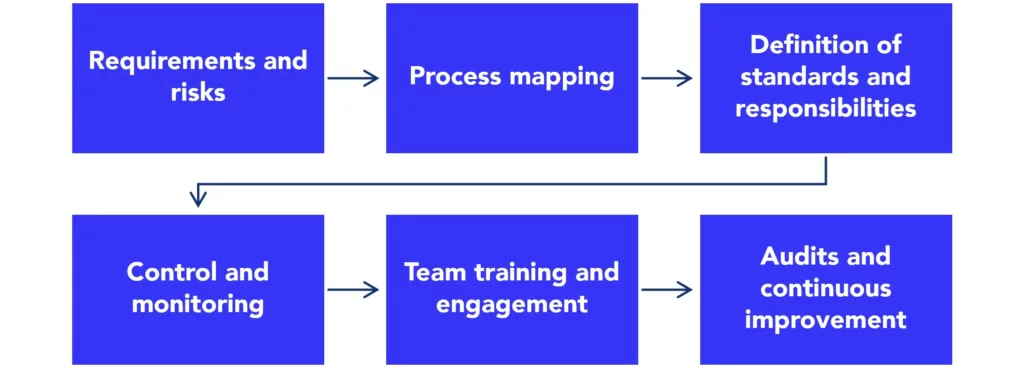
Figure 1 – Steps for implementing a Food Safety Management System
Effective implementation does not end with defining procedures or obtaining certification. The real challenge lies in integrating the system into management routines, ensuring it is applied in the field, and creating a continuous cycle of problem identification, learning, and improvement.
Food Safety Management System Certification
Certifying a Food Safety Management System makes it possible to demonstrate, through an independent assessment, that the organization has structured processes and controls in place to manage the risks associated with food safety.
The choice of standard depends on factors such as the industry, the organization’s position in the food chain, the markets where it operates, and its customers’ requirements. Although different standards and certification schemes exist, these approaches all aim to strengthen organizations’ ability to consistently produce and supply safe food.
Discover how to identify the approach that best aligns with your organization
ISO 22000 and FSSC 22000
ISO 22000 is an international standard that establishes the requirements for a Food Safety Management System and can be applied to organizations of any size at different stages of the food chain. It incorporates HACCP principles, prerequisite programs, communication throughout the chain, and a systematic approach to managing food safety risks.
FSSC 22000 is a certification scheme based on ISO 22000, complemented by specific requirements for prerequisite programs and additional requirements of its own. This combination allows for a more detailed approach to certain industries and food chain requirements.
The choice between the two standards should consider, among other factors, the requirements of customers and the markets where the organization intends to operate.
BRCGS, SQF, and GFSI-recognized standards
There are other certification standards that are widely used in the food industry, including BRCGS (Brand Reputation Compliance Global Standards or Global Standard Food Safety) and SQF (Safe Quality Food).
BRCGS establishes requirements related to product safety, quality, legality, and integrity, with a strong focus on operational controls in food manufacturing, processing, and packaging activities.
SQF also offers certification programs geared toward different segments of the food chain and combines management requirements with food safety control practices.
Both BRCGS and SQF, as well as FSSC 22000, are certification programs recognized by the GFSI – Global Food Safety Initiative. Certification under ISO 22000 alone is not recognized by the GFSI. The GFSI itself is not a certification but rather establishes benchmarking requirements through which it evaluates and recognizes different food safety certification programs.
For organizations, this recognition can be especially important when customers or large distribution groups require certification under a GFSI-recognized program.
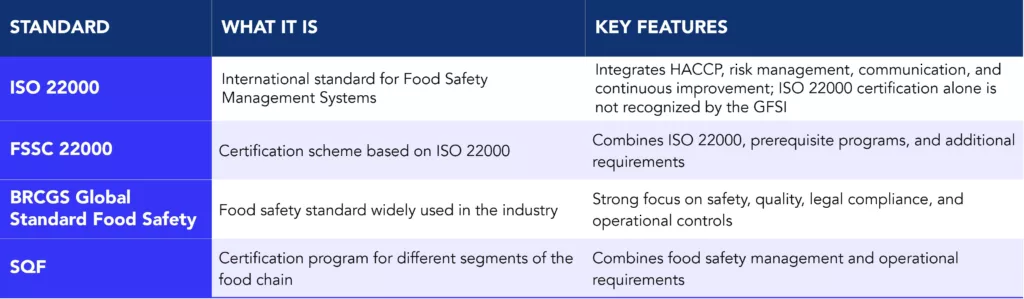
Figure 2 – Comparison of the main certification standards for Food Safety Management Systems
Technology and software in food safety management
Technology can significantly strengthen the effectiveness of a Food Safety Management System, especially in organizations with complex operations, multiple sites, or large volumes of data and records.
Food safety management software can support activities such as document control, inspection logging, nonconformity management, critical point monitoring, traceability, audit preparation, and tracking of corrective actions. These food safety compliance software solutions also make it possible to centralize legal requirements, evidence, and indicators, reducing reliance on scattered records and manual processes.
A digital improvement system can facilitate real-time data collection, generate alerts in response to deviations, and speed up the analysis of trends and recurring causes. AI in the food industry can strengthen these capabilities, supporting, for example, pattern detection, early identification of potential deviations, and the analysis of large volumes of data related to food quality and safety.
However, technology doesn’t replace well-defined processes or a culture of operational discipline. Digitalization should start with the needs of the process and support clear, simple, and consistent ways of working. Otherwise, there is a risk of merely digitalizing inefficiencies or creating complex systems with little impact on food safety.
How to maintain an effective Food Safety Management System over time
A Food Safety Management System’s effectiveness depends on its ability to evolve with the organization. Changes in products, processes, equipment, suppliers, and legal requirements, as well as shifting customer expectations and global food industry trends, can change the organization’s requirements and risk profile, making previously adequate controls insufficient.
Therefore, it is essential to regularly monitor the system’s performance through food safety audits, indicators, and analysis of nonconformities, complaints, incidents, and the results of the various control mechanisms.
Beyond verifying compliance with requirements, this information should be used to identify trends, understand root causes, and define improvement actions. Updating standards, ongoing team training, and close operational monitoring help ensure established practices continue to be applied consistently.
Likewise, leadership must keep food safety integrated into management priorities and ensure that problems are addressed quickly and in a structured way.
Keeping an FSMS effective therefore means going beyond certification and compliance. This approach makes it possible to integrate food safety into a broader operational excellence strategy for the food industry, balancing risk control, efficiency, and continuous improvement. The goal should be to build a living system, embedded in day-to-day management and supported by a culture of prevention, accountability, and learning, capable of protecting the consumer and sustainably strengthening trust in the products and the organization.
This vision is aligned with Kaizen Institute’s commitment to helping organizations integrate food safety into a broader operational excellence strategy. That is the purpose of KAIZEN™ consulting services in the food industry and consumer packaged goods (CPG): helping every organization balance risk, quality, and efficiency throughout the entire value chain, based on a robust, evolving system that is genuinely embedded in day-to-day management.
See more on Consumer Products
Find out more about transformation in this sector