
Case Study
Standardizing excellence in a Pan‑European retail network
Goals: build a unified Lean capability framework, standardize warehouse operations, and accelerate the cross‑country deployment of proven improvements


A Pan-European retailer operating a large network of distribution centers set out to strengthen its operational excellence and Lean maturity. As the organization expanded across several European countries, differences in processes, capabilities, and improvement practices became increasingly visible.
This case study explores how the company strengthened its Lean capability and accelerated operational excellence through the development of an international Lean Academy and the implementation of a structured yokoten cycle.
A retail network company in transformation
A leading multinational retailer operating across Europe sought to strengthen operational excellence in its logistics network. With over 60 distribution centers, thousands of employees, and a rapidly expanding footprint, the organization faced increasing pressure to standardize processes, elevate Lean capabilities, and accelerate the deployment of best practices (BP) across countries.
Two strategic pillars were defined to support this transformation:
- Lean Academy, to build internal capability and create a unified Lean culture.
- Yokoten cycle, to systematically collect, validate, and deploy best practices and standard solutions across warehouses.
Initial challenges across countries
Before the project, the organization faced several structural challenges:
- No unified Lean capability-building program across countries.
- Limited standardization of warehouse processes.
- Inconsistent adoption of Lean tools and methodologies.
- Best practices existed locally but were not shared or scaled.
- No structured mechanism to validate, approve, and deploy standard solutions.
Strategic needs identified
The retailer required a scalable, international model to:
- Develop Lean competencies at all organizational levels.
- Standardize operational procedures across warehouses.
- Accelerate the rollout of proven improvements.
- Strengthen cross-country collaboration and knowledge sharing.
Meaningful change starts with a single decision, and the next step is in your hands
Lean Academy – Building a unified Lean culture
The retailer faced a familiar challenge: Lean knowledge existed, but it was unevenly distributed. Some warehouses had strong routines, others were just beginning. Training materials varied by country, and onboarding new Lean roles required significant effort. To address this, the organization established a partnership to design an international Lean Academy capable of delivering consistent, scalable training to hundreds of employees.
The Academy was built around a role-based learning journey, ensuring that each group—from team members to managers—received the right depth of Lean knowledge. The curriculum covered Daily KAIZEN™, Value Stream KAIZEN™, Strategic KAIZEN™, and Warehouse Optimization, with content tailored to the responsibilities and expected behaviors of each role.
Training followed a clear and repeatable structure:
- Pre-reading to align expectations.
- A facilitated session to build knowledge.
- An implementation exercise to apply concepts on the Gemba.
- And an assessment to validate learning.
This approach ensured that training was not theoretical but directly connected to daily operations.
To support scale, the Academy was anchored in a SharePoint platform where employees could enroll in courses, access materials, submit exercises, and track their progress. A PowerApps enrollment system enabled a pull-based model, allowing countries to activate the Academy when ready. Governance was defined at both international and national levels, ensuring content consistency while giving countries autonomy to manage delivery.
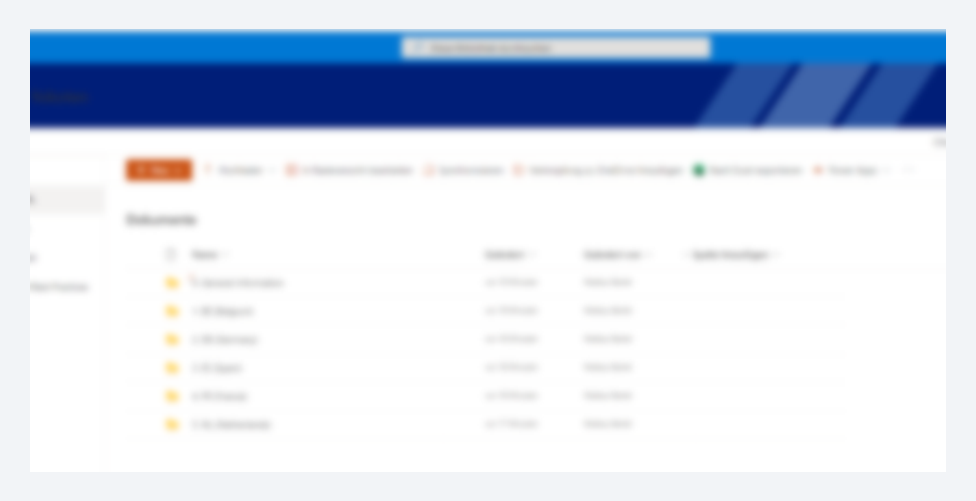
Figure 1 – Sharepoint example
The result was a fully operational Lean Academy with 25 training modules, 60 supporting materials, and over 1,000 slides developed in two languages. More importantly, it created the foundation for training more than 1,000 employees, establishing a common Lean language across the network.
Yokoten cycle — Scaling best practices and standard solutions
To complement the capability-building effort of the Lean Academy, the organization needed a structured, repeatable way to capture operational improvements and scale them across its international warehouse network. Although many sites had developed strong local practices, there was no mechanism to collect them, validate them, or deploy them consistently. The yokoten cycle was created to fill this gap — a comprehensive model for sharing best practices and implementing standard solutions across countries.
“We built a system to collect, share, evaluate, and then implement these best practices through all the different warehouses.” – Kaizen Institute consultant
The yokoten approach was built around a three‑month cycle, divided into three phases (A, B, and C). Together, these phases created a rhythm that transformed local ideas into international standards.
Phase A: Collection of best practices
Local teams identified best practices emerging from daily operations or Lean Workshops. These practices were documented using a simple, standardized two-step framework:
- A high-level description and benefits.
- A step-by-step OPL (One-Point Lesson).
These practices can originate from improvements implemented by operational teams, outputs of kaizen events, solutions developed during Lean Workshops, or any local innovation that improves safety, quality, productivity, or flow.
This phase ensures that valuable improvements developed on the shop floor do not remain isolated. It creates a pull-based knowledge-sharing system, where ideas originate from those closest to the work and are elevated to the network level.
To operationalize this approach, clear roles were defined across the organization. Team leaders and operational teams captured the practices, while Lean agents supported documentation, challenged the teams, and ensured alignment with Lean principles.
The first three weeks of the yokoten cycle were dedicated to capturing, selecting, and documenting Best Practices. How it worked in practice:
- Teams were challenged to identify improvements.
- Lean agents helped select the most relevant ones.
- The yokoten team validated whether each practice meets Lean criteria before moving to the next phase.
- Practices were documented with OPLs and uploaded to the SharePoint site.
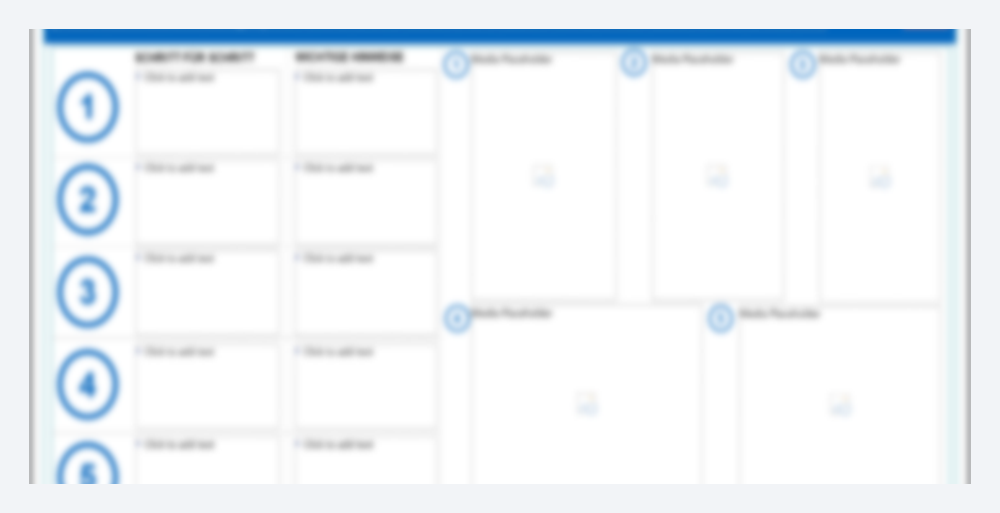
Figure 2 – Example of an OPL (One-Point Lesson)
Phase B: Unfolding and implementation
Lean agents selected the best practices submitted by other warehouses and implemented them locally. This included testing, adapting, validating, and integrating the practices into daily operations.
This phase transformed the cycle from a simple sharing mechanism into a cross-country improvement engine. To accelerate learning across the network and ensure that improvements with proven impact were adopted beyond their original site. This phase turned isolated success into network-wide standards.
Lean agents led the implementation, supported by team leaders, while local managers validated feasibility and ensured alignment with operational priorities. This phase typically spanned two to three weeks, following the collection period.
How it worked in practice:
- Lean agents reviewed the list of validated Best Practices on SharePoint.
- They selected practices relevant to their warehouse context.
- Implementation was carried out in the Gemba, with adjustments as needed.
- Results were reviewed and documented for the next phase.
Phase C: Promotion, review and recognition
The yokoten team reviewed the implemented practices, evaluated their quality and impact, and recognized the best contributions. Approved practices were uploaded to the SharePoint repository, making them accessible to all countries.
To reinforce a culture of continuous improvement, celebrate high-quality contributions, and motivate teams to participate actively in future cycles. The yokoten team conducted the evaluation, and local managers validated final decisions. The teams with the best practices and implementations received due recognition.
Finally, the last week of the cycle was dedicated to review, communication, and recognition. In practice, this translated into:
- The yokoten team evaluated practices based on impact, clarity, and alignment with Lean principles.
- Approved practices were added to the international repository.
- Recognition was given to the teams with the best OPLs and the best implementation results.
In parallel, a push cycle for standard solutions was established to deploy improvements with proven financial impact.
This cycle followed six steps—from collecting solutions to auditing results—and involved logistics managers, lean agents, and national leadership. Each solution was documented with a standardized template including step-by-step instructions and quantified benefits.
The impact was significant:
- The first Best Practice Cycle collected over 25 practices from 16 warehouses across three countries.
- The Standard Solution Cycle identified 20 solutions ready for rollout, representing more than €1 million in annual financial impact.
Beyond the numbers, the yokoten model created a repeatable system for operational learning, ensuring that improvements no longer stayed local but became part of the organization’s shared knowledge base.
Reinvent your consumer products operations with our solutions
Measurable impact across the network
Together, the Lean Academy and yokoten cycle created a cohesive ecosystem for capability building and continuous improvement. The Academy ensured that employees at all levels understood Lean principles and could apply them consistently. The yokoten cycle ensured that improvements spread quickly and systematically across warehouses.
The transformation strengthened alignment between international and national Lean teams, increased process standardization, and accelerated the rollout of proven solutions. It also reinforced a culture in which learning, sharing, and improvement became part of daily operations.
The road ahead
- Pilot implementation of standard solutions in selected warehouses.
- Full roll-out across all countries.
- Continuous content updates every 6 months.
- Expansion of the Lean Academy to additional roles and advanced modules.
- Integration of results reporting into the organization’s Business Operating System.
Conclusion: A scalable model for excellence
The combined implementation of the Lean Academy and the yokoten cycle established a scalable, international model for operational excellence. By developing people, standardizing processes, and creating a structured system to share and deploy improvements, the organization built the foundations for a sustainable Lean culture across its warehouse network. The results achieved in the first cycles demonstrate the strength of this approach and confirm its potential to continue driving performance, alignment, and continuous improvement across all countries.
We respect our clients’ confidentiality agreements. While names have been changed or omitted, the results are real.
See more on Consumer Products
Find out more about transformation in this sector
See more on Logistics
Find out more about transformation in this sector