
Article
Safety stock in pull systems: How to size and optimize


No value chain is immune to uncertainty. Safety stock acts as a buffer whenever there are fluctuations in consumption or delays in supply, ensuring that material flow is uninterrupted and that operations continue to respond consistently to market needs.
Although essential for maintaining service levels, safety stock also represents occupied space and tied-up capital. The main challenge for organizations lies in finding the ideal level—robust enough to absorb variability, yet lean enough to avoid waste.
This article takes a practical approach to sizing and optimizing safety stock in pull environments, analyzing different replenishment scenarios and the critical variables leaders must master to drive logistical and operational improvement.
What is safety stock, and what is it for?
Safety stock is a strategic material reserve designed to protect production and logistics systems from unexpected fluctuations. It doesn’t increase capacity or improve efficiency, but it does ensure stability in the face of demand variability or supply delays. Its main objective is straightforward: keeping operations running even when conditions deviate from plan.
Without safety stock, any supply delay or sudden shift in demand can quickly lead to stockouts, compromising operational efficiency, productivity, delivery performance, and ultimately, business credibility.
Factors affecting the need for safety stock
The sizing of safety stock primarily depends on two key factors:
- Demand variability: The greater the fluctuation in the consumption of a given product, the higher the safety margin needed to absorb those deviations.
- Lead time variability: Instabilities in supply chain lead times—whether due to logistical failures, production issues, or supply disruptions—require additional safety stock to compensate.
In both cases, safety stock does not eliminate the root cause of variability—it merely provides temporary protection for operations. That’s why safety stock sizing should always be accompanied by structural initiatives aimed at reducing variability.
Pull systems and the role of safety stock
In pull systems, material flow is driven by actual consumption, not by forecasts. Every replenishment movement occurs only when there is a real, downstream need. This logic helps reduce total inventory and exposes inefficiencies and variability more quickly—but it does not eliminate the need for safety stock; it simply repositions it within the system.
Kanban as a synchronization system
Kanban functions as a visual replenishment signal. Whenever a container is consumed, the associated Kanban automatically triggers a replenishment request. This logic creates a continuous and visually manageable flow, where:
- The product is always available at the point of use.
- Replenishment is triggered by consumption.
- Physical flow and information flow are fully integrated.
Essentially, Kanban turns daily demand fluctuations into production or transport signals only when needed, avoiding overproduction and excess inventory.
The Kanban loop concept
The Kanban loop defines the complete logistical cycle that the Kanban follows—from the moment of consumption to the replenishment of stock. This cycle includes several partial lead times that together make up the total replenishment lead time:
- Lead time for processing the replenishment order.
- Picking lead time (time required to prepare the material).
- Production and/or transportation lead time.
- Inbound lead time (time until the material is available for use).
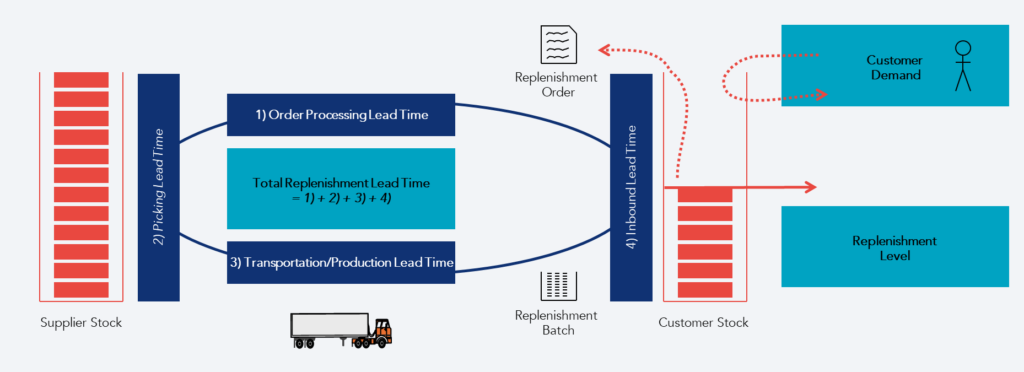
Figure 1 – Kanban loop
This cycle is illustrated in the image above, clearly showing how the material flow and information flow are synchronized.
Replenishment level and the safety stock formula
The replenishment point in a Kanban system is calculated to ensure material availability throughout the entire cycle time, plus a buffer for variability. The calculation is based on the following components:
Replenishment level = Demand during replenishment lead time + safety stock
Safety stock accounts for fluctuations in both demand and lead time:
Safety stock = demand variation + lead time variation
This model enables an objective adjustment of the number of Kanbans, ensuring the system continues to operate even under variable conditions.
Impact of demand and lead time variability on safety stock
Safety stock exists specifically to absorb the variability that occurs between consumption and replenishment. Whenever demand or lead time deviates from the average, the system approaches its stock limit.
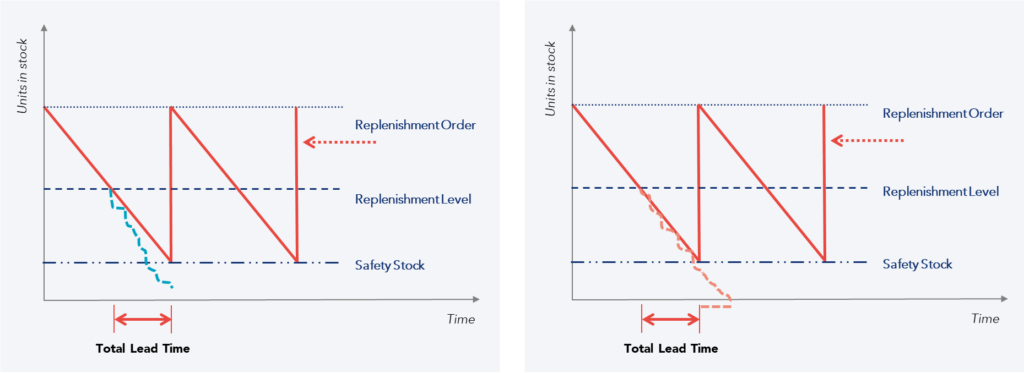
Figure 2 – Effect of demand and lead time variability on inventory
When demand during the lead time is higher than average (left image), consumption accelerates and can quickly deplete the available stock before the new supply arrives. This situation can lead to stockouts, even in a properly sized replenishment system.
On the other hand, when actual lead time exceeds the planned lead time (right image), material takes longer to reach the point of use. This delay can also result in stockouts.
It is this combination of demand and lead time variability that defines the need to maintain an appropriate level of protection, adjusted to the risk and criticality of each product.
Empower your team with lean stock management training
Calculating safety stock in pull-based replenishment cycles
Kanban-based pull systems can take on different configurations depending on the supply source and the nature of the flow. Below are three practical application scenarios, each with distinct characteristics for calculating safety stock
Transportation Kanban with an external supplier
In this model, the supplier is located outside the production facility and is responsible for shipping the materials. Key characteristics of this cycle include:
- The customer is a supermarket of purchased components.
- The supplier is an external vendor (outside the organization).
- Transportation is by truck, usually without a standardized working cycle (i.e., no fixed delivery schedule).
- Typical transportation frequencies range from 1 to 5 days but can extend to 30 days or more (in the case of international shipments).
- Delivery lead time can vary significantly around the average, especially when the external supplier operates with high levels of waste.
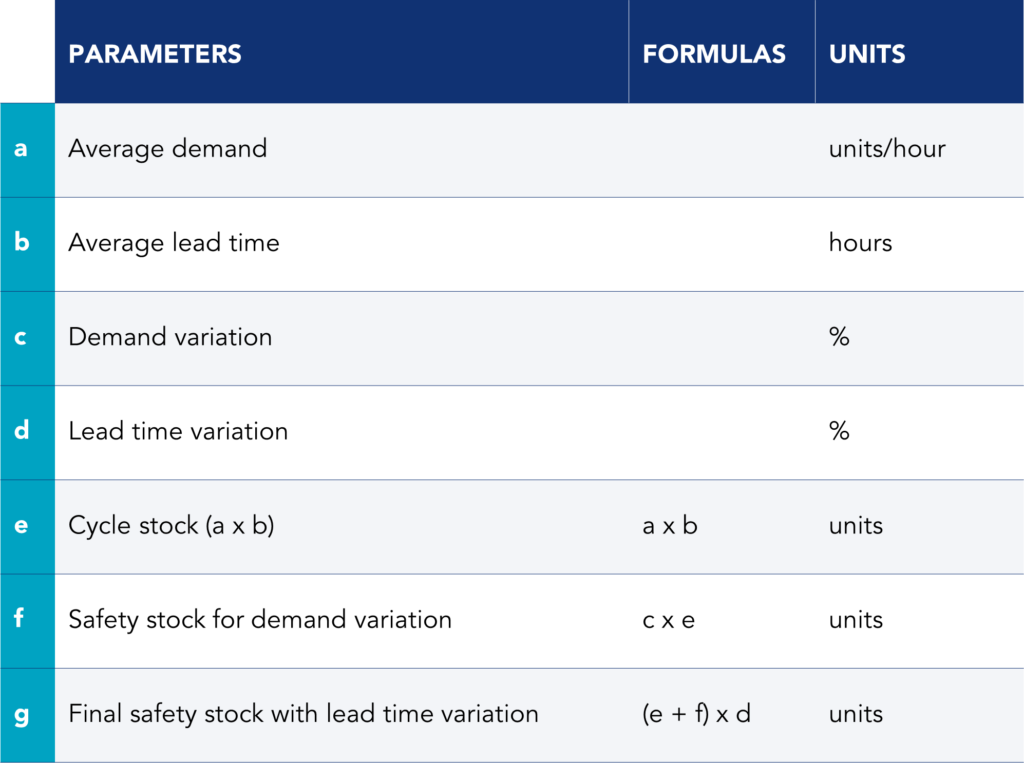
The central challenge in this cycle is managing external variability—aiming to stabilize transportation frequency and negotiating more predictable logistics conditions.
Internal transportation Kanban
This model applies to material movements within the production facility, often supported by Mizusumashi operators who follow regular supply cycles.
Key characteristics include:
- The customer is a border of line supermarket.
- The supplier is either an end-of-line supermarket or a supermarket of purchased components.
- Transportation is carried out by a Mizusumashi following a standardized working cycle (typically with a fixed lead time of 20 or 60 minutes).
In this case, lead time variability is virtually zero, so safety stock is focused solely on demand variability.
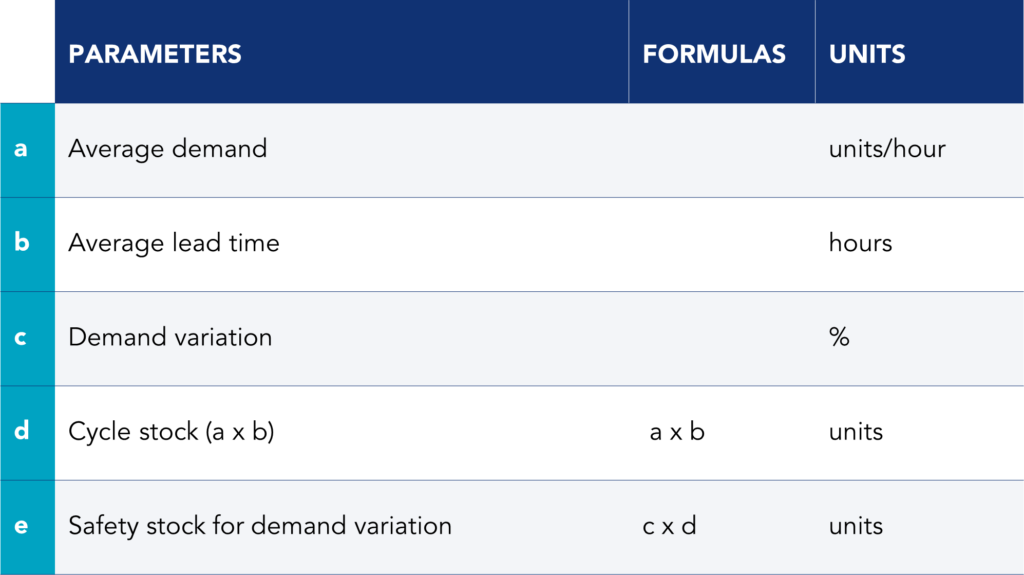
This model allows operations to run with very low levels of safety stock due to the high stability of the internal logistics cycle.
Production flow Kanban
This cycle applies within the production process itself, especially in assembly lines with zero setup time or minimal residual setups. The Kanban directly manages production sequencing, following the order of consumption and preventing early production.
Key characteristics of this loop include:
- Kanbans are attached to each container in the supermarket.
- Consumption at the finished goods supermarket releases the Kanban.
- The Kanban is sent to a line with zero setup capability (meaning it can flexibly run small or even single-piece batches).
- The Kanban enters a sequencer at the start of the line.
- The line-side area is stocked with all components required to begin production.
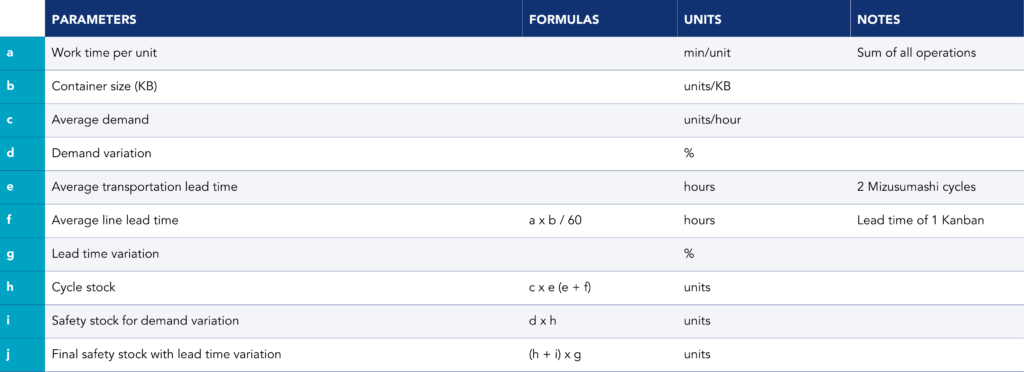
In this case, safety stock is influenced not only by demand but also by variability in production time.
The challenge of variability: How to reduce the need for safety stock
In a Lean system, the real challenge isn’t just calculating the ideal safety stock level—it’s progressively reducing the need for it by minimizing inventory buffers. Safety stock exists due to uncertainty in demand, lead times, production, and process stability. The more control an organization has over these sources of variability, the lower the stock level required to ensure continuous supply.
Continuous improvement plays a central role in this effort, targeting the root causes of variability and helping to build systems that are more robust, predictable, and efficient.
Minimizing variability through continuous improvement
As we’ve seen, variability can be grouped into two main areas: demand variability and lead time variability.
- Reducing demand variability:
- Lower average lead time: the shorter the replenishment time, the smaller the window of exposure to demand fluctuations.
- Level final customer demand (Heijunka): produce in small batches with high frequency and regularity.
- Segment using ABC (or PQ) analysis: identify products with more predictable behavior (A items), allowing tighter control and lower stock levels compared to B and C items.
- Reducing lead time variability:
- Shorten overall average lead time: reduce transportation, picking, and order processing steps by applying Lean logistics and warehousing principles to create flow.
- Standardize logistics work: establish stable routines, with standardized Mizusumashi and Milk Run cycles to ensure regular pick-ups and deliveries, improving logistics network stability.
- Improve production process reliability: apply Total Productive Maintenance (TPM) to monitor and improve OEE, and implement Standard Work on production lines.
By reducing variability across both dimensions, companies can create more stable and predictable systems. The direct result is a sustained reduction in safety stock levels—freeing up capital and space without compromising service levels.
Conclusion: The future of safety stock
Sizing safety stock remains one of the most critical aspects of operational management and supply chain optimization. The challenge lies not only in mathematical calculation but in building increasingly stable and responsive systems—where safety stock can be progressively reduced without sacrificing service levels. Achieving this requires the application of Lean principles in warehousing, logistics, and production, along with investment in operational efficiency training—empowering teams to apply these concepts in practice.
Emerging technologies are also enhancing these processes. The use of advanced analytics and machine learning enables more accurate demand forecasting, allowing for dynamic, data-driven safety stock adjustments in real time. Additionally, IoT sensors on production lines and throughout the logistics chain provide complete visibility into material flows, enabling the anticipation of disruptions.
Despite the growing role of technology, the core principle remains: controlling variability is the most effective way to optimize safety stock. Combining Lean operations, robust pull systems, and digital intelligence will enable organizations to become more agile, with supply chains that are more resilient, efficient, and ready for volatile market conditions.
Looking to optimize your safety stock levels without compromising service level?
Still have questions about safety stock?
How does the EOQ (Economic Order Quantity) model relate to safety stock sizing?
The EOQ model helps determine the optimal order quantity that minimizes total inventory costs—specifically, ordering and holding costs. However, it does not directly account for variability in demand or lead time. Safety stock complements the EOQ model by protecting operations against this uncertainty and ensuring service levels are maintained.
What’s the difference between safety stock and reorder point?
Safety stock is an additional inventory reserve used to cover unexpected fluctuations in demand or supply delays. The reorder point, on the other hand, is the stock level that signals when a new order should be placed. This point is calculated based on expected demand during the lead time and includes safety stock to prevent stockouts.
What data is needed to accurately calculate safety stock?
Accurate safety stock calculation requires reliable data on average demand, demand variability, average replenishment lead time, and lead time variability. Additionally, the desired service level must be defined, reflecting the level of protection the company wants against stockouts.
How do you calculate demand and lead time variability?
Demand and lead time variability are typically measured using the standard deviation of historical data. Depending on the organization’s risk management strategy, a multiple of the standard deviation may be applied, reflecting the desired service level. A higher service level requires a greater safety margin, resulting in a more robust safety stock that can absorb extreme variations.
See more on Discrete Manufacturing
Find out more about transformation in this sector
See more on Operations
Find out more about improving this business area