
Case Study
Increased productivity in specialized retail
Goals : improve in-store team efficiency by dynamically adjusting resources, standardizing processes, and strengthening customer service levels


+25%
Productivity
+11%
Online service level
€28M/year
Volume managed with the new approach
To ensure sustainable business growth and enhance customer experience, the organization concerned undertook an operational transformation centered on productivity and efficiency. This approach was particularly crucial in the context of rising sales and shrinking margins, where tighter cost control and a more agile response to retail dynamics were essential. By critically analyzing store processes and redefining operational practices, the company was able to align its resources, tasks, and priorities to support a more efficient and customer-focused model.
A global retailer with an integrated operating model focused on efficiency
The company is an Australian-based retailer that operates with a business model centered on local product design and complete control of the value chain, from development through to distribution. With over 450 stores and a workforce of more than 55,000 employees, the organization serves approximately 7 million customers each week and is recognized for offering high-value products at the best possible prices.
With a presence in Australia, New Zealand, Southeast Asia, Europe, and North America, the company positions itself as a leader in omnichannel retail, continuously investing in innovative shopping experiences across its stores, online platforms, and mobile apps. This strategy is driven by a strong sense of social responsibility and commitment to sustainability, reinforcing the organization’s active role as a change agent in the communities it serves.
Addressing structural inefficiencies to sustain growth
As the organization pursued sustainable expansion, the need to revise the store operating model became evident. The increasing operational complexity and ongoing pressure to deliver excellent service required a thorough review of the factors that limit efficiency and impact performance. A steady rise in units sold, combined with shrinking margins, placed added pressure on productivity. At the same time, direct labor costs were increasing at a faster pace than sales volume, resulting in a high direct labor/sales ratio. It was in this context that the main challenges to be overcome were identified to ensure a more agile, adaptable, and customer-centered operation.
The main challenges identified are outlined below:
Teams not aligned with the actual workload
The size of the teams was fixed, with no variation depending on the flow of customers, the number of boxes received, or the volume of online orders. This lack of flexibility led to moments of overload or low occupancy, with a direct impact on productivity.
Excessive time spent on non-customer-facing tasks
Much of the team’s work was concentrated on support tasks that added little value to the customer, reducing the time available for service and efficient restocking.
Lack of clarity in task distribution
The absence of a clear model for task assignment and monitoring made team coordination difficult, leading to the ineffective use of available resources.
Inconsistent customer experience across stores
Stores delivered uneven service levels due to differing operational practices and the lack of shared standards. This variability compromised the customer experience and brand consistency.
Is your operation facing similar challenges?
The approach implemented to improve operational efficiency
To address these challenges, the company implemented a structured Lean-based approach focused on aligning resources with actual workload and standardizing processes:
Dynamic team sizing
The size of the teams is now adjusted daily based on specific data, such as the number of customers, boxes received, and the volume of online orders. This flexible model has enabled greater efficiency in resource allocation.
Standardization of tasks and processes
Clear standards were established for key operational tasks, ensuring consistent execution across stores. Planning tools and visual management systems were also introduced, supporting better day-to-day management and greater transparency in task assignment. Regular monitoring of these activities helped enforce compliance with new procedures and reinforced operational discipline at the store level.
Alignment across more than 200 stores
A coordinated effort was made to align operating practices across more than 200 stores, with direct involvement from frontline employees and team leaders. This initiative ensured consistent process execution and encouraged the sharing of best practices among employees.
Results achieved through the new operating model
The implementation of this new operational approach led to significant improvements across several key areas of in-store performance. Below are the main results achieved, which have a direct impact on productivity, cost, and service quality.
Productivity increase
Productivity increased by 25%, reflecting better use of the teams’ time and greater capacity to respond to operational needs.
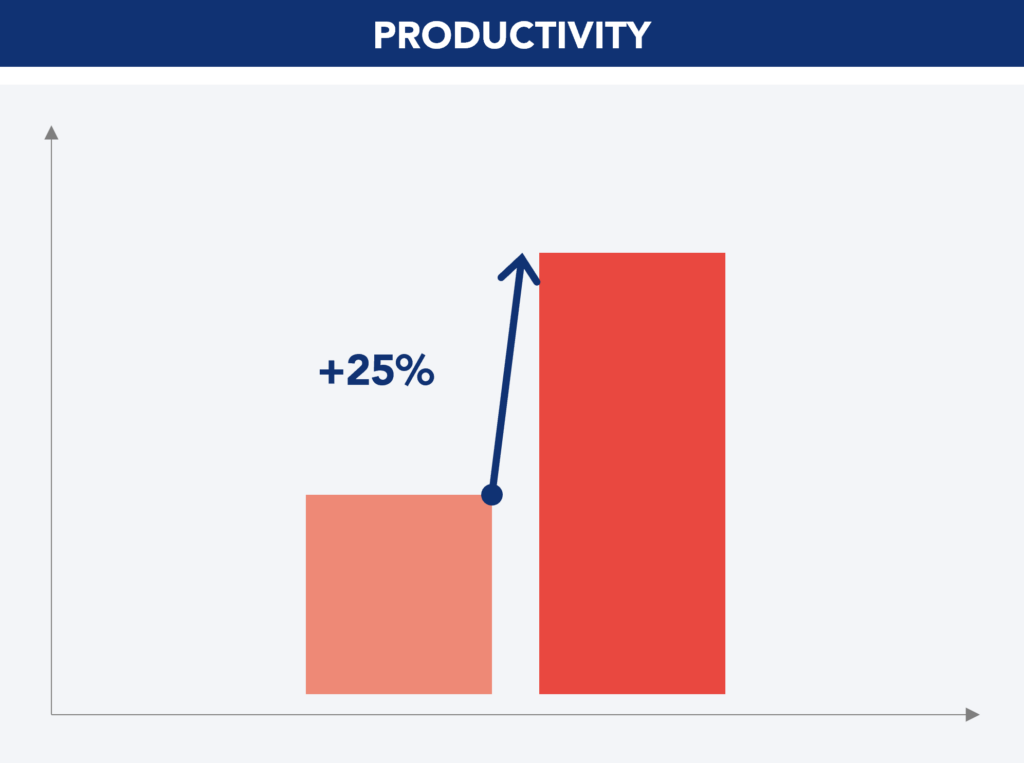
Figure 1 – Graph showing productivity increase
Reduction in operating costs
A 10% reduction in the high direct labor/sales ratio highlighted more efficient resource management, aligning labor costs with sales volume.
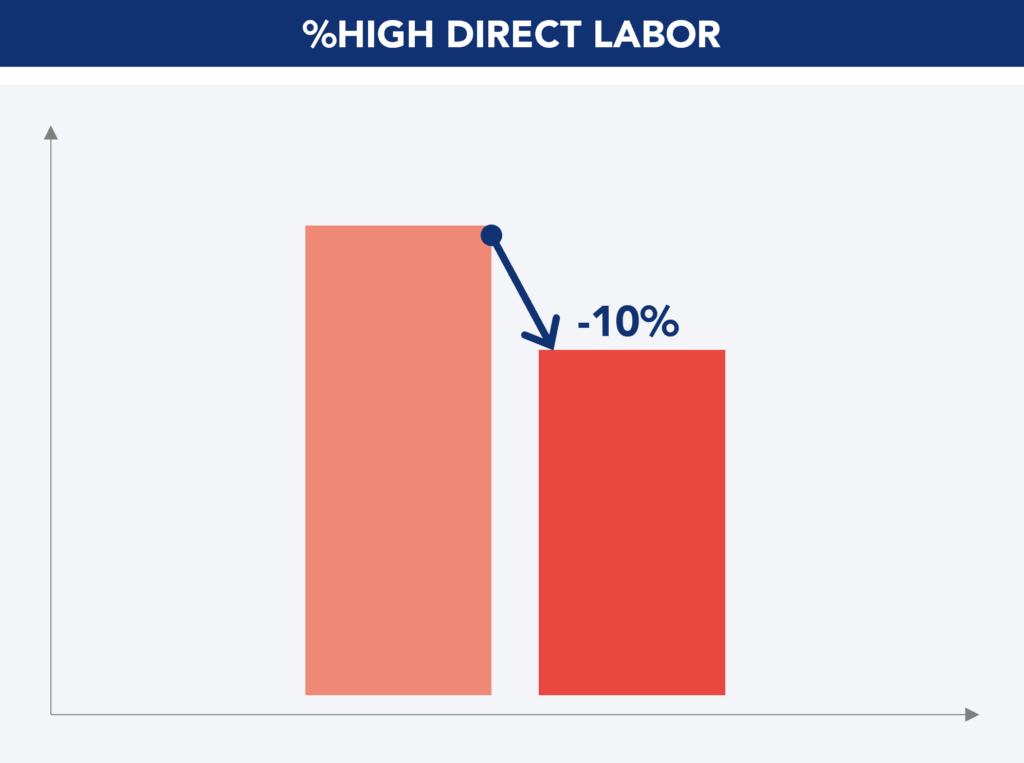
Figure 2 – Graph showing the reduction in direct labor costs in relation to sales
Improved customer service
Online service levels increased by 11%, demonstrating the effectiveness of the new approach in handling orders and meeting deadlines.
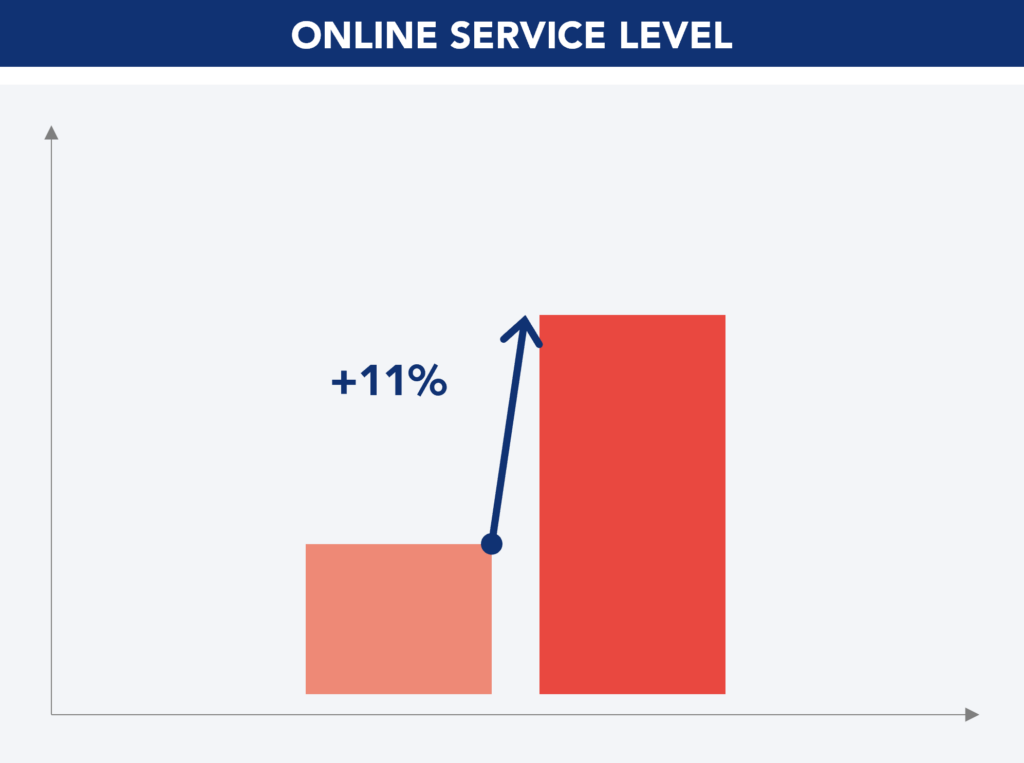
Figure 3 – Graph showing the percentage increase in online service level
We are committed to respecting our clients’ confidentiality. While we have altered or omitted their names, the results are genuine.
See more on Improvement Projects
Find out more about improving this business area
See more on Retail
Find out more about transformation in this sector