
Case Study
Culture of safety and accident prevention at a packaging film production facility
Goals: eliminate work-related accidents involving absence and reduce the associated hours of absence to zero through a structured and sustained culture of safety


-100%
Accidents involving absence
-100%
Hours of absence per accident
90
Safety measures identified and implemented
The manufacturing industry has one of the highest rates of workplace accidents in Europe, due to employees’ direct exposure to machines, materials, and continuous production processes.
Consequently, safety is no longer merely a regulatory requirement. It has become a crucial factor for productivity, talent retention, and the teams’ trust in the organization.
The company and its commitment to industrial safety
The organization in question specializes in the manufacture of flexible packaging films, producing multilayer, coextruded, biaxially oriented polyolefin shrink film for applications in the food, cosmetics, and paper packaging industries, as well as for display items in general retail markets. It is part of an international group and operates under industry-recognized quality and sustainability certifications.
With over 45 years of experience and approximately 150 employees, the organization generates an annual revenue of 35 million euros. Employee safety is a central pillar of its operations, supported by a management policy based on ethical principles and accountability.
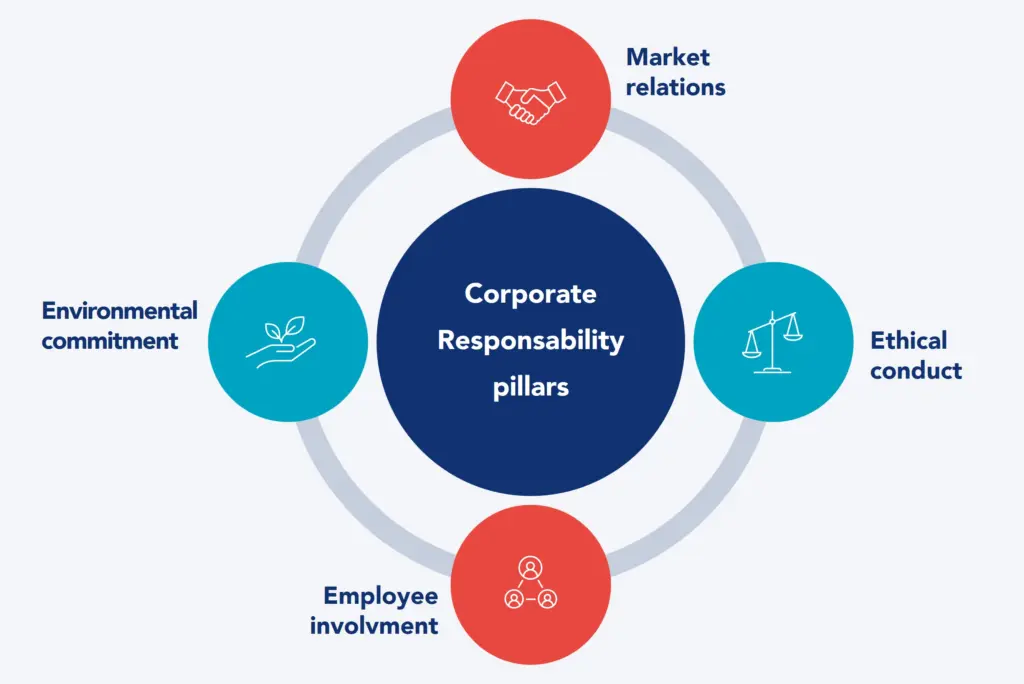
Figure 1 – Pillars of corporate responsibility
The challenge of eliminating workplace accidents
Before the intervention, the safety assessment revealed a set of weaknesses that put employees’ physical well-being at risk and compromised the organization’s operational excellence goals.
Unsafe work practices
A widespread lack of safe work practices was identified, particularly in tasks performed at height, exposing employees to fall risks in various areas of the factory.
Unsafe handling of equipment and materials
The handling of equipment and materials, such as guillotines and other cutting machines, was carried out without sufficient safeguards, increasing exposure to serious accidents.
Risks of slipping, falling, and cuts
Unclean work areas and inadequate tools created recurring risks of slipping, falling, and cutting, exacerbating the accident rate.
Failure to comply with safety measures
Dangerous maneuvers and noncompliance with established safety measures were recorded, revealing gaps in the shop-floor safety culture.
In quantitative terms, the reference year recorded 20 accidents resulting in absence, with a total of 2,500 hours of absence associated with these accidents.
The structured approach to risk elimination
To address the identified challenges, a structured project was conducted using the 9-step A3 methodology, with its scope extended to all machines and risk points (extrusion, processing, maintenance, and warehouse) over approximately eight months.
Identification and classification of risk points in the field
A field-based system for recording critical points was implemented, making it possible to identify, classify by type and severity, and design specific solutions for each risk detected in areas such as extrusion, processing, and the warehouse.
Improving the culture of safety
Short, regular training sessions, posters and visual communications, a continuous system for recording critical points and feedback, monthly safety discussion meetings, and a recognition and reward system were implemented, involving supervisors, assistant supervisors, and the safety committee.
Safety gemba walksbysector
Safety gemba walks were introduced and carried out twice a day in the extrusion, processing, and warehouse sectors, enabling direct identification of risks in the field and tracking the evolution of safety conditions in each sector.
Learn how to effectively structure gemba walks tailored to your industry’s specific context
Addressing the identified critical points
Each identified critical point was systematically addressed, with solutions designed for specific risks, such as the threading method on folding machines and the handling of rotating platforms.
Weekly safety training and strengthening of the culture
Fixed weekly training sessions (“safety briefings”) were established on Fridays, along with a monthly safety report for ongoing monitoring of indicators. The safety culture was further reinforced by celebrating milestones achieved, such as the record of 60 consecutive days without accidents.
The results achieved through the project
Quantitative results
- 100% reduction in the number of accidents involving absence, compared to the baseline of 20 accidents.
- 100% reduction in the total hours of absence per accident, compared to the baseline of 2,500 hours.
- Identification and implementation of 90 safety actions across the entire production facility.
Qualitative results
The project led to the teams fully embracing the methodology for identifying and reporting critical issues, coupled with a strong sense of urgency and enthusiasm in implementing solutions. The involvement of the entire team was crucial for the simultaneous execution of a large number of improvement actions.
Apply the same risk elimination approach at your factory
Lessons Learned
Among the factors that contributed to the project’s success, the cross-team involvement and the rapid adoption of the risk identification methodology stand out. Throughout the implementation, several challenges were also identified, namely accelerating the transformation of the shop-floor safety culture, prioritizing actual risks over lower-impact ones, and strengthening the involvement of supervisors and assistant supervisors in consolidating safety awareness within their respective teams. These challenges were progressively overcome through the teams’ commitment, continuous learning, and collective dedication to improvement, strengthening the safety culture and building a solid foundation for its future development.
Consolidating these lessons learned demonstrates that cultural transformation and operational excellence are ongoing processes, in which empowering teams in the field is the true driver of change. Structuring and sustaining dynamics of this nature requires cooperation with specialized partners. Kaizen Institute’s methodological support ensures that efficiency, safety, and social responsibility advance in complete harmony, turning complex challenges into lasting standards of excellence.
We are committed to respecting our clients’ confidentiality. While we have altered or omitted their names, the results are genuine.
See more on Sustainability
Find out more about improving this business area