
Case Study
AI and KAIZEN™ in the health and aesthetics sector: from overloaded services to an autonomous clinic
Goals: increase operational productivity and customer experience through the digitalization and automation of the scheduling process, reducing the workload of reception teams and cancellation rates


+22%
Revenue
6,500 h/year
Capacity freed at reception
€460k
Total benefits
The health and beauty sector has been experiencing accelerated growth, driven by rising demand for aesthetic medicine services, wellness treatments, and specialized care. This growth has placed increased pressure on clinic operations, including a higher volume of appointments, greater customer expectations, and the urgent need to optimize processes that, in many cases, still rely on manual interaction and poorly automated workflows.
In this context, the operational efficiency of reception services has become a critical competitive factor. The ability to manage appointments, confirmations, cancellations, and customer communication in an agile and consistent manner has a direct impact on customer experience, occupancy rates, and, consequently, business profitability.
From front desk to excellence: the context of a reference clinic
The company in question is a leading clinic in the health and aesthetics sector, offering a broad range of services encompassing aesthetic medicine, laser treatments, hair care, beauty services, sports therapy, podiatry, and plastic surgery, among others. With a multidisciplinary team and a declared commitment to excellence in customer service, the organization has positioned itself as an integrated health and wellness destination, distinguished by the breadth and quality of its offering.
With an annual volume of approximately 47,000 appointments, the company faced the challenge of maintaining its service standards in a context of continuous demand growth, without proportionally increasing operational resources.
Operational challenges identified during the current-state analysis
The scheduling process was primarily based on direct phone contact with the reception desk, which handled approximately 70% of total appointment volume. This model placed increasing pressure on the team, which was simultaneously handling phone calls, manually confirming appointments, managing cancellations, and providing in-person customer support.
Overload of the front desk services with repetitive, low-value-added tasks
The reception team managed the vast majority of appointments entirely manually, with no automation of confirmations or reminders. The 160 daily confirmation calls represented 780 annual hours of work, and the 460 monthly voicemail messages added a further 730 hours — totaling 1,500 annual hours, approximately one-eighth of total reception capacity, dedicated to tasks eligible for automation. The result was an operation with no capacity buffer during peak periods and a 12% cancellation rate.
Absence of automation in the confirmation and reminder processes
There was no automated process for confirming appointments or sending appointment reminders, with the entire process being handled through manual phone calls. Additionally, there was no standardized follow-up procedure for non-response situations, which directly contributed to the high incidence of cancellations and no-shows.
Underutilized digital channels
Digital channels (website and app) accounted for only 20% of total appointments, with no contribution from WhatsApp. At the same time, the website offered limited information on availability, pricing, and treatment details, prompting customers to contact the reception desk for basic inquiries and, consequently, contributing to higher volumes of low-complexity calls.
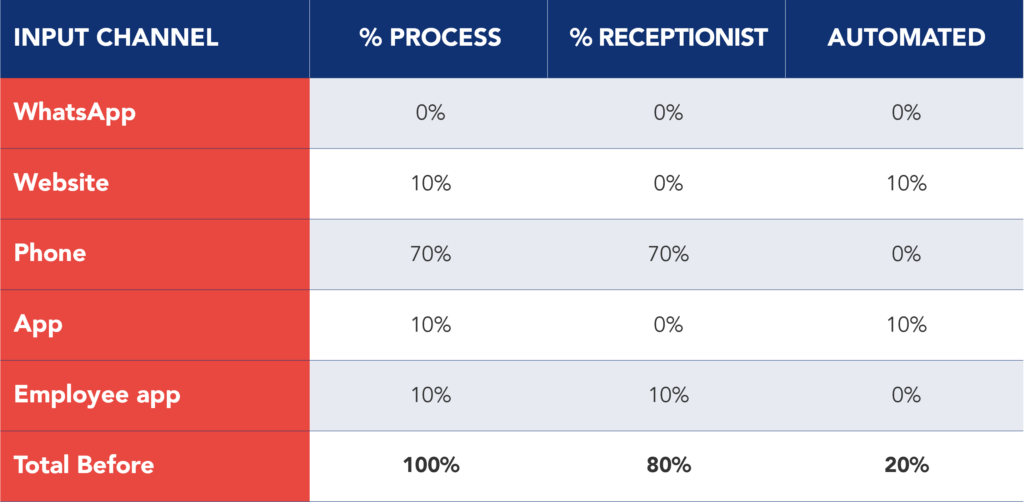
Figure 1 – Appointment distribution by input channel before program implementation
Absence of a missed-call recovery process
No structured process existed for recovering missed calls. The 5,500 annual voicemails were managed in an unsystematic manner, without prioritization criteria, without tracking response times, and without monitoring which appointments were actually rescheduled, leading to a direct loss of business opportunities.
Lack of visibility on operational performance
The management team did not have a dashboard of operational KPIs that would allow them to monitor the reception desk’s performance in real time, particularly in terms of the volume of appointments, cancellations, missed calls, and response times. This limitation hindered their ability to actively manage the operation and to systematically identify opportunities for continuous improvement.
Turn your operation into a smarter, more efficient one
An integrated approach for smarter operations
The response to the identified challenges was built on an integrated continuous improvement and digitalization program, structured around six complementary intervention areas. The approach was grounded in a clear principle: technology alone does not transform operations — it is the combination of intelligent automation with new management routines and team behaviors that drives sustainable results.
Daily KAIZEN™ and process standardization
A Daily KAIZEN™ system was implemented, featuring visual management boards and daily tracking of operational indicators. The standardization of the sales script for the reception team, combined with the definition of structured support for the customer journey, ensured greater consistency in service levels and created the conditions for the team to identify deviations and propose improvements autonomously and systematically.
Automated confirmations and reminders via WhatsApp
To ensure every appointment actually takes place, a proactive customer communication flow was implemented based on two key touchpoints: an immediate confirmation via WhatsApp right after scheduling, and an automatic reminder the day before, both with integrated options to confirm, reschedule, or cancel easily. For non-response cases, a structured follow-up process was also defined to replace manual confirmation calls. This approach prevented last-minute no-shows and cancellations, freeing up 780 annual team hours and protecting approximately €33,200 in annual revenue.
Structured recovery of missed calls and voicemails
When the initial contact fails — missed calls or unanswered voicemails — an immediate recovery process was put in place, with automatic WhatsApp messages sent and voicemails routed to a prioritized queue based on customer value and request urgency. Real-time monitoring of missed calls, response times, and recovered appointments ensures no contact is lost in the process. This approach seized opportunities that would otherwise have gone overlooked, freeing 725 annual team hours and generating approximately €32,500 in additional appointments.
Chatbot for website and app
A virtual assistant chatbot was developed and deployed, capable of answering frequently asked questions, presenting services and availability, and guiding customers through the online scheduling process. As a result, only exception cases and more complex scheduling requests are now routed to the reception team, reducing time spent on digital support by 25%, and freeing 3,000 annual team hours, while generating approximately €28,000 in additional value.
Virtual receptionist integrated with the management system
The highest-impact initiative was the implementation of a telephone virtual receptionist integrated with the appointment management system, capable of handling calls, classifying requests, creating appointments, and managing rescheduling and cancellations autonomously, with automatic confirmation via WhatsApp. Under this model, exception cases and more complex situations are directed to the reception team. This transformation freed 6,300 annual team hours and generated approximately €300,000 in benefits, establishing itself as the primary pillar of the reception’s operational transformation.
The impact of a well-executed transformation
The integrated implementation of automation and continuous improvement initiatives delivered significant results in operational efficiency, customer experience, and financial performance, demonstrating the impact of the transformation carried out across operations.
Released operational capacity at reception
The program released 6,500 annual hours of reception team capacity, previously consumed by manual, repetitive tasks. This capacity was redirected toward activities with higher added value, specifically in-person customer support, which offers a higher quality of service, as well as upselling and cross-selling initiatives.
Cancellation reduction and revenue recovery
The automation of confirmations and reminders, in conjunction with the implementation of a structured missed-call recovery process, contributed to a reduction in cancellation and no-show rates, directly protecting clinic revenue. Together, these two initiatives recovered approximately €65,700 in annual revenue.
Transformation of the channel structure
Dependence on the human-assisted phone channel dropped from 70% to 10% of the total volume of contacts processed, while automated channels now handle 95% of interactions, compared to the 20% recorded at the outset. The introduction of WhatsApp as an appointment-scheduling channel—which did not exist previously—now accounts for 50% of the total volume of contacts.
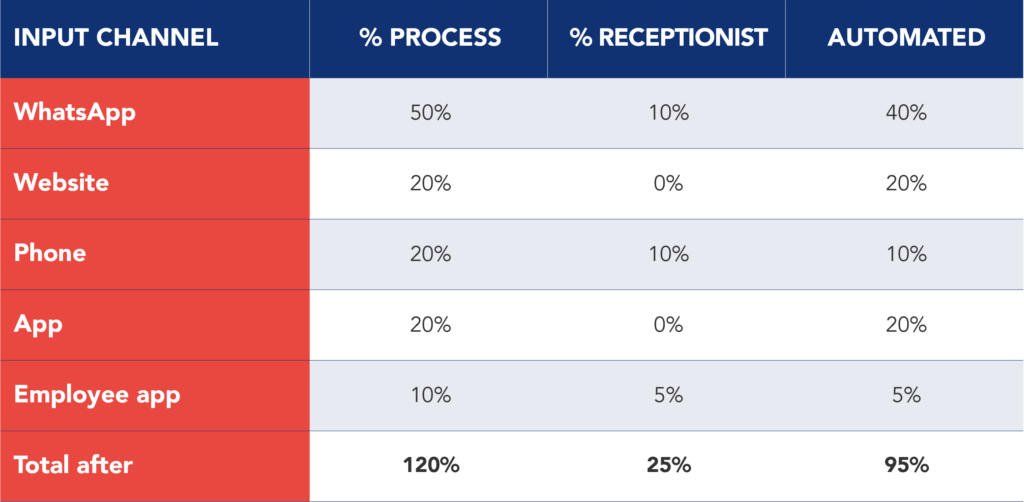
Figure 2 – Appointment distribution by input channel after program implementation
Revenue growth
The opening of new digital channels, the simplification of the online scheduling process, and the implementation of the virtual receptionist generated a 22% increase in revenue, supported by growth in appointment volume and an improved conversion rate across all channels.
Total financial benefits
The full set of implemented initiatives generated approximately €460k in annual financial benefits, split between direct operational savings and additional revenue resulting from new channel openings and improved appointment recovery rates.
Wondering how technology and KAIZEN™ work together?
A new way to operate and grow
This case study demonstrates what is possible when the right technology meets the right approach. The reception services of a clinic may seem like a detail, but they are not. It is the first and last point of contact with the customer, where the experience begins and ends — and where, in this case, 12% of appointments were silently lost every year, with no one measuring the true cost of that loss.
From the AI Receptionist to the chatbot, from structured missed-call recovery to confirmation automation, every initiative was grounded in standardized processes and teams equipped to manage, measure, and continuously improve. Daily KAIZEN™, sales script standardization, and visual KPI management were just as decisive in driving results as the technology itself — because without that foundation, any tool is just another unfulfilled promise.
This is what distinguishes a real transformation from a simple technology implementation. Kaizen Institute ensures that organizations do not simply end up with installed tools, but with smarter operations, more capable teams, and sustainable results over time. It is with this purpose that specialized digital solutions have been developed, designed to generate lasting operational impact.
We are committed to respecting our clients’ confidentiality. While we have altered or omitted their names, the results are genuine.
See more on Healthcare
Find out more about transformation in this sector
See more on Digital & AI
Find out more about improving this business area