Case Study
Achieving operational excellence in aluminum extrusion manufacturing
Goals: reduce stoppages and waste across extrusion, packaging, planning, and logistics, and build a plant-wide KAIZEN™ Culture supported by daily management and standard work


+800k€
Savings
-40%
Ongoing (work-in-progress) stock
– 30%
Stoppages in the extrusion process
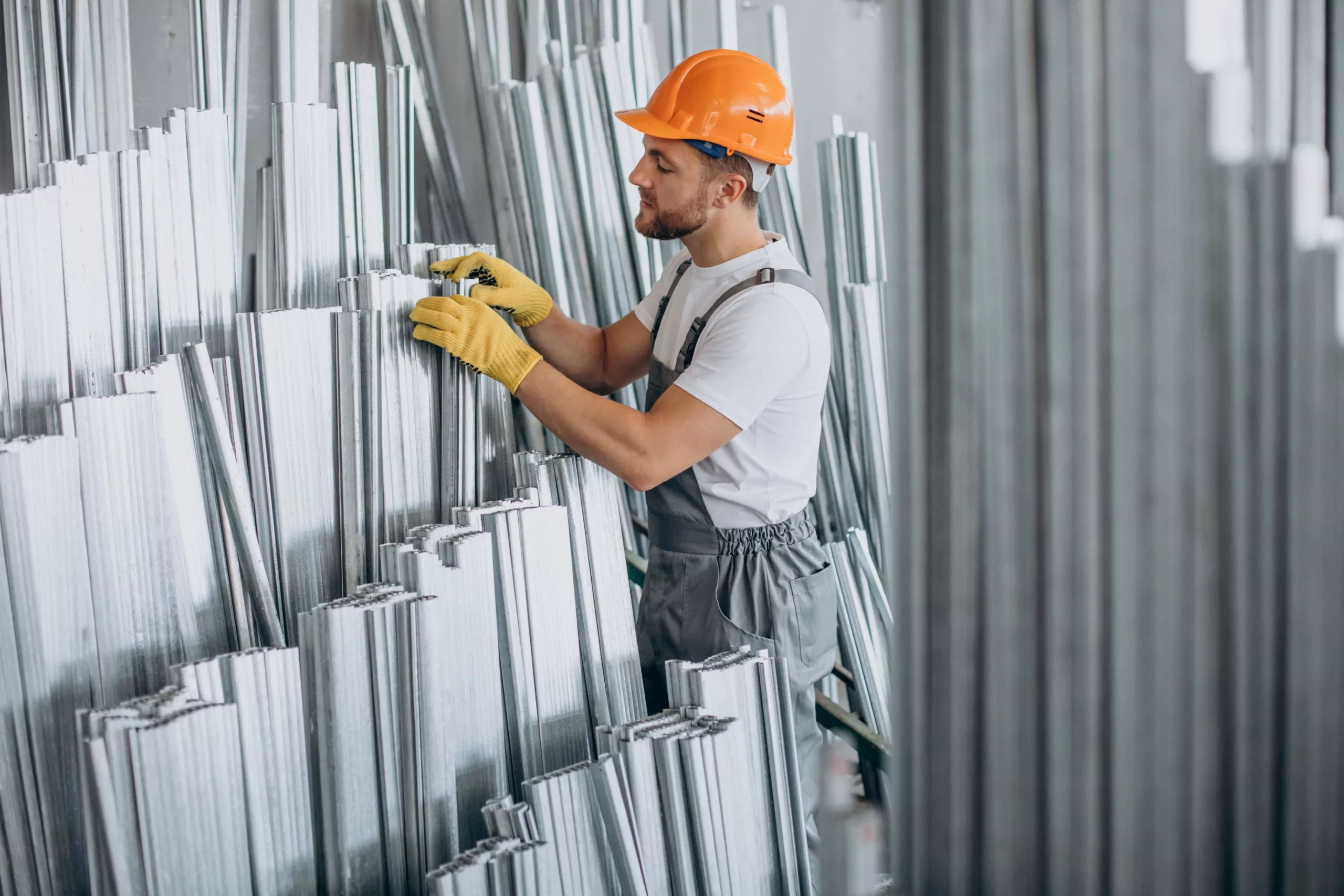
Since its foundation in 1970, the company has grown into a large aluminum extrusion manufacturer, supplying aluminum profiles to the construction, industrial, and architectural sectors across domestic and international markets. The organization employs over 600 people and generates more than €120 million in annual revenue by combining extrusion, cutting, machining, and packaging operations supported by an internal logistics and shipping structure.
Opportunities identified across the operation
An initial assessment of the plant identified several opportunities for improvement across extrusion, packaging, planning, layout, and internal logistics:
Extrusion inefficiencies and stoppages
The extrusion process showed recurring stoppages and inefficiencies, limiting overall equipment availability and constraining throughput.
High work-in-progress and limited space
Work-in-progress inventory was high across all sections, and space constraints limited the ability to introduce new production equipment. Rising work-in-progress led the company to consider a large-scale investment in an automated warehouse.
Limited integration between operations
Operations were not well integrated with one another, and planning followed a “push” logic rather than a “pull” logic aligned with actual demand.
Variable packaging capacity
The packaging section had limited and variable capacity, with equipment operating below its potential efficiency and waste (muda) present across a workforce of more than 120 packaging operators.
Absence of a structured continuous improvement culture
Prior to the project, the organization had not yet established a structured KAIZEN™ Culture, limiting its ability to sustain improvements once implemented.
Turn stoppages and waste into savings across your company
The approach to transforming the operation
Extrusion
Actions included indicator boards and shift-turnover communication, weekly coordination meetings between production and maintenance, daily and monthly stoppage dashboards, 5S implementation, and the development of standards covering work parameters, inspection routines, cleaning and basic maintenance, and problem-reaction protocols. Improvement workshops delivered more than 100 improvement actions, alongside a new weekly autonomous maintenance plan.
Packaging
To secure a steady supply of packaging materials to the line, a dedicated logistics operator was assigned to the area. Day-to-day management was reinforced through daily team meetings, while the flow of finished product was smoothed with box-leveling and custom-built palletizing supports. The workstation itself was reorganized around 5S, with structured supermarket and consumables areas, and the whole set-up was underpinned by a new packaging-plan database.

Figure 1 – 5S definition
Planning
Packaging capacity was adjusted to work-in-progress peaks, with subcontracting used during overloads. A daily dashboard, weekly meetings with the commercial department, systematic review of extrusion stock, and capability assessments by section improved planning accuracy.
Internal logistics and shipping
Basket requests were centralized according to planning levels, drivers used handheld devices (PDA) for real-time tracking of material location, overnight truck exchanges were introduced to secure shipping windows, and a mobile app replaced phone- and in-person-based basket requests.
Layout and flow
Stretch-film equipment was relocated closer to vertical lacquering, a stretch-film stock container was eliminated, and palletizing was integrated into the vertical lacquering line, as part of a broader redesign of the cutting, machining, and extrusion areas.
Project governance and culture
A weekly kamishibai routine assessed standard compliance; visual indicators tracked daily benefits; teams were trained in continuous improvement tools; and Daily KAIZEN™ and Leaders’ KAIZEN™ planning, together with pull and sequencing between operations, were rolled out with weekly visual follow-ups.
Explore our metals & machinery manufacturing consulting
Results achieved with the project
Quantitative results
- Savings of over €800,000 were generated through the project.
- Extrusion stoppages were reduced by up to 30%, improving availability by around 3%; on specific equipment, reductions reached 55%, improving availability by around 5%.
- Ongoing (work-in-progress) stock was reduced from about 550 t to 400 t, a decrease of roughly 40%.
- Inventory carrying value was reduced from about €1,400,000 to €1,000,000, a saving of roughly €400,000.
- Average stock coverage was reduced from 7 days to 5 days.
Qualitative results
The project strengthened process control through new metrics, standards, and capability assessments, and drove physical, procedural, and behavioral change across the plant. Top management engagement remained strong throughout; teams were trained in continuous improvement tools, and the organization’s perception of waste improved broadly. Daily KAIZEN™, 5S, and visual management practices, first established in the pilot areas, were identified as a foundation the organization plans to extend to the remaining areas of the plant.
Kaizen Institute’s manufacturing operations consulting works with manufacturing plants on exactly this pairing, treating the technical fix and the daily-management habit around it as one project rather than two. The plants that keep their gains tend to be the ones that build a culture of Daily KAIZEN™.
We are committed to respecting our clients’ confidentiality. While we have altered or omitted their names, the results are genuine.
See more on Manufacturing Operations
Find out more about improving this business area
See more on Metal & Machinery
Find out more about transformation in this sector