
Case Study
Continuous improvement in pharmaceutical distribution: how Phoenix’s Runcorn Site set the standard for its network
Goals: make Runcorn Phoenix UK’s flagship pharmaceutical distribution site, with orderly, lean operations that raise productivity, strengthen health and safety and involve everyone


+50%
Goods-in productivity
+10%
Picking productivity
-64%
Accidents on site
The company and its role in pharmaceutical distribution
Phoenix Healthcare Distribution is a national full-line pharmaceutical wholesaler and part of the PHOENIX group. Through a network of distribution centres across the UK, it supplies medicines and healthcare products to pharmacies, GPs and hospitals, providing reliable and cost-effective supply for the NHS and other healthcare providers.
With a team of 250 colleagues, Phoenix Healthcare Distribution’s Runcorn Site set out to become Phoenix UK’s flagship pharmaceutical distribution site: a clean, orderly depot where visitors can see Phoenix’s standards at first hand, with a visible lean culture built on 6S and a central Mission Control room.
The site’s lean transformation, carried out with Kaizen Institute, earned the Runcorn Site the KAIZEN™ Award UK & Ireland 2026 in the Operational Excellence category.
Get inspired by the success stories behind the KAIZEN™ Awards UK & Ireland
The challenge: from reactive to proactive
Runcorn always met its commitments, but at a cost. The working day was spent catching up, and departments competed for the same people and time. Before the transformation, three main challenges held the site back:
Departments pulling in different directions
Goods-in and replenishment ended every day with a backlog. Stock control staff were regularly pulled in to help other departments catch up, which left their own work behind. Product allocation, the work of placing stock where sales demand it, was pushed aside, and improvement projects made little progress.
“Before we started KAIZEN™, every department was actually working against each other.” – Sian Price, Stock Control Manager
Reacting instead of preventing
There were no preventive routines in place. Problems were handled as they surfaced, and colleagues often received feedback too late for it to change the outcome.
“It was a firefighting depot. It was always reactive instead of proactive.” – Joe Moffat, Operations Manager
A missing lean culture
For site management, culture was the biggest gap. Colleagues needed shared standards, a common view of performance and a regular forum for raising problems and ideas.
The approach: from housekeeping standards to daily improvement
The team recognised that every department had to change. Working with Kaizen Institute, the site introduced KAIZEN™ tools in stages, each building on the last.
6S and housekeeping standards
The team was briefed on housekeeping rules and expectations, built on one principle: everything has a home. Unwanted items were red-tagged and removed. As colleagues saw these basic standards held day after day, 6S became normal practice and gave the site a stable base for the routines that followed.
Gain valuable insights with our 5S guide and start improving your workspace today
Processes, layout and flow
Processes were reviewed and those that fell short were removed. The layout and flow of the warehouse were reworked from inbound to outbound, and pick-face stock presentation was improved.
Data-led product allocation
Sian Price’s team analysed which products needed to be moved. They placed each product in the right location using four inputs:
- Heat maps.
- Daily sales data.
- Product dimensions.
- Bin location sizes.
Daily KAIZEN™ and the Mission Control room
Daily KAIZEN™ meetings now involve every member of the site. Feedback reaches colleagues the same day, so teams can prevent problems instead of chasing them, and anyone on the shop floor can recommend an improvement or raise a concern.
Issues from these meetings feed into the Mission Control room (MCR) meetings. Every department reviews its KPIs there, from inbound to outbound, including the systems team. From there, the team drives its improvement projects, each one led by a team lead.
“For me, the mission control room is probably the most significant change that this depot has.” – Matt Baldwin, Depot Manager
Lean training for all colleagues
Every colleague completed the site’s lean training. This gave the whole team a common language for spotting waste and proposing improvements.
Results achieved
With shared standards and daily routines in place, the site saw results across productivity, health and safety and quality, as well as in its culture.
Quantitative results
Productivity:
- Productivity now exceeds 152 lines per hour.
- Goods-in productivity improved by 50%.
- Picking productivity improved by 10%.
- Automated picking for van orders rose from 57% to 69%, so vans now leave much earlier, with fewer customer issues.
Health and safety:
- Accidents on site fell by 64%.
Quality:
- The quality KPI, which measures quality deviations, remains below 0.1% of total volume, with consistency maintained across all operations.
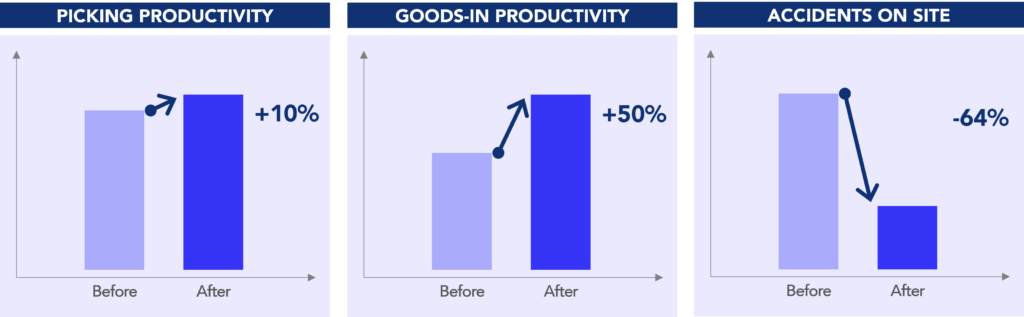
Figure 1 – Graph illustrating the main results achieved
Qualitative results
11 Phoenix sites are now replicating the Runcorn standard. Colleague engagement has grown: feedback comes in every day through Daily KAIZEN™ and the MCR, and colleagues take pride in the site every day. The work still gets done, but in a calmer, more organised way.
“We always got it done, but it was what I like to call organised chaos. Now, it’s a lot more organised […] a lot more stress-free.” – Steven Hanson, Production Supervisor
For site management, the culture change is the achievement they are proudest of, and the team is already looking at what comes next.
“We’re always looking to improve our productivity, improve our culture, and that will be down to our teams.” – Matt Baldwin, Depot Manager
See more on Pharmaceuticals
Find out more about transformation in this sector
See more on Warehousing & Distribution
Find out more about improving this business area