Article
Kryton’s Calgary and Vancouver plants earn the KAIZEN™ 5S certification


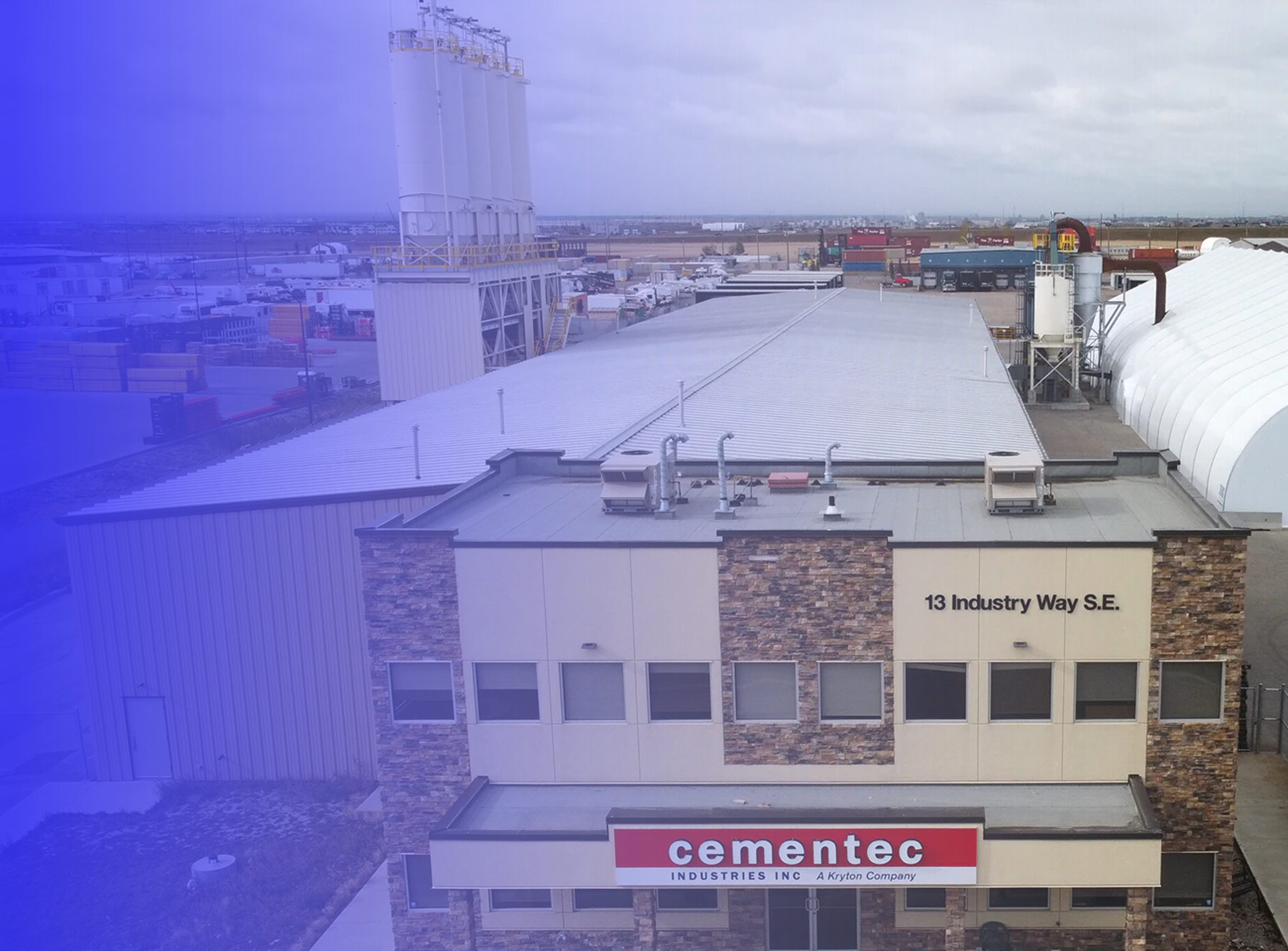
In 2026, Kryton International had both of its Canadian manufacturing plants undergo an independent on-site audit by Kaizen Institute, and both passed. In May, the Calgary facility, which produces the Hard-Cem® abrasion-resistant admixture, earned the KAIZEN™ 5S Certification with a score of 95%. The Vancouver facility, where Kryton produces its Krystol Internal Membrane™ (KIM®) waterproofing admixture, followed with a score of 97%, becoming the second Kryton site to reach this milestone.
Kryton provides Smart Concrete® solutions to customers in over 50 countries. For a company like Kryton, the important thing is not the certificate on the wall. What matters is that two plants producing two different products now meet the same independently verified standard for organizing, maintaining, and improving work every day.
What the KAIZEN™ 5S Certification actually measures
KAIZEN™ is the Japanese term for continuous improvement: making small, daily improvements to the way work is done. The 5S Certification recognizes how consistently a plant applies that practice.
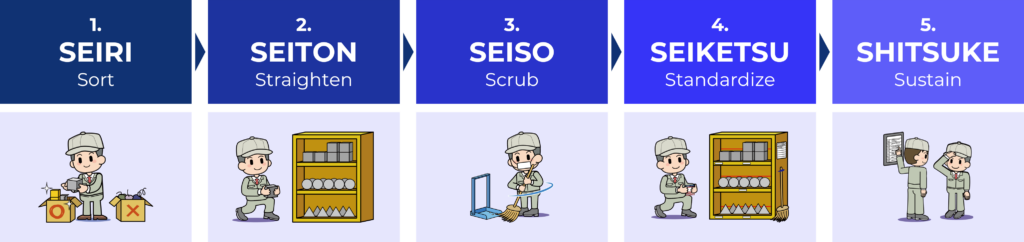
Figure 1: The five steps of 5S
To earn it, a facility has to show strength in three areas:
- A well-organized workplace
- Standards that are clearly upheld
- A workforce trained to spot and remove inefficiencies on the shop floor themselves
In both cases the certification followed a rigorous, multi-month review of the facility’s workflows. Its scope matters too. The certification does not cover a pilot line or a model area. It covers the whole facility and every person who works in it.
Carlos Bartilotti, Senior Principal at Kaizen Institute, said the Calgary team did more than clear the bar: “The team passed our audit with distinction.”
Gain valuable insights with our 5S guide and start improving your workspace today
Calgary: redesigning flow around the people who do the work
At Calgary, the certification process produced concrete changes to how the plant runs. Hard-Cem® made there is shipped worldwide for critical infrastructure such as logistics centers, mines, data centers and transportation hubs.
Kryton highlighted three changes:
- Material flow: Raw material staging and point-of-use storage were redesigned, significantly reducing cycle times for Hard-Cem®.
- Visual management: Full 5S workplace organization standards were rolled out across the production floor to maximize operator safety and equipment uptime.
- Frontline-led innovation: Structured KAIZEN™ teian (employee suggestion) protocols were set up. They have already produced dozens of small improvements to daily mixing and packaging safety standards.
The third change says the most about culture. A suggestion system that produces dozens of small improvements shows that operators are not just following a new layout. They are actively reshaping it. Kari Yuers, CEO of Kryton International, put it this way: “The KAIZEN™ Culture empowers our frontline operators to actively drive innovation.”
Vancouver: consistency that holds up day in and day out
Vancouver produces KIM®, which provides integral waterproofing across many kinds of critical infrastructure: hydro-electric power and wastewater treatment facilities, tunnels, foundations and marine structures. In these settings the long-term durability of concrete depends on a product that performs the same way, batch after batch.
At Vancouver, the KAIZEN™ 5S methodology set up disciplined workplace practices meant to reduce waste, surface abnormalities quickly, and improve safety and efficiency. These practices now form part of daily manufacturing work, visual controls and employee responsibilities. Over the certification process, the plant improved in six areas: standardized work, visual management, employee ownership, waste reduction, safety and sustainment.
Bartilotti’s assessment of Vancouver focused on consistency rather than peak performance: “A single well-run shift doesn’t earn this certification. Consistency across the entire facility does.” He added that the Vancouver team had shown its standards hold up under scrutiny, day in and day out.
Why an independent audit matters to customers
Many manufacturers invest in 5S training. Fewer put the plant itself in front of an outside auditor and publish the result. That distinction runs through both certifications.
“Many organizations train their people; far fewer put the plant itself in front of an independent audit and let the result stand on its own. That is the difference between an initiative and an operating standard, and it gives Kryton’s customers third-party assurance behind the quality they expect.”— Carlos Bartilotti, Senior Principal, Kaizen Institute
For Kryton’s customers, the link is direct. Engineers and contractors who specify Hard-Cem® or KIM® for critical infrastructure rely on every batch performing as documented. As Bartilotti noted about Vancouver, that consistency is exactly what customers count on when they specify Kryton products for critical infrastructure work.
Yuers described the Vancouver certification in the same terms: “The KAIZEN™ certification represents independent validation of the high standards we expect and maintain across our manufacturing facilities.” She also tied the certifications to Kryton’s wider footprint: “As we bring more of our manufacturing footprint to this level, our customers around the world can have even greater confidence in the consistency and reliability of every batch of KIM® we produce.”
How would your shop floor score in a 5S audit?
A stable base for growth
The construction industry increasingly wants smarter, more resilient building materials. Kryton says its certified Calgary plant positions it to scale output quickly to meet global infrastructure needs. It says the Vancouver plant will let it expand production while continuing to cut manufacturing carbon emissions.
Taken together, the two certifications suggest a deliberate pattern. Kryton is not treating 5S as a one-off project at a single site. It is using it as a common operating standard across its manufacturing network. A first plant proves the model, a second confirms it can be repeated, and in Yuers’ words the aim is to bring “more of our manufacturing footprint to this level.”
The lesson for other manufacturers is simple. Sort, straighten, scrub, standardize and sustain look like basic steps. Their real value is that they make daily discipline visible and verifiable, and they give frontline teams the structure to keep improving after the auditor leaves. When that discipline holds across a whole facility, and then across a second one, it stops being an initiative. It becomes how the company works.
Building that kind of operating standard takes more than a 5S rollout. It means redesigning material flow and visual management on the shop floor, and giving frontline teams the habits that keep improvement going once the certification is in hand. Kaizen Institute’s Manufacturing Operations consulting helps plants embed this discipline across the entire facility, while its KAIZEN™ Culture consulting helps leaders and teams turn daily improvement into a shared way of working at every site.
See more on KAIZEN™ Culture
Find out more about transformation in this sector
See more on Manufacturing Operations
Find out more about improving this business area