
Interview
Building a culture of quality in healthcare
Dr. Ahmed Algamal · Former Group Quality Director · Saudi German Health UAE


Dr. Ahmed Algamal
Former Group Quality Director at Saudi German Health UAE
Dr. Ahmed Algamal is a physician with more than twenty years in healthcare quality, spanning hospital quality leadership in Saudi Arabia and the UAE, national accreditation standards work in Egypt, and seven years as a JCI international consultant to over 35 organizations across Europe, Asia and the Middle East.
At Saudi German Health UAE, he led a structured KAIZEN™ program with Kaizen Institute across three hospitals in Dubai, Sharjah and Ajman. His approach positions the quality team as a coach rather than an inspector, giving frontline staff the tools, data and confidence to solve the problems they face every day.
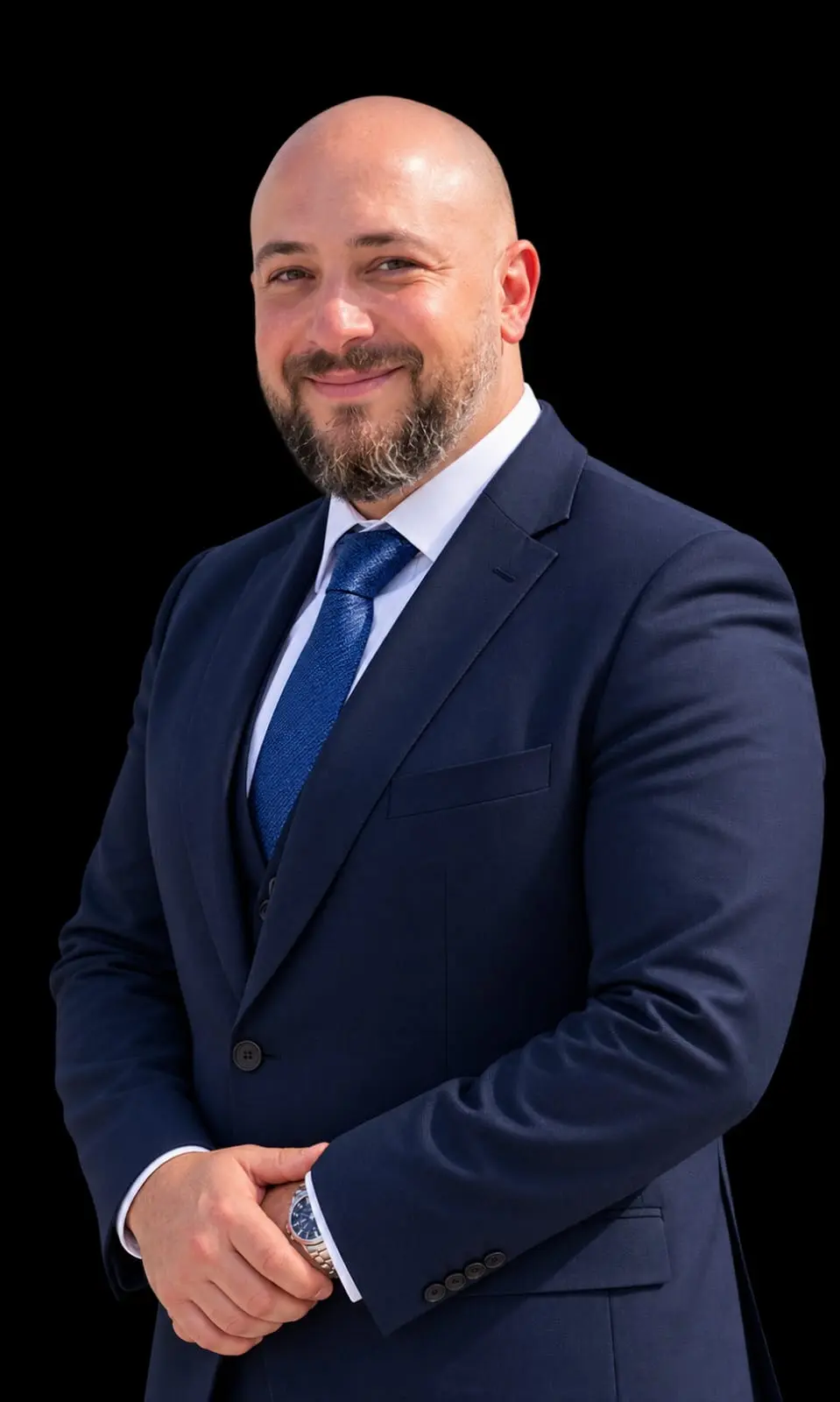
In this interview, Dr. Ahmed Algamal reflects on more than two decades in healthcare quality. Drawing on a KAIZEN™ program across three hospitals in Dubai, Sharjah and Ajman, he explains why lasting improvement depends less on tools and more on trust, structure and leadership.
Quality as guide and activator
1. Could you briefly introduce yourself, your role, and how you are involved in continuous improvement or KAIZEN™ today?
I am a physician by training who has spent more than twenty years in healthcare quality. My career has taken me through hospital quality leadership in Saudi Arabia and the UAE, national accreditation standards work in Egypt, and seven years as a JCI international consultant supporting more than 35 organizations across Europe, Asia and the Middle East.
I led Total Quality Management at Saudi German Health UAE, where we ran a structured KAIZEN™ program with Kaizen Institute across our three hospitals.
Continuous improvement is not a side project for me; it is how I design the quality function itself. I see the quality team as a guide and activator, not an inspector. Our role is to give frontline teams the tools, data and confidence to fix the problems they live with every day. KAIZEN™ gives us the shared language and method to do that at scale.
Improving for patients, not for surveys
2. Which industry do you work in, and what are the most common challenges you see when applying continuous improvement in this context?
I work in healthcare, where improvement is both most needed and hardest to protect. Three challenges come up again and again.
The first is time. Clinicians and nurses are stretched, and improvement work can feel like one more demand on an already full shift. If KAIZEN™ is presented as an extra task, it loses. It has to be built into how the day already runs.
The second is the compliance mindset. Healthcare is heavily regulated and accredited, so many teams learn to work toward the next survey rather than toward better care. Improvement becomes a burst of activity before an inspection, then fades.
The third is hierarchy. Strong professional hierarchies can make junior staff hesitant to point out waste or risk. Yet they usually see the problems first.
The common thread is that tools are rarely the barrier. The barrier is whether people feel the system genuinely wants their ideas, and whether leaders follow through when they offer them.
Chartered projects with frontline owners
3. Could you share one improvement or KAIZEN™ success story that stands out from your experience?
The story I am proudest of is not a single project but a program. At Saudi German Health UAE, we moved from scattered improvement efforts to a portfolio of 17 chartered KAIZEN™ projects, run by 12 units across our three hospitals in Dubai, Sharjah and Ajman.
Every project had a charter, a baseline, a target and a named owner from the frontline. Sixteen of the 17 met their targets, with an average relative improvement of around 87%. Alongside this, units logged 26 5S initiatives that made workplaces safer and easier to work in. The majority of these projects addressed patient safety processes.
What stands out for me is what changed beneath the numbers. Staff began reporting more incidents and near misses, not fewer. We read that as a sign of growing trust and a healthier safety culture, not a deterioration. People were raising problems because they now believed something would happen when they did.
The lesson was that results follow structure. Clear charters, visible tracking and leadership attention turned good intentions into measurable change.
When the launch energy fades
4. In your experience, what is hardest about building and sustaining a culture of continuous improvement or KAIZEN™?
Starting is the easy part. Launch events, training days and first projects create real energy. The hard part is month eighteen, when the novelty has gone, priorities shift and the people who championed the work move on.
Sustaining KAIZEN™ depends on three things that are less visible than the projects themselves. First, leaders must keep asking about improvement in routine meetings, not only at celebrations. What leaders pay attention to is what teams believe matters.
Second, improvement has to live inside the management system. That means a defined way to charter projects, track progress and recognize results, so it does not depend on one enthusiastic person.
Third, and most important, staff need to see that speaking up leads to action. One ignored suggestion can undo months of encouragement.
We capture this in a simple phrase: #Quality_Is_U. Quality is everyone’s job, not a department’s. The day a nurse or a receptionist fixes a problem without waiting to be asked is the day the culture has taken root.
Celebrate small wins loudly
5. What is the most important lesson you have learned from your work with KAIZEN™ or continuous improvement?
The most important lesson is that the quality function should be a coach, not a police force.
Early in my career, quality was often about audits, findings and corrective action plans. That approach can secure compliance, but it rarely creates ownership. People fix what they are told to fix, then return to old habits.
KAIZEN™ taught me a different stance. When we start from respect for the people doing the work, ask what gets in their way, and give them simple tools to solve it, the energy changes. Teams stop defending themselves and start improving.
This has shaped how I structure quality departments. Instead of one team that only inspects, I separate the roles: a group that provides assurance and an on-the-ground consultant team that works side by side with clinics and units. Data and digital tools support both.
The second lesson is related. Celebrate small wins loudly. A five-minute saving on a daily task, repeated across a network, matters. Recognizing it publicly tells everyone that their ideas count.
Measure how freely people raise problems
6. What advice would you give to someone starting or strengthening a continuous improvement journey today?
Start small, but start with structure. A few well-chartered projects with clear owners, baselines and targets will teach your organization more than a large launch with vague goals. Early, visible success builds the credibility you will need later.
Choose problems that frontline staff care about. If a project removes frustration from their day, you will not need to sell KAIZEN™; they will sell it for you.
Make the data easy to see. Today we have digital tools that can turn incident reports, audit results and process measures into simple dashboards within days, not months. When teams can watch their own numbers move, motivation follows. Technology should serve the improvement work, not become a project of its own.
Involve leaders personally. Ask executives to attend report-outs, walk the floor and recognize teams by name.
Finally, be patient with culture. Tools can be taught in a week. Trust takes years. Measure your progress not only by savings and indicators, but by how freely people raise problems.
The value of an external voice
7. From your experience, what has it been like to work with Kaizen Institute, and what value has this collaboration brought to your organization?
Working with Kaizen Institute gave us something we could not easily build alone: a proven method, an outside perspective and the discipline to keep going.
At Saudi German Health UAE, the partnership helped us move from good intentions to a managed program. The Institute’s coaches trained our teams, challenged our assumptions and brought examples from healthcare systems around the world. That external voice mattered. Sometimes a team will accept a challenge from an outside expert that it would resist from a colleague.
The value showed up in the results. Across 17 chartered projects in our three hospitals, 16 met their targets. Just as importantly, we built internal capability, so our own staff could lead improvement without depending on consultants.
I also value being part of the wider Kaizen Institute Healthcare Collaborative. Learning from peers in other countries shows that our challenges are shared, and so are the solutions.
Lasting improvement in hospitals depends on structure, leadership support and empowered frontline teams. Kaizen Institute’s Healthcare consulting helps health systems build that foundation and sustain results over time.
See more on Healthcare
Find out more about transformation in this sector