
Article
The shock is imported, but the answer is internal: What business leaders in Thailand are telling us


António Costa
Chief Executive Officer
Kaizen Institute Global
At the inaugural KAIZEN™ Economic Barometer Thailand event in Bangkok, I posed a simple question to the audience: Are you aware of whether your company is performing above or below its annual plan this morning? I would like to address the same question with you, as the answer is at the heart of what more than 150 business leaders in Thailand shared with us.
Forty-two percent of them expect to finish the next 12 months below plan, and only one in five companies expects to exceed it. Their average confidence in the business environment stands at a 5.4 out of 10, reflecting leaders who are neither pessimistic nor confident but are monitoring the situation for signs of change.
It was a great pleasure to be in Bangkok for this launch. For more than a decade, we have produced the KAIZEN™ Economic Barometer, and I am especially pleased to see it reach Southeast Asia, starting in Thailand, in partnership with the International Institute for Trade and Development (ITD), a public organization under the supervision of Thailand’s Ministry of Commerce.
Why we listen to the people running companies
Official forecasts tell us what economists expect. The Barometer tells us what the people running companies see, and what they are doing about it. Both views matter, and they do not always agree.
Thailand shows this gap clearly. The IMF ranks the country among the world’s top four exporters of AI hardware, and the World Bank finds that AI-related goods account for over 70% of its export growth. Yet the IMF expects Thailand to grow about 2% this year, against 4.8% for Asia and the Pacific. The boom is visible in the export statistics, but it has not reached the confidence of the leaders we surveyed.
Four findings that stand out
Between September 14 and October 5, more than 150 CEOs, board members, and senior executives answered our questions. Nearly half of the panel works in manufacturing, and a third of the companies employ 250 people or more. This first edition is a baseline rather than a national statistic, and four findings stand out.
The first is that leaders are worried about demand and cost at the same time. Weak domestic demand is the most cited risk, followed closely by energy and input costs, and then by geopolitical tension. Companies are squeezed between revenue that is not growing and costs that are.
The second is that they are not waiting for the economy to rescue them. Half have cut costs, and almost as many have improved productivity. They are focusing on what they can control, which is how their own organizations work. The choice between those two responses matters more than it may seem. When demand is weak, cutting costs often means cutting payroll, which weakens demand even further. The IMF studied 85 economies and found that three years after a cost-of-living shock, real wages remain about 3% below their pre-crisis path. Households are already carrying that shock, and squeezing them again deepens the first problem. The only exit that avoids this is creating more value from the same resources.
The third is a blind spot. Leaders name rising labor costs as a constraint far more often than productivity, which hardly appears at all. We still tend to see labor as a cost to reduce, when it is a capability to multiply. In a country where the working-age population is already declining, that distinction will decide who competes.
The fourth is that technology is not yet the answer. Only about one company in ten accelerated automation or AI in response to cost pressure, and I do not read that as a failure. The World Bank makes the same point from another angle: only about 13% of jobs in the region are positioned to use AI well, against 39% in advanced economies. The gap lies as much in how work is organized as in the technology itself, and automating a process full of waste only produces waste faster. We should optimize first, and then automate.
Put the four findings together and they lead to one conclusion: the shock is imported, but the answer is internal.
If the answer is internal, the next step is knowing where to look
What this means for leaders
The results of the Barometer point to five lessons for leaders, and there are three I would highlight.
The first is to review the plan weekly rather than quarterly. When two in five companies already see their plan slipping, the real risk is finding out too late.
The second is to compete on value, quality, and operational excellence, and not on price alone. Cost competitiveness is the biggest barrier to growing abroad, and cutting wages will not solve it.
The third is to invest in the leaders who drive value creation every day. Sixteen percent of executives see management capability as a constraint, yet only 6% plan to invest in it.
Leaders also asked government for clear and stable rules, and 37% put regulatory simplification first. That is a fair request, but governments have less room to act than they used to, as record public debt limits their options. Predictability can also be built inside each company, through clear targets, visible indicators, and a disciplined review rhythm. That part is in our hands today.
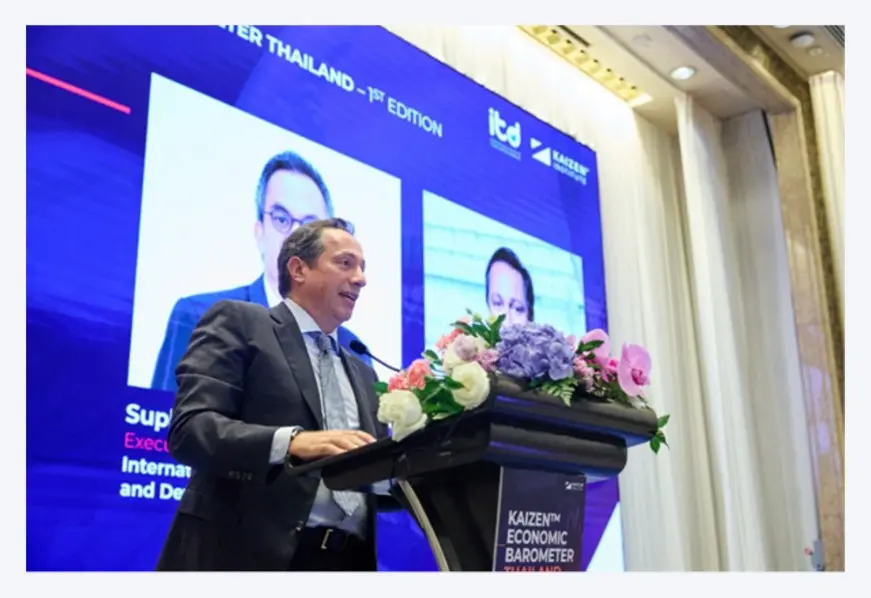
Figure 1 – Presenting the findings of the first KAIZEN™ Economic Barometer Thailand in Bangkok
Preparing for winter
At the IMF and World Bank meetings in Bangkok, the IMF’s Managing Director warned that “winter is coming.” There is a simple rule at Kaizen Institute: you do not prepare for winter in winter. You prepare in the summer, or at the latest in the autumn, while the plan is still on track and there is time to fix the flow.
This first edition is our baseline. The 5.4 and the 42% are where we start, and in the next editions we will track whether confidence rises, whether plans stop slipping, and whether more companies turn to productivity before they turn to cuts.
I would like to thank ITD and the Ministry of Commerce for their partnership, and above all the business leaders who gave their time to answer. Your participation is what makes this initiative meaningful.
I will leave you with the three questions I left with the leaders in Bangkok, for Monday morning
- Am I above or below plan this week, and do I know it?
- Where does the waste live in my flow, before I automate?
- And who on the shop floor leads improvement every day?
The Barometer’s message is consistent: the shock may arrive from outside, but what happens next depends on how each company works from the inside. Reviewing the plan weekly, choosing productivity before cuts, optimizing the flow before automating it, and developing the leaders who drive improvement every day are all within reach of any organization.
This is where Kaizen Institute works alongside companies, building a KAIZEN™ Culture in which improvement is led daily, from the shop floor to the boardroom.
See more on KAIZEN™ Culture
Find out more about improving this business area