Article
Economic Barometer Thailand: balancing cost cuts and productivity


Half of Thai businesses are cutting costs. Are they doing enough to improve productivity?
The first KAIZEN™ Economic Barometer Thailand, developed by Kaizen Institute in partnership with the International Institute for Trade and Development (ITD), surveyed more than 150 CEOs, board members and senior executives of companies operating in Thailand. Among the main findings of this first edition:
- 42% of business leaders expect their company to finish the next 12 months below plan, while only one in five (20%) expects to beat it;
- Faced with pressure on margins, half of companies (50%) have cut costs and almost as many (49%) have improved operational productivity, but only 11% have accelerated automation, digitalization or AI;
- Confidence in Thailand’s business and economic environment stands at 5.4 out of 10, the baseline for future editions of the Barometer.
Thailand’s economy is going through a period of slower growth. GDP growth eased to 1.9% in the second quarter and inflation rose again to 2.5% in August, largely driven by higher fuel and food prices. Thai companies are feeling the pressure on two fronts: demand that is not growing, and costs that are.
Against this backdrop, business leaders rate their confidence in Thailand’s business and economic environment for the next 12 months at an average of 5.4 out of 10: neither pessimistic nor confident, but waiting to see. Half of the leaders surveyed (50%) score their confidence between 4 and 6, and one in three (34%) scores 7 or more. The results of this first edition were presented on October 21 at the Sheraton Grande Sukhumvit, Bangkok, at a launch event organized by Kaizen Institute and ITD.
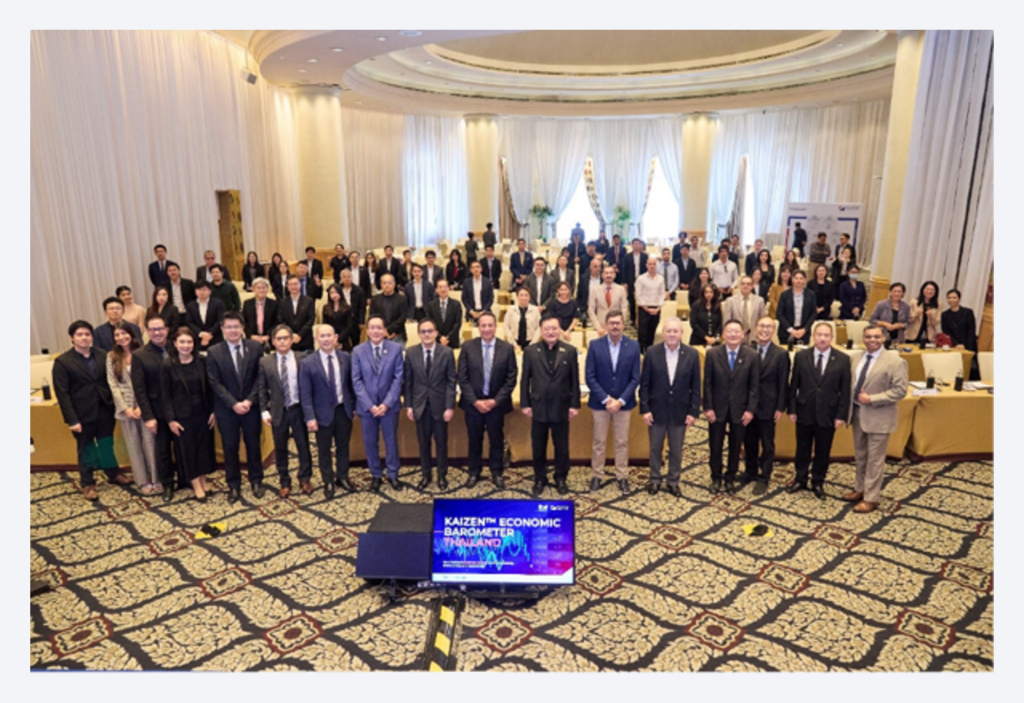
Photo 1: Participants at the launch of the first KAIZEN™ Economic Barometer Thailand in Bangkok
A cautious outlook: more companies expect to shrink than to grow
For two in five companies, the plan is already slipping. Around 42% of leaders expect to finish the next 12 months below their business plan, 12% of them significantly, while 32% expect to stay broadly in line and only 20% expect to outperform it. The gap between plan and reality is where execution becomes critical: a strategy only creates value when it reaches the day-to-day, when priorities are understood across the organization, progress is monitored regularly and deviations are identified early enough to act.
Profitability tells a similar story. Looking at the next 12 months, 44% of companies expect their profitability to fall, against 36% who expect it to rise. Capital investment plans are evenly split: around one in three companies expects to increase investment in Thailand, the same proportion expects to reduce it, and 30% expect it to remain broadly unchanged. With new investment on hold, the priority is not only where to invest, but how to make existing assets work harder.
On the workforce, nearly half of companies (45%) expect headcount in Thailand to remain broadly unchanged. Where it changes, the direction is mostly downward: 37% expect to reduce their workforce, half of them significantly, compared with 18% who expect to hire. With Thailand’s working-age population already declining, future growth will depend more and more on what organizations can achieve with the people and resources they already have. Reducing headcount alone does not create productivity; redesigning how work is done does.
The results also reveal a blind spot. When asked which workforce issues most constrain their growth, leaders point to a shortage of technical or specialized skills (33%) and rising labor costs (30%), while workforce productivity is cited by only 6%. Labor is still seen as a cost to reduce rather than a capability to multiply. With an aging workforce and succession challenges already cited by 15%, the answer is not simply finding more people or cutting wages, but increasing the value created by the teams already in place.
Squeezed from both sides: weak demand and rising costs
Weak demand in Thailand (40%) and energy and other input-cost pressures (38%) are the most cited external risks to performance over the next 12 months, ahead of geopolitical tensions, trade restrictions or global conflicts (33%) and regulatory, tax or policy uncertainty (19%). The same pattern appears in investment decisions: uncertainty about future market demand (36%) and the cost competitiveness of operating in Thailand (29%) are the main brakes on new investment.
Cost is also the main barrier to growing abroad, with 29% of leaders pointing to the cost competitiveness of operating or exporting from Thailand as their biggest cross-border challenge, well ahead of finding reliable customers or partners (11%) and tariffs or limited market access (10%). It is no surprise, then, that the home market comes first: 45% see Thailand as their strongest growth opportunity over the next two to three years, while ASEAN markets outside Thailand attract 18% and China 7%. Competing on price alone is rarely sustainable. Lasting competitiveness abroad depends on higher value-added offerings, consistent quality and lean operations that lower the cost base without cutting into capability.
When it comes to government, leaders ask for clear, stable rules before new incentives. Greater regulatory simplification and policy predictability is the action most cited (37%), followed by more competitive tax and investment conditions (27%), stronger workforce skills and talent development (21%), improved access to finance (20%) and better trade facilitation and international market access (19%). Predictability, however, can also be built inside each company, through clear targets, visible indicators and a disciplined review rhythm.
Turn cost pressure into a productivity advantage
The answer is inside: productivity, people and optimizing before automating
Business leaders are not waiting for the economy to rescue them. In response to margin and operating-cost pressures over the past 12 months, half of companies (50%) reduced discretionary or structural costs, and almost as many (49%) improved operational productivity and efficiency. Others adjusted production capacity or their operating model (27%), or increased prices (16%). The choice between the first two responses matters: cutting costs protects this year’s margin, while improving productivity removes the underlying waste, such as waiting times, rework and excess inventory, and lowers the cost base for good.
Companies are growing outward and tightening inward at the same time. Expansion into new markets or customer segments is the initiative most accelerated (34%), backed by operational excellence and productivity improvement (30%) and cost restructuring or organizational simplification (29%). Digital transformation and AI adoption follows, with 22%.
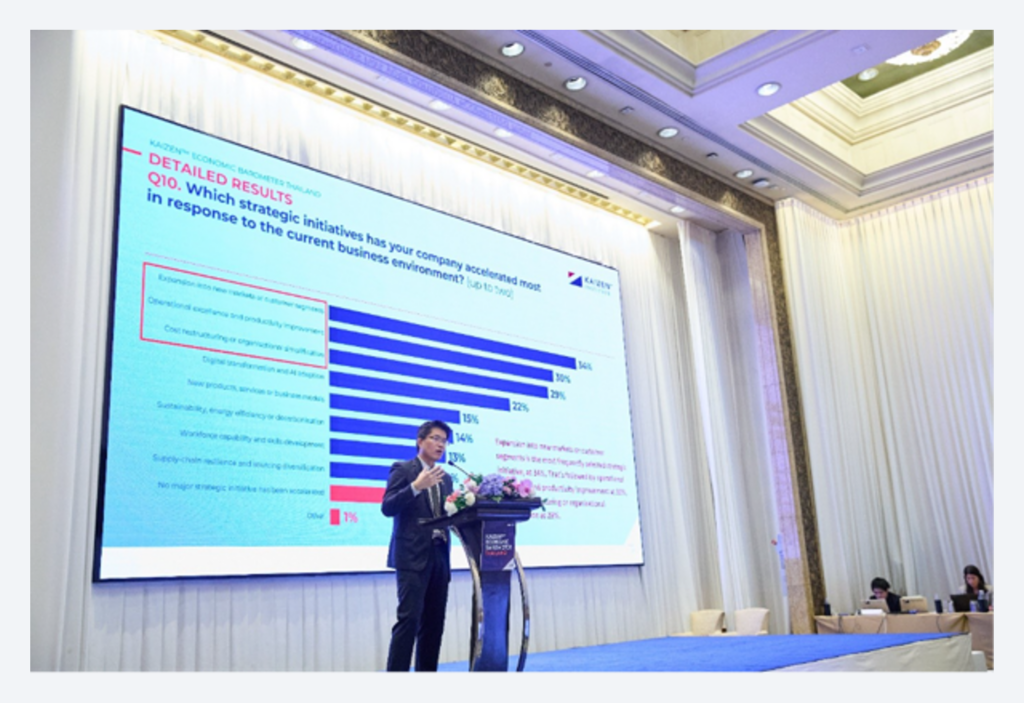
Photo 2: Dr. Nat Tharnpanich, Lecturer at the Faculty of Economics, Chulalongkorn University, presenting the first edition results.
Technology is not yet the main lever against cost pressure: when responding to margin and cost pressures, only 11% of companies accelerated automation, digitalization or AI. This is not necessarily a weakness. Companies that first map the flow, remove waste and standardize the work give technology a solid base to deliver returns.
Looking at the next 12 to 24 months, investment plans are almost evenly split across people, process and technology: workforce skills and capability development (30%), operational excellence and continuous improvement (29%) and digital, data and AI capabilities (29%) share the top spot, followed by innovation and new products or services (27%). Lasting quality, efficiency and growth depend directly on the leaders and team leaders on the gemba, where value is created every day.
The report closes with five lessons for leaders: review the plan weekly, not quarterly; compete on value, quality and operational excellence rather than price alone; optimize before automating; invest in the leaders who drive daily value creation; and build internal predictability, whatever the market does.
Ramesh Raju, Managing Director of Kaizen Institute Thailand, explains:
“Strategies rarely fail in the boardroom. They fall short in the gap between decisions and daily execution. The Barometer reveals an important disconnect: 16% of business leaders identify management capability as a constraint, yet only 6% prioritize greater investment in leadership and organizational effectiveness. Top management should see this as an opportunity to build strong leadership teams at every level, not just in the boardroom. Middle managers and frontline leaders play a critical role in translating strategy into daily actions, developing people and driving continuous improvement. Ultimately, Thailand’s competitiveness will depend not only on the strategies businesses pursue, but on the leadership capability to execute them consistently.”
Suphakit Charoenkul, Executive Director of the International Institute for Trade and Development (ITD), emphasizes:
“This first edition offers a timely view of how business leaders in Thailand are navigating a challenging operating environment and persistent cost pressures. Their message is clear: companies are improving what lies within their control, while looking to the public sector for predictable rules, competitive conditions and a stronger skills base. Turning these insights into results will require business and government to work together, and ITD will draw on these findings in its research, capacity-building programs and policy dialogue to support Thailand’s long-term competitiveness.”
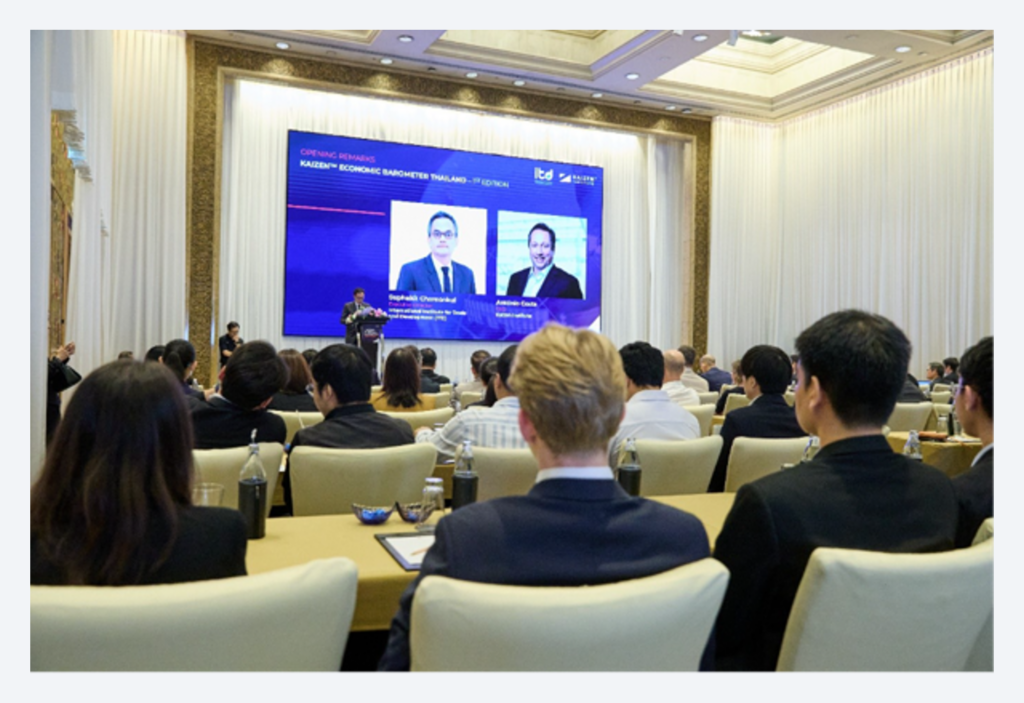
Photo 3: Mr. Suphakit Charoenkul, Executive Director of the International Institute for Trade and Development (ITD), delivering the opening remarks at the launch of the KAIZEN™ Economic Barometer Thailand.
António Costa, Global CEO of Kaizen Institute, points out:
“Thai business leaders are squeezed between revenue that is not growing and costs that are, and they are not waiting for the economy to rescue them. Half have already turned to what they can control: how their own organizations work. The shock is imported, but the answer is internal. Labor is a capability to multiply, not a cost to reduce, and automating a process full of waste only produces waste faster, so optimize first, then automate. This first edition is our baseline. In the next editions we will track whether confidence rises, whether the plan stops slipping, and whether more companies turn to productivity before they turn to cuts.”
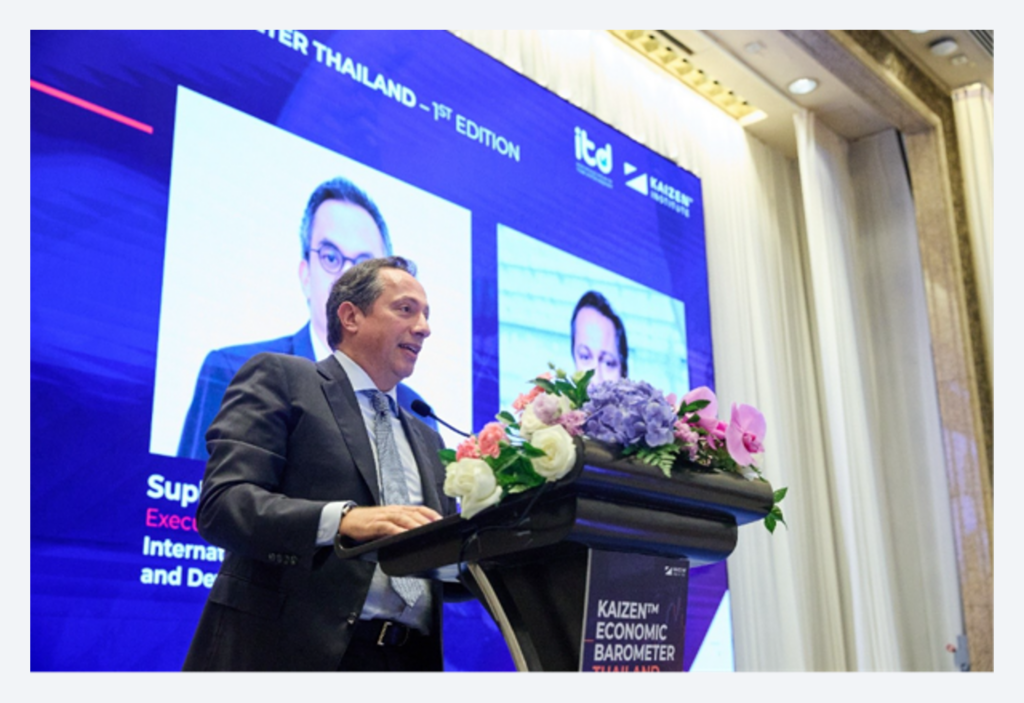
Photo 4: Mr. António Costa, Global CEO of Kaizen Institute, delivering the opening remarks at the launch of the KAIZEN™ Economic Barometer Thailand.
The KAIZEN™ Economic Barometer is an opinion survey that Kaizen Institute has carried out for more than a decade across Europe and the Americas, among board members and senior executives of medium and large companies, on their outlook for the economy and their business, current affairs, trends and challenges. The Thailand edition, the first in Southeast Asia, is developed by Kaizen Institute Thailand in partnership with ITD and will be conducted twice a year.
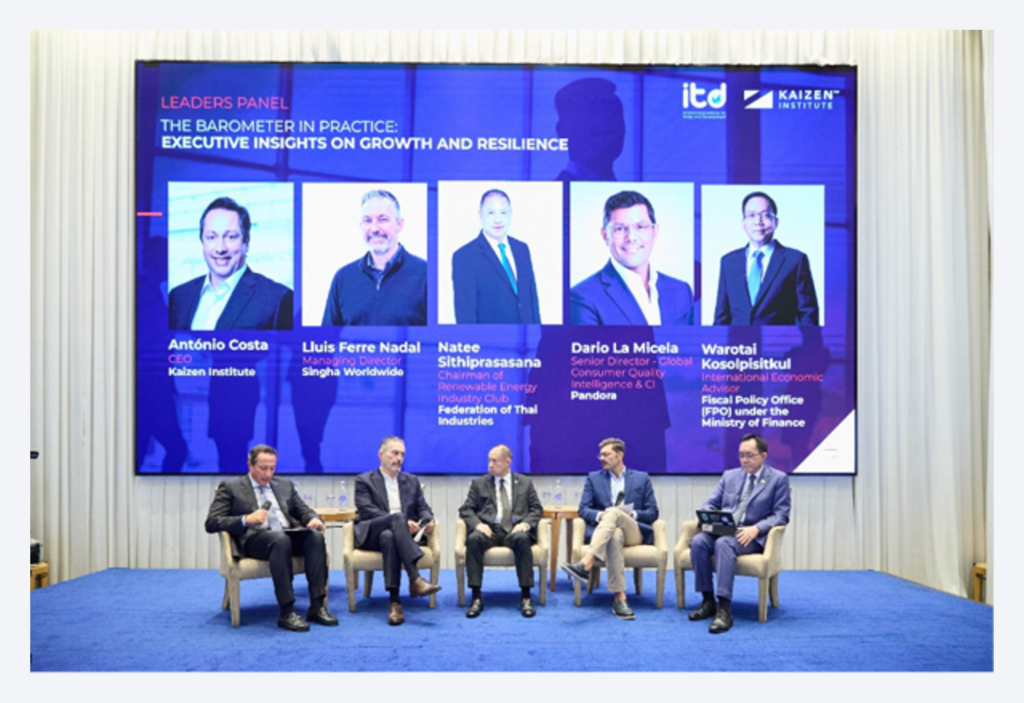
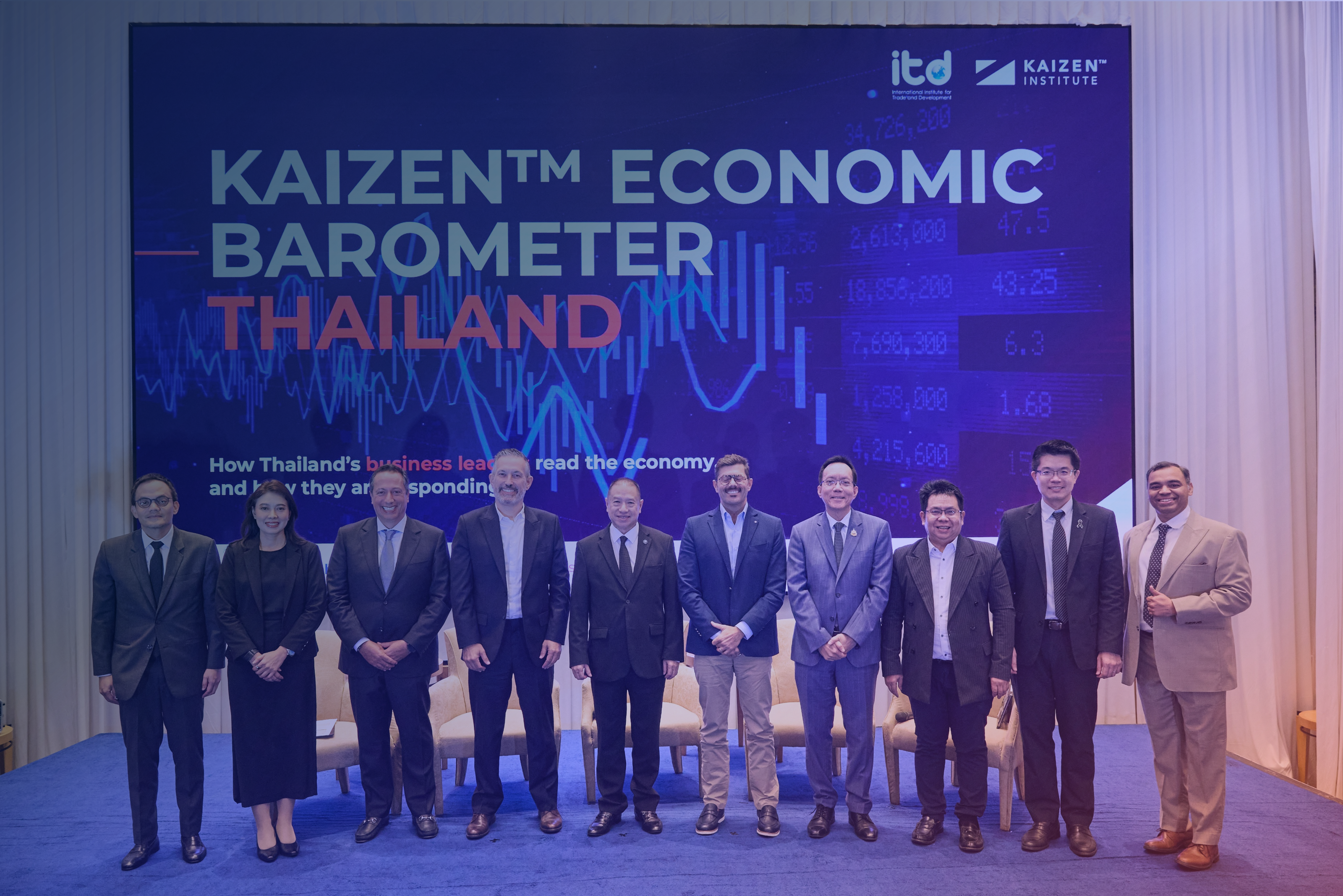
Photo 5: Leaders Panel at the KAIZEN™ Economic Barometer Thailand launch: António Costa, Global CEO, Kaizen Institute; Lluis Ferre Nadal, Managing Director, Singha Worldwide; Natee Sithiprasasana, Chairman of the Renewable Energy Industry Club, Federation of Thai Industries; Dario La Micela, Senior Director – Global Consumer Quality Intelligence & CI, Pandora; Dr. Warotai Kosolpisitkul, International Economic Advisor, Fiscal Policy Office (FPO), Ministry of Finance.
The first edition of the KAIZEN™ Economic Barometer Thailand surveyed more than 150 CEOs, board members and senior executives of companies operating in Thailand between September 14 and October 5, 2026, through an online questionnaire in Thai and English. Nearly half of the panel (45%) is in manufacturing, and 34% of the companies employ 250 or more people in Thailand.
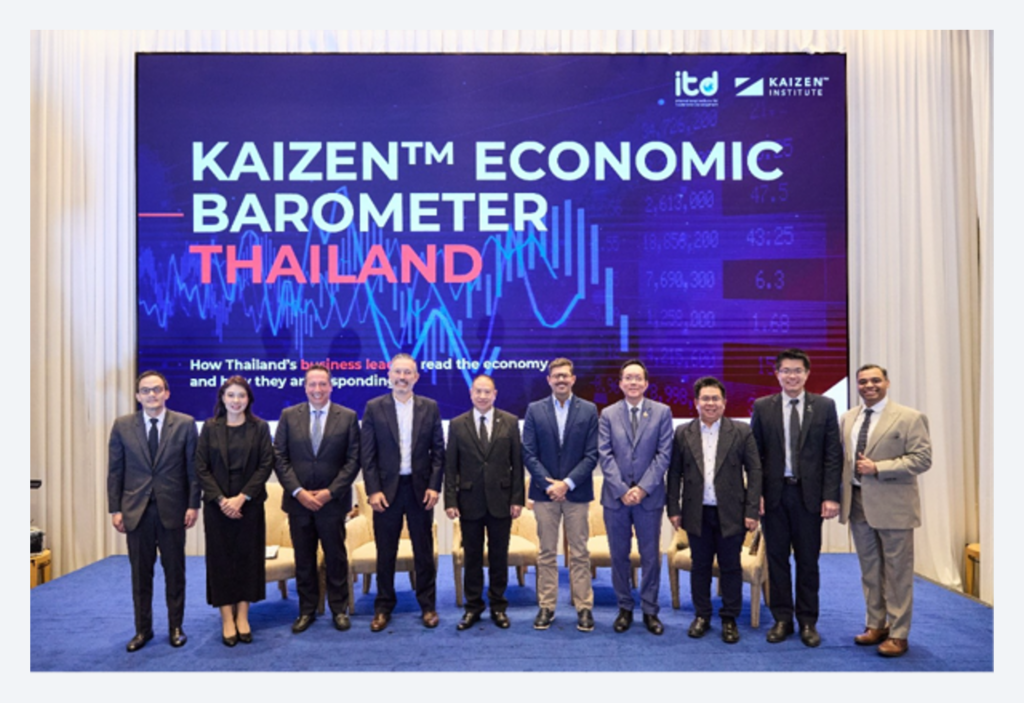
Photo 6: Leaders Panel with representatives of the International Institute for Trade and Development (ITD) and Kaizen Institute Thailand at the launch of the first edition of the KAIZEN™ Economic Barometer Thailand in Bangkok.
Turning these findings into results means tackling the causes of cost, not only the budget lines. Kaizen Institute’s Cost Savings consulting helps companies in Thailand reduce operating costs by removing waste from their processes and improving how work flows, protecting margins while building a stronger base for growth and automation.
See more on KAIZEN™ Culture
Find out more about improving this business area